In law, a judgment is a decision of a court regarding the rights and liabilities of parties in a legal action or proceeding. Judgments also generally provide the court's explanation of why it has chosen to make a particular court order.

A decree is a legal proclamation, usually issued by a head of state, judge, royal figure, or other relevant authorities, according to certain procedures. These procedures are usually defined by the constitution, Legislative laws, or customary laws of a government.
The Federal Interlocutor for Métis and Non-Status Indians was a title and role in the Canadian Cabinet that provided a liaison for the federal Canadian government, and its various departments, to Métis and non-status Aboriginal peoples, and other off-reserve Aboriginal groups.
In semiotics, linguistics, anthropology, and philosophy of language, indexicality is the phenomenon of a sign pointing to some element in the context in which it occurs. A sign that signifies indexically is called an index or, in philosophy, an indexical.
A partition is a term used in the law of real property to describe an act, by a court order or otherwise, to divide up a concurrent estate into separate portions representing the proportionate interests of the owners of property. It is sometimes described as a forced sale. Under the common law, any owner of property who owns an undivided concurrent interest in land can seek such a division. In some cases, the parties agree to a specific division of the land; if they are unable to do so, the court will determine an appropriate division. A sole owner, or several owners, of a piece of land may partition their land by entering a deed poll.
Interlocutory is a legal term which can refer to an order, sentence, decree, or judgment, given in an intermediate stage between the commencement and conclusion of a cause of action, used to provide a temporary or provisional decision on an issue. Thus, an interlocutory order is not final and is not subject to immediate appeal.
Lauro Lines s.r.l. v. Chasser, 490 U.S. 495 (1989), is the touchstone case in which the United States Supreme Court laid out the law of interlocutory appeals for United States federal courts.
An interlocutory appeal occurs when a ruling by a trial court is appealed while other aspects of the case are still proceeding. The rules governing how and when interlocutory appeals may be taken vary by jurisdiction.

The National Security Advisor is the senior official on the National Security Council of India, and the chief advisor to the Prime Minister of India on national security policy and international affairs. In 2019, the term of Ajit Doval the current NSA was extended for another 5-year term, and has been assigned the rank of a Union Cabinet Minister and ranks at the seventh position in the Indian Order of Precedence.
An interlocutory injunction is a court order to compel or prevent a party from doing certain acts pending the final determination of the case. It is an order made at an interim stage during the trial, and is usually issued to maintain the status quo until judgment can be made.
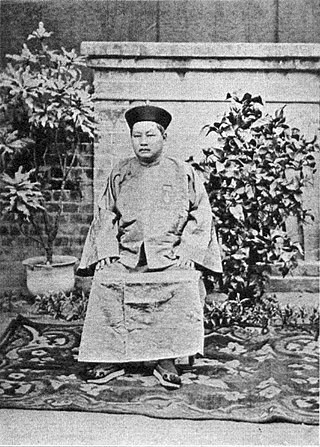
Taw Sein Ko was Burma's first recorded archaeologist. He spent over 32 years in various government services, and ended his career in 1919 as the Superintendent of the Archaeological Survey of Burma.

Narinder Nath Vohra, popularly referred as N. N. Vohra, is a retired 1959 batch Indian Administrative Service (IAS) officer of Punjab cadre who was the 12th governor of the Indian state of Jammu and Kashmir. He was the first civilian governor of Jammu and Kashmir in eighteen years after Jagmohan.
The New Jersey Superior Court, Appellate Division is the intermediate appellate court in New Jersey. "The Appellate Division of New Jersey's Superior Court is the first level appellate court, with appellate review authority over final judgments of the trial divisions and the Tax Court and over final decisions and actions of State administrative agencies." Above the New Jersey Superior Court, Appellate Division is the Supreme Court of New Jersey which "sits alone atop the State judiciary, entertaining appeals from the Appellate Division and, on rare occasions, directly by order of the Court from other cases within the judicial and administrative system."
The interaction hypothesis is a theory of second-language acquisition which states that the development of language proficiency is promoted by face-to-face interaction and communication. Its main focus is on the role of input, interaction, and output in second language acquisition. It posits that the level of language that a learner is exposed to must be such that the learner is able to comprehend it, and that a learner modifying their speech so as to make it comprehensible facilitates their ability to acquire the language in question. The idea existed in the 1980s, and has been reviewed and expanded upon by a number of other scholars but is usually credited to Michael Long.
Connecticut National Bank v. Germain, 503 U.S. 249 (1992), was a case in which the Supreme Court of the United States held that an interlocutory order of a district court, sitting as an appellate court in a bankruptcy case, is in turn reviewable by the court of appeals when authorized under 28 U.S.C. § 1292. Although the Justices were unanimous in deciding the specific statutory interpretation issue concerning bankruptcy appeals that the case presented, they disagreed on the extent to which it was appropriate to refer to the legislative history of the statute in resolving the case.
The registrar is a chief executive officer of a judicial forum. They are in charge of the entire registry of the department.
The Naga Peace Accord is a peace treaty, signed, on 3 August 2015, between the Government of India, and the National Socialist Council of Nagaland (NSCN), to end the insurgency in the state of Nagaland in Northeast India. The Government’s interlocutor for Naga Peace Talks, R. N. Ravi signed it on behalf of the Government of India, whereas Lt. Isak Chishi Swu, Chairman and Thuingaleng Muivah, General Secretary signed on behalf of the NSCN, in presence of the Indian Prime Minister, Narendra Modi.
In the Catalan-Valencian, sentences consist of a collection of noun phrases grouped around a verb. One of these noun phrases has the syntactic function of subject while the others function as complements, or adverbials. The sentence can be introduced by a 'frame'.

Juliana, et al. v. United States of America, et al. was a climate-related lawsuit filed in 2015 and dismissed in 2020. Filed by 21 youth plaintiffs against the United States and several executive branch officials. Filing their case in the United States District Court for the District of Oregon, the plaintiffs, represented by the non-profit organization Our Children's Trust, include Xiuhtezcatl Martinez, the members of Martinez's organization Earth Guardians, and climatologist James Hansen as a "guardian for future generations". Some fossil fuel and industry groups initially intervened as defendants but later requested to be dropped following the 2016 presidential election, stating that the case would be well defended under the new administration.

Ravindra Narayana Ravi is an Indian politician and former bureaucrat serving as the current governor of Tamil Nadu. Ravi served as governor of Nagaland from 1 August 2019 to 9 September 2021 and as Governor of Meghalaya from 18 December 2019 to 26 January 2020.

