History
The International Bureau was founded on a conference held by several women's organizations in London in 1899. It was an international sister-association to the British National Vigilance Association, who had been questioned by the Association for Moral and Social Hygiene (AMSH) for combatting prostitution as such more than helping the victims of sex trafficking and women's rights. [2]
The International Bureau played an important role in the international debate and work against human trafficking, and arranged several well known international conferences about the white slave trade in the early 20th-century. [3] [4]
One of the main destinations for the victims of the white slave trade sex trafficking were brothels in Egypt operated by foreign residents. Many of the procurers and prostitutes who had accompanied the British and French troops to Constantinople during the Crimean war in the 1850s opened brothels in Port Said in Egypt during the construction of the Suez Canal, and these brothels was a destination for many victims of the white slave trade, since they were under protection of the foreign consulates because of the so called Capitulatory privileges until 1937, which exempted foreign citizens in Egypt from Egyptian law, and thus protected from the police. [5] A local branch of the International Bureau for the Suppression of the Traffic in Women was therefore founded in Alexandria in 1904 and in Port Said in 1914 to address the issue. [6] However, the European consulates in Egypt did not want to support a law against the sex trafficking because it would interfere with the Capitulatory privileges, and the brothel owners belonged to the most frequent clients of the consulates. [7]
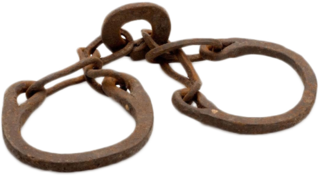
Sexual slavery and sexual exploitation is an attachment of any ownership right over one or more people with the intent of coercing or otherwise forcing them to engage in sexual activities. This includes forced labor that results in sexual activity, forced marriage and sex trafficking, such as the sexual trafficking of children.

Prostitution in the Netherlands is legal and regulated. Operating a brothel is also legal. De Wallen, the largest and best-known Red-light district in Amsterdam, is a destination for international sex tourism.
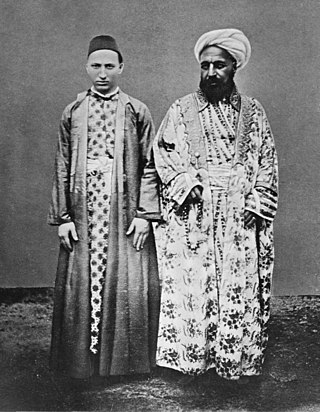
White slavery refers to the enslavement of any of the world's European ethnic groups throughout human history, whether perpetrated by non-Europeans or by other Europeans. Slavery in ancient Rome was frequently dependent on a person's socio-economic status and national affiliation, and thus included European slaves. It was also common for European people to be enslaved and traded in the Muslim world; European women, in particular, were highly sought-after to be concubines in the harems of many Muslim rulers. Examples of such slavery conducted in Islamic empires include the Arab slave trade, the Barbary slave trade, the Ottoman slave trade, and the Black Sea slave trade, among others.
Prostitution in Turkey is legal and regulated. The secularization of Turkish society allowed prostitution to achieve legal status during the early 20th century. Known as "general houses" (genelevler) in the country, these are state run brothels which must receive permits from the government to operate. In turn, the regulatory agencies issue identity cards to sex workers that give them rights to some free medical care and other social services. However, many local governments now have a policy of not issuing new registrations, and in some cities, such as Ankara and Bursa, brothels have been demolished by court order. In 2012, it was estimated there are 100,000 unliscenced prostitutes in Turkey, half of whom are foreign born.
Prostitution in Colombia is legal, regulated and limited to brothels in designated "tolerance zones". Sex workers are required to have regular health checks. However, the laws are rarely applied and prostitution is widespread, partly due to poverty and internal displacement.
Prostitution in Belize is legal, but the buying of sexual services is not. Associated activities such as operating a brothel, loitering for the purposes of prostitution and soliciting sex are also illegal.

Prostitution is a type of sex work that involves engaging in sexual activity in exchange for payment. The definition of "sexual activity" varies, and is often defined as an activity requiring physical contact with the customer. The requirement of physical contact also creates the risk of transferring infections. Prostitution is sometimes described as sexual services, commercial sex or, colloquially, hooking. It is sometimes referred to euphemistically as "the world's oldest profession" in the English-speaking world. A person who works in the field is usually called a prostitute or sex worker, but other words, such as hooker and whore, are sometimes used pejoratively to refer to those who work in prostitution. The majority of prostitutes are female and have male clients.
Prostitution in Poland is legal, but operating brothels or other forms of pimping or coercive prostitution and prostitution of minors are prohibited.
Prostitution is illegal in Egypt. The Egyptian National Police officially combats prostitution but, like almost all other countries, prostitution exists in Egypt. UNAIDS estimate there to be 23,000 prostitutes in the country, including Egyptians, West African and Eastern Europeans.
Prostitution is illegal in Iran, and incurs various punishments ranging from fines and jail terms to execution for repeat offenders.
Prostitution in Lebanon is nominally legal and regulated. However, no licences have been issued since 1975. In modern Lebanon, prostitution takes place semi-officially via 'super night clubs', and illegally on the streets, in bars, hotels and brothels. UNAIDS estimate there to be 4,220 prostitutes in the country.
Indonesia is a source, transit, and destination country for women, children, and men trafficked for the purposes of commercial sexual exploitation and forced labor. The greatest threat of trafficking facing Indonesian men and women is that posed by conditions of forced labor and debt bondage in more developed Asian countries and the Middle East.
Prostitution in Cambodia is illegal, but prevalent. A 2008 Cambodian Law on Suppression of Human Trafficking and Sexual Exploitation has proven controversial, with international concerns regarding human rights abuses resulting from it, such as outlined in the 2010 Human Rights Watch report.
Prostitution in Libya is illegal, but common. Since the country's Cultural Revolution in 1973, laws based on Sharia law's zina are used against prostitutes; the punishment can be 100 lashes. Exploitation of prostitutes, living off the earnings of prostitution or being involved in the running of brothels is outlawed by Article 417 of the Libyan Penal Code. Buying sexual services isn't prohibited by law, but may contravene Sharia law.
Prostitution in Algeria is illegal under Article 343 of the Algerian Penal Code. This article also prohibits the use of prostitution services, pimping, living with a prostitute, soliciting, and forcing others into prostitution.
The International Agreement for the suppression of the White Slave Traffic is a series of anti–human trafficking treaties, specifically aimed at the illegal trade of white people, the first of which was first negotiated in Paris in 1904. It was one of the first multilateral treaties to address issues of slavery and human trafficking. The convention held that human trafficking was a punishable crime and that the 12 signatories should exchange information regarding human trafficking operations.

The International Abolitionist Federation, founded in Liverpool in 1875, aimed to abolish state regulation of prostitution and fought the international traffic in women in prostitution. It was originally called the British and Continental Federation for the Abolition of Prostitution.
Although prostitution in Morocco has been illegal since the 1970s it is widespread. In 2015 the Moroccan Health Ministry estimated there were 50,000 prostitutes in Morocco, the majority in the Marrakech area. Prostitutes tend to be Moroccan women from lower socioeconomic backgrounds as well as migrants from sub-Saharan Africa, many of whom are victims of human trafficking UNAIDS estimated the figure at 75,000 in 2016.
Prostitution in Papua New Guinea is generally regarded as illegal but widely practiced with the laws rarely enforced. Prostitution occurs on the streets, in bars, brothels and in logging, mining, and palm oil areas. In 2010 it was estimated there were 2.000 prostitutes in the capital, Port Moresby. The drought in 2016 caused a rise in prostitution. Many of the women have turned to sex work due to poverty or unemployment.
The Advisory Committee on Traffic in Women and Children was a permanent committee of the League of Nations (LN), inaugurated in 1921. It was the first permanent committee of the League of Nations to address the issue of sexual trafficking, at that point in time often termed as white slave trade.

