
Interplanetary spaceflight or interplanetary travel is the crewed or uncrewed travel between stars and planets, usually within a single planetary system. In practice, spaceflights of this type are confined to travel between the planets of the Solar System. Uncrewed space probes have flown to all the observed planets in the Solar System as well as to dwarf planets Pluto and Ceres, and several asteroids. Orbiters and landers return more information than fly-by missions. Crewed flights have landed on the Moon and have been planned, from time to time, for Mars and Venus. While many scientists appreciate the knowledge value that uncrewed flights provide, the value of crewed missions is more controversial. Science fiction writers propose a number of benefits, including the mining of asteroids, access to solar power, and room for colonization in the event of an Earth catastrophe.

The magnetopause is the abrupt boundary between a magnetosphere and the surrounding plasma. For planetary science, the magnetopause is the boundary between the planet's magnetic field and the solar wind. The location of the magnetopause is determined by the balance between the pressure of the dynamic planetary magnetic field and the dynamic pressure of the solar wind. As the solar wind pressure increases and decreases, the magnetopause moves inward and outward in response. Waves along the magnetopause move in the direction of the solar wind flow in response to small-scale variations in the solar wind pressure and to Kelvin–Helmholtz instability.

Panspermia is the hypothesis that life exists throughout the Universe, distributed by space dust, meteoroids, asteroids, comets, and planetoids, as well as by spacecraft carrying unintended contamination by microorganisms. Panspermia is a fringe theory with little support amongst mainstream scientists. Critics argue that it does not answer the question of the origin of life but merely places it on another celestial body. It is also criticized because it cannot be tested experimentally.

Terraforming or terraformation is the hypothetical process of deliberately modifying the atmosphere, temperature, surface topography or ecology of a planet, moon, or other body to be similar to the environment of Earth to make it habitable by Earth-like life.
Space travel can refer to:
IPS, ips, or iPS may refer to:

The interplanetary medium (IPM) or interplanetary space consists of the mass and energy which fills the Solar System, and through which all the larger Solar System bodies, such as planets, dwarf planets, asteroids, and comets, move. The IPM stops at the heliopause, outside of which the interstellar medium begins. Before 1950, interplanetary space was widely considered to either be an empty vacuum, or consisting of "aether".

The interplanetary Internet is a conceived computer network in space, consisting of a set of network nodes that can communicate with each other. These nodes are the planet's orbiters (satellites) and landers, and the earth ground stations. For example, the orbiters collect the scientific data from the Curiosity rover on Mars through near-Mars communication links, transmit the data to Earth through direct links from the Mars orbiters to the Earth ground stations, and finally the data can be routed through Earth's internal internet.

The interplanetary dust cloud, or zodiacal cloud, consists of cosmic dust that pervades the space between planets within planetary systems, such as the Solar System. This system of particles has been studied for many years in order to understand its nature, origin, and relationship to larger bodies.
An interstellar war is a space war between combatants from different planetary systems. The concept provides a common plot device in science fiction, especially in the space opera subgenre. In contrast, the term intergalactic war refers to war between combatants from different galaxies; interplanetary war refers to war between combatants from different planets of the same solar system.

The Lunar and Planetary Laboratory (LPL) is a research center for planetary science located in Tucson, Arizona. It is also a graduate school, constituting the Department of Planetary Sciences at the University of Arizona. LPL is one of the world's largest programs dedicated exclusively to planetary science in a university setting. The Lunar and Planetary Lab collection is held at the University of Arizona Special Collections Library.

InterPlaNet (IPN), not to be confused with InterPlanetary Network, is a computer networking protocol designed to operate at interplanetary distances, where traditional protocols such as the Internet Protocol break down. It is the base for Interplanetary Internet. It has been under development by Vint Cerf and NASA since 1998 and a permanent network link to Mars was planned by 2008 until the Mars Telecommunications Orbiter was canceled in 2005. The protocol was expected to be space-qualified and ready for use by around 2010.

A space probe, or simply probe, is a robotic spacecraft that doesn't orbit the Earth, but instead explores farther into outer space. A space probe may approach the Moon; travel through interplanetary space; flyby, orbit, or land or fly on other planetary bodies; or enter interstellar space.
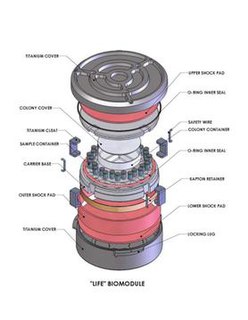
The Living Interplanetary Flight Experiment was an interplanetary mission developed by the Planetary Society. It consisted of sending selected microorganisms on a three-year interplanetary round-trip in a small capsule aboard the Russian Fobos-Grunt spacecraft in 2011, which was a failed sample-return mission to the Martian moon Phobos. The Fobos-Grunt mission failed to leave Earth orbit, and was destroyed.
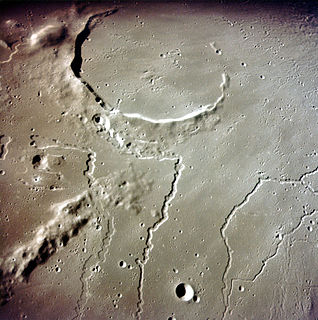
Planetary science is the scientific study of planets, celestial bodies and planetary systems and the processes of their formation. It studies objects ranging in size from micrometeoroids to gas giants, aiming to determine their composition, dynamics, formation, interrelations and history. It is a strongly interdisciplinary field, which originally grew from astronomy and earth science, and now incorporates many disciplines, including planetary geology, cosmochemistry, atmospheric science, oceanography, hydrology, theoretical planetary science, glaciology, and exoplanetology. Allied disciplines include space physics, when concerned with the effects of the Sun on the bodies of the Solar System, and astrobiology.
The following outline is provided as an overview of and topical guide to the Solar System:

Xenocracy is a space simulator developed by Simis Limited and published by Grolier Interactive in 1998. Xenocracy is a cross between a space combat action sim and a political strategy game.
Martyn J. Fogg is a British physicist and geologist, an expert on terraforming.
Gan De is the tentative name for a planned interplanetary mission by China to study the Jupiter system and its environs.

