This page is based on this
Wikipedia article Text is available under the
CC BY-SA 4.0 license; additional terms may apply.
Images, videos and audio are available under their respective licenses.

In Greek mythology, Jocasta, also known as Iocaste or Epicaste, was a daughter of Menoeceus, a descendant of the Spartoi, and queen consort of Thebes. She was the wife of first Laius, then of their son Oedipus, and both mother and grandmother of Antigone, Eteocles, Polynices and Ismene. She was also sister of Creon and mother-in-law of Haimon.

Oedipus at Colonus is one of the three Theban plays of the Athenian tragedian Sophocles. It was written shortly before Sophocles's death in 406 BC and produced by his grandson at the Festival of Dionysus in 401 BC.

The Pterophoridae or plume moths are a family of Lepidoptera with unusually modified wings. Though they belong to the Apoditrysia like the larger moths and the butterflies, unlike these they are tiny and were formerly included among the assemblage called "microlepidoptera".
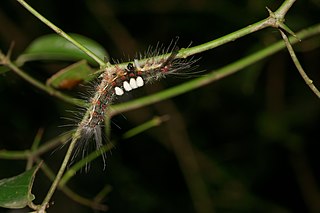
The Lymantriinae are a subfamily of moths of the family Erebidae.
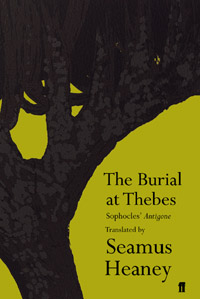
The Burial at Thebes: A version of Sophocles' Antigone is a play by Irish Nobel laureate Seamus Heaney, based on the fifth century BC tragedy Antigone by Sophocles. It is also an opera by Dominique Le Gendre
In Greek mythology, Metope may refer to the following individuals:
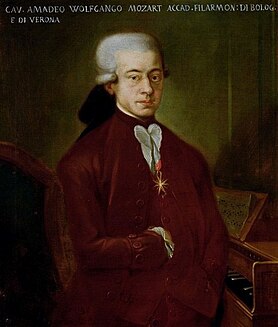
Mitridate, re di Ponto, K. 87 (74a), is an early opera seria in three acts by Wolfgang Amadeus Mozart. The libretto is by Vittorio Amedeo Cigna-Santi, after Giuseppe Parini's Italian translation of Jean Racine's play Mithridate.
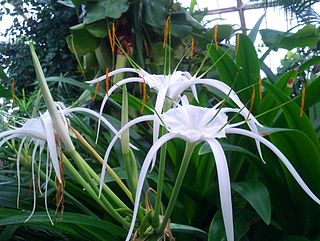
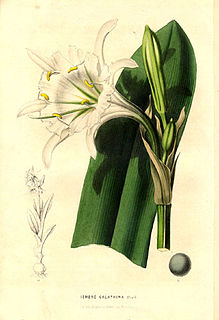
Hymenocallis (US) or (UK) is a genus of American plants in the amaryllis family.
The Pig King is an Italian literary fairy tale written by Giovanni Francesco Straparola in his The Facetious Nights of Straparola. Madame d'Aulnoy wrote a French, also literary, variant, titled Prince Marcassin.

Hypermnestra helios is a species of swallowtail butterfly belonging to the Parnassinae family and is the sole member of the genus Hypermnestra. It is found in Iran, Afghanistan, Pakistan, Turkmenistan, Kirghizstan, Tajikistan, and Uzbekistan. It is locally common in desert habitats.

Antigona (Antigone) is an opera in three acts in Italian by the composer Tommaso Traetta. The libretto, by Marco Coltellini, is based on the tragedy Antigone by Sophocles. But there is also an opera Antigona by Josef Mysliveček.

Hercules and the Conquest of Atalantis is a 1961 film directed by Vittorio Cottafavi and starring Reg Park in his film debut as Ercole/Hercules. It was originally released in Super Technirama 70.
Trichura latifascia is a moth in the subfamily Arctiinae. It was described by Francis Walker in 1854. It is found in Panama, Colombia, French Guiana and Pará, Brazil.

Antigono is a three act opera seria composed by Christoph Willibald Gluck. It premiered February 9, 1756, at the Teatro di Torre Argentina in Rome, Italy. The Italian libretto was written by Pietro Metastasio, who was considered to be the most important opera seria librettist. Antigono was the only opera that Gluck ever premiered in Rome. This allowed him to reuse several arias and an entire introduction from some of his other operas, L’innocenza Giustificata, L’cinesi, and La Danza.
In Greek mythology, Ismene was a daughter of the river-god Asopus by Metope. The blue berries near Thebes were named for her, or for her brother. She was the wife of Argus, eponymous king of Argus and thus, mother of Argus Panoptes and Iasus.