Related Research Articles

Sir Alfred Jules "Freddie" Ayer was an English philosopher known for his promotion of logical positivism, particularly in his books Language, Truth, and Logic (1936) and The Problem of Knowledge (1956).

Immanuel Kant was a German philosopher and one of the central Enlightenment thinkers. Born in Königsberg, Kant's comprehensive and systematic works in epistemology, metaphysics, ethics, and aesthetics have made him one of the most influential and controversial figures in modern Western philosophy. He has been called the "father of modern ethics", the "father of modern aesthetics", and for bringing together rationalism and empiricism, the "father of modern philosophy".
Analytic philosophy is a broad, contemporary movement or tradition within Western philosophy, especially anglophone philosophy, focused on analysis as a philosophical method. It is characterized by a clarity of prose; rigor in arguments; and making use of formal logic and mathematics, and, to a lesser degree, the natural sciences. It is further characterized by an interest in language, semantics and meaning, known as the linguistic turn. It has developed several new branches of philosophy and logic, notably philosophy of language, philosophy of mathematics, philosophy of science, modern predicate logic and mathematical logic.

John Leslie Mackie was an Australian philosopher. He made significant contributions to ethics, the philosophy of religion, metaphysics, and the philosophy of language. Mackie had influential views on metaethics, including his defence of moral scepticism and his sophisticated defence of atheism. He wrote six books. His most widely known, Ethics: Inventing Right and Wrong (1977), opens by boldly stating, "There are no objective values." It goes on to argue that because of this, ethics must be invented rather than discovered.
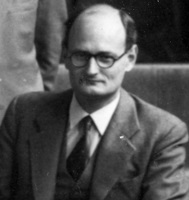
Richard Mervyn Hare, usually cited as R. M. Hare, was a British moral philosopher who held the post of White's Professor of Moral Philosophy at the University of Oxford from 1966 until 1983. He subsequently taught for a number of years at the University of Florida. His meta-ethical theories were influential during the second half of the twentieth century.
Critical thinking is the process of analyzing available facts, evidence, observations, and arguments to make sound conclusions or informed choices. It involves recognizing underlying assumptions, providing justifications for ideas and actions, evaluating these justifications through comparisons with varying perspectives, and assessing their rationality and potential consequences. The goal of critical thinking is to form a judgment through the application of rational, skeptical, and unbiased analyses and evaluation. In modern times, the use of the phrase critical thinking can be traced to John Dewey, who used the phrase reflective thinking, which depends on the knowledge base of an individual; the excellence of critical thinking in which an individual can engage varies according to it. According to philosopher Richard W. Paul, critical thinking and analysis are competencies that can be learned or trained. The application of critical thinking includes self-directed, self-disciplined, self-monitored, and self-corrective habits of the mind, as critical thinking is not a natural process; it must be induced, and ownership of the process must be taken for successful questioning and reasoning. Critical thinking presupposes a rigorous commitment to overcome egocentrism and sociocentrism, that leads to a mindful command of effective communication and problem solving.

Renaissance humanism is a worldview centered on the nature and importance of humanity that emerged from the study of Classical antiquity.
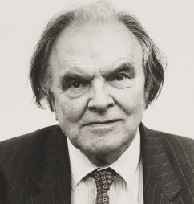
Peter Thomas Geach was a British philosopher who was Professor of Logic at the University of Leeds. His areas of interest were philosophical logic, ethics, history of philosophy, philosophy of religion and the theory of identity.

Ian MacDougall Hacking was a Canadian philosopher specializing in the philosophy of science. Throughout his career, he won numerous awards, such as the Killam Prize for the Humanities and the Balzan Prize, and was a member of many prestigious groups, including the Order of Canada, the Royal Society of Canada and the British Academy.
In most contexts, the concept of good denotes the conduct that should be preferred when posed with a choice between possible actions. Good is generally considered to be the opposite of evil and is of ethics, morality, philosophy, and religion. The specific meaning and etymology of the term and its associated translations among ancient and contemporary languages show substantial variation in its inflection and meaning, depending on circumstances of place and history, or of philosophical or religious context.

Analytical Thomism is a philosophical movement which promotes the interchange of ideas between the thought of Thomas Aquinas, and modern analytic philosophy. It is a branch of analytic scholasticism that draws on other scholastic sources, esp. John Duns Scotus.
Early modern philosophy was a period in the history of philosophy that overlaps with the beginning of the period known as modern philosophy. It succeeded the medieval era of philosophy. Early modern philosophy is usually thought to have occurred between the 16th and 18th centuries, though some philosophers and historians may put this period slightly earlier. During this time, influential philosophers included Descartes, Locke, Hume, and Kant, all of whom contributed to the current understanding of philosophy.
Friedrich Waismann was an Austrian mathematician, physicist, and philosopher. He is best known for being a member of the Vienna Circle and one of the key theorists in logical positivism.
The unity of science is a thesis in philosophy of science that says that all the sciences form a unified whole. The variants of the thesis can be classified as ontological and/or as epistemic/pragmatic. There are also philosophers who emphasize the disunity of science, which does not necessarily imply that there could be no unity in some sense but does emphasize pluralism in the ontology and/or practice of science.

William Ernest Johnson, FBA, usually cited as W. E. Johnson, was a British philosopher, logician and economic theorist. He is mainly remembered for his 3 volume Logic which introduced the concept of exchangeability.
Overlapping consensus is a term coined by John Rawls in A Theory of Justice and developed in Political Liberalism. The term overlapping consensus refers to how supporters of different comprehensive normative doctrines—that entail apparently inconsistent conceptions of justice—can agree on particular principles of justice that underwrite a political community's basic social institutions. Comprehensive doctrines can include systems of religion, political ideology, or morality.

Stephan Körner, FBA was a British philosopher, who specialised in the work of Kant, the study of concepts, and in the philosophy of mathematics.
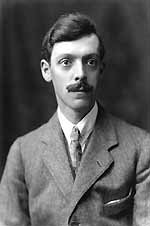
John Anderson was a Scottish philosopher who occupied the post of Challis Professor of Philosophy at Sydney University from 1927 to 1958. He founded the empirical brand of philosophy known as Australian realism.
Darcia Narvaez is a Professor of Psychology Emerita at the University of Notre Dame who has written extensively on issues of character, moral development, and human flourishing.

Exemplarist Moral Theory is a book about moral philosophy by Linda Zagzebski, published in 2017 based on her Gifford Lectures.
References
- ↑ "OBITUARY: John Boyd Wilson (1928–2003)". Journal of Moral Education. 33 (3): 389–393. September 2004. doi:10.1080/0305724042000272877. ISSN 0305-7240.
- ↑ Harrison, John L. (October 1977). "Review Article: John Wilson as moral educator". Journal of Moral Education. 7 (1): 50–63. doi:10.1080/0305724770070106. ISSN 0305-7240.
- ↑ Pring, Richard (2003). "Obituary: John Wilson, 1928–2003". Oxford Review of Education. 29 (4): 421–422. doi:10.1080/0305498032000153007.
| International | |
|---|---|
| National | |

 | This biography article of a United Kingdom academic is a stub. You can help Wikipedia by expanding it. |