
Look up Keres in Wiktionary, the free dictionary.
Keres are female death spirits in Greek mythology.
Keres may also refer to:
Keres are female death spirits in Greek mythology.
Keres may also refer to:


Finno-Ugric is a traditional linguistic grouping of all languages in the Uralic language family except for the Samoyedic languages. Its once commonly accepted status as a subfamily of Uralic is based on criteria formulated in the 19th century and is criticized by some contemporary linguists such as Tapani Salminen and Ante Aikio. The three most spoken Uralic languages, Hungarian, Finnish, and Estonian, are all included in Finno-Ugric.

Hungarian, or Magyar, is a Uralic language of the Ugric branch spoken in Hungary and parts of several neighboring countries. It is the official language of Hungary and one of the 24 official languages of the European Union. Outside Hungary, it is also spoken by Hungarian communities in southern Slovakia, western Ukraine (Transcarpathia), central and western Romania (Transylvania), northern Serbia (Vojvodina), northern Croatia, northeastern Slovenia (Prekmurje), and eastern Austria (Burgenland).

The Uralic languages, sometimes called the Uralian languages, are spoken predominantly in Europe and North Asia. The Uralic languages with the most native speakers are Hungarian, Finnish, and Estonian. Other languages with speakers above 100,000 are Erzya, Moksha, Mari, Udmurt and Komi spoken in the European parts of the Russian Federation. Still smaller minority languages are Sámi languages of the northern Fennoscandia; other members of the Finnic languages, ranging from Livonian in northern Latvia to Karelian in northwesternmost Russia; and the Samoyedic languages, Mansi and Khanty spoken in Western Siberia.
Linda is an English feminine given name, derived from the Spanish word linda, meaning "pretty."

"Õ" (uppercase), or "õ" (lowercase) is a composition of the Latin letter O with the diacritic mark tilde.

Paul Keres was an Estonian chess grandmaster and chess writer. He was among the world's top players from the mid-1930s to the mid-1960s, and narrowly missed a chance at a World Chess Championship match on five occasions. As Estonia was repeatedly invaded and occupied during World War II, Keres was forced by the circumstances to represent the Soviet Union and Nazi Germany (1941–44) in international tournaments.
Uri may refer to:

Turanism, also known as pan-Turanism or pan-Turanianism, is a pan-nationalist political movement built around pseudoscientific claims of biological and linguistic connections between various ethnic groups of Eurasia. It revolves around the abandoned proposal of a Ural-Altaic language family, which hypothesizes that the Turkic, Mongolic, Tungusic, and Uralic peoples share Inner and Central Asian origins and therefore close cultural, ethnic, and linguistic bonds. Supporters of Turanism propose political unity among these groups, chiefly to oppose the cultural and political influences of the Indo-Europeans of Europe and South Asia, as well as the Sino-Tibetans of East Asia. The movement emerged in the 19th century to counter pan-nationalist ideologies such as pan-Germanism, and built upon the ideas of pan-Slavism.
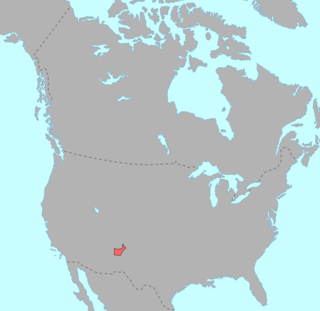
Keres, also Keresan, is a Native American language, spoken by the Keres Pueblo people in New Mexico. Depending on the analysis, Keres is considered a small language family or a language isolate with several dialects. If it is considered a language isolate, it would be the most widely spoken language isolate within the borders of the United States. The varieties of each of the seven Keres pueblos are mutually intelligible with its closest neighbors. There are significant differences between the Western and Eastern groups, which are sometimes counted as separate languages.
International Correspondence Chess Federation (ICCF) was founded on 26 March 1951 as a new appearance of the International Correspondence Chess Association (ICCA), which was founded in 1945, as successor of the Internationaler Fernschachbund (IFSB), founded on 2 December 1928.
Paul Felix Schmidt was an Estonian and German chess player, writer and chemist.

Gunnar Friedemann was an Estonian chess master.
Henrik is a male given name of Germanic origin, primarily used in Scandinavia, Finland, Estonia, Hungary and Slovenia. In Poland, the name is spelt Henryk but pronounced similarly. Equivalents in other languages are Henry (English), Heiki (Estonian), Heikki (Finnish), Henryk (Polish), Hendrik, Heinrich (German), Enrico (Italian), Henri (French), Enrique (Spanish) and Henrique (Portuguese). It means 'Ruler of the home' or 'Lord of the house'.
Feliks (Felix) Kibbermann was an Estonian chess master, philologist of German language, lexicographer and pedagogue.
Ura may refer to:
Harald Keres was an Estonian physicist considered to be the father of the Estonian school of relativistic gravitation theory. In 1961 Keres became a member of the Estonian Academy of Sciences in the field of theoretical physics. In 1996 Keres was awarded the Order of the National Coat of Arms, Class III.
Estonian may refer to:
Kere may refer to: