It is proposed that this article be deleted because of the following concern:
If you can address this concern by improving, copyediting, sourcing, renaming, or merging the page, please edit this page and do so. You may remove this message if you improve the article or otherwise object to deletion for any reason. Although not required, you are encouraged to explain why you object to the deletion, either in your edit summary or on the talk page. If this template is removed, do not replace it . The article may be deleted if this message remains in place for seven days, i.e., after 22:44, 9 January 2019 (UTC). Nominator: Please consider notifying the author/project: {{subst:proposed deletion notify |Kuroda Hidetada|concern=Non-notable samurai; fails [[WP:ANYBIO]]. Original version was sourced to Samurai Wiki, which is... less than optimal. Even if you follow up with their source ([https://wiki.samurai-archives.com/index.php?title=Kuroda_Hidetada]), one source is not enough to maintain an article. The ja.wiki article has a single source, but only used to cite the DOB/DOD - no way to know how in-depth the source is as I can't locate an online copy. Either way, not enough when the individual in question doesn't appear to have a significant claim to meeting ANYBIO.}} ~~~~ |
 | This article has multiple issues. Please help improve it or discuss these issues on the talk page . (Learn how and when to remove these template messages) (Learn how and when to remove this template message)
|


Kuroda Hidetada(黒田 秀忠, 1492–1546) was a Japanese samurai of the Sengoku period who served the Uesugi clan.

Japan is an island country in East Asia. Located in the Pacific Ocean, it lies off the eastern coast of the Asian continent and stretches from the Sea of Okhotsk in the north to the East China Sea and the Philippine Sea in the south.
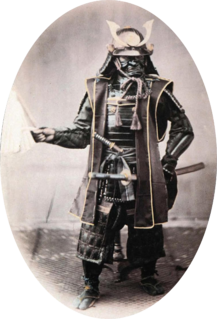
Samurai (侍) were the military nobility and officer caste of medieval and early-modern Japan.
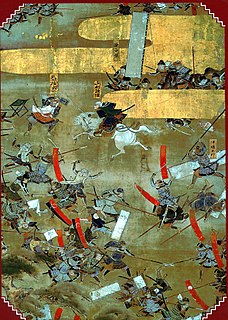
The Sengoku period is a period in Japanese history marked by social upheaval, political intrigue and near-constant military conflict. Japanese historians named it after the otherwise unrelated Warring States period in China. It was initiated by the Ōnin War, which collapsed the Japanese feudal system under the Ashikaga shogunate, and came to an end when the system was re-established under the Tokugawa shogunate by Tokugawa Ieyasu.
 | This article about samurai or samurai-related topic is a stub. You can help Wikipedia by expanding it. |