 List of Independence Day Award recipients |
|---|
 | This article needs additional citations for verification .(January 2021) |
Independence Day Award, Bangladesh's highest civilian honours - Winners, 1990-1999:
List of Independence Day Award recipients |
|---|
| | This article needs additional citations for verification .(January 2021) |
Independence Day Award, Bangladesh's highest civilian honours - Winners, 1990-1999:
Two individuals were awarded.
| Recipients | Area | Note |
|---|---|---|
| Aminul Islam | science and technology | |
| Muhamad Yasin | rural development |
Three individuals were awarded.
| Recipients | Area | Note |
|---|---|---|
| Naeb Subedar Shah Alam | Sports | |
| Shamsur Rahman | Literature | |
| M Innas Ali | Science and technology |
Two individuals and one organization were awarded.
| Recipients | Area | Note |
|---|---|---|
| Bangladesh Rice Research Institute | science and technology | organization |
| Kazi Zaker Husain | education | |
| Zahir Raihan | literature | posthumous |
Five individuals were awarded.
| Recipients | Area | Note |
|---|---|---|
| Qazi Abdul Alim | Sports | |
| Abul Kashem | Education | Posthumous |
| SM Sultan | Fine arts | |
| Jahanara Begum | Rural development | |
| A. Q. M. Badruddoza Chowdhury | Medical science |
Four individuals and one organization were awarded.
| Recipients | Area | Note |
|---|---|---|
| Directorate of the Geological Survey of Bangladesh | science and technology) [1] | organization |
| Ahsan Habib | literature | posthumous |
| Ateequr Rahman | sports | |
| Mobarak Hossain Khan | music | |
| Grameen Bank | rural development | organization |
Seven individuals were awarded.
| Recipients | Area | Note |
|---|---|---|
| Abdullah-Al-Muti | science and technology | |
| Alhaz Moulavi Kazi Ambar Ali | education | |
| Abdul Karim Sahitya Bisharad | literature | posthumous |
| Begum Ferdausi Rahman | music | |
| Begum Syed Iqbal Mand Banu | social service | |
| Zakaria Pintoo | sports | |
| Syed Mohammad Ali | journalism |
Eight individuals were awarded.
| Recipients | Area | Note |
|---|---|---|
| Moulavi Abdul Hashim | literature | |
| Anjuman Mufidul Islam | social work | organization |
| Mohammad Abdul Jabbar | music | |
| Sabina Yasmin | music | |
| Professor A. M. Zahurul Haq | science and technology | |
| Dr. Kazi Abul Monsur | medical science | |
| Kazi Salahuddin | sports | |
| Safiuddin Ahmed | fine arts |
Ten individuals were awarded.
| Recipients | Area | Note |
|---|---|---|
| Munshi Siddique Ahmed | science and technology | |
| Nurul Islam | medical science | |
| Kabir Chowdhury | education | |
| Abdul Matin | education | |
| Sufia Kamal | literature | |
| Shawkat Osman | literature | |
| Abdul Alim | music | posthumous |
| Jahanara Imam | social work | |
| Syed Mohammad Hossein | social work | |
| Dhirendranath Datta | language and independence movements | posthumous |
| Recipients | Area | Note |
|---|---|---|
| Shahidullah Kaiser | literature | posthumous |
| Abdul Mosabber Chowdhury | science and technology | |
| Sheikh Fazilatunnesa Mujib | liberation war | posthumous |
| Syed Nazrul Islam | liberation war | posthumous |
| Tajuddin Ahmed | liberation war | posthumous |
| Captain Mansur Ali | liberation war | posthumous |
| A. H. M. Kamruzzaman | liberation war | posthumous |
| Abdur Rab Serniabat | liberation war | posthumous |
| Sheikh Fazlul Huq Moni | liberation War | posthumous |
| Sheikh Kamal | sports | posthumous |
| Recipients | Area | Note |
|---|---|---|
| Mazharul Islam | architecture | |
| Fazlur Rahman Khan | architecture | posthumous |
| Mohammad Kibria | fine arts | |
| Sikandar Abu Zafar | literature | posthumous |
| Brojen Das | sports | posthumous |
| Begum Badrunnesa Ahmed | social work | |
| Kalim Sharafi | music | |
| A. Q. M. Bazlul Karim | education | |
| A.F.Salahuddin Ahmed | education | |
| Abdus Samad Azad | liberation war | |
| Rashiduddin Ahmad | medical science | |
| A. M. Harun-ar-Rashid | [2] |
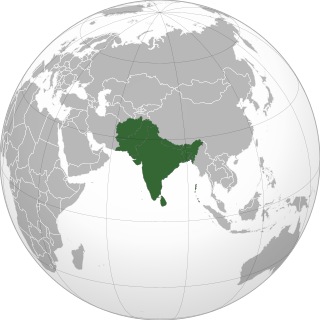
The South Asian Association for Regional Cooperation (SAARC) is the regional intergovernmental organization and geopolitical union of states in South Asia. Its member states are Afghanistan, Bangladesh, Bhutan, India, Maldives, Nepal, Pakistan, and Sri Lanka. SAARC comprises 3% of the world's land area, 21% of the world's population and 5.21% of the global economy, as of 2021.
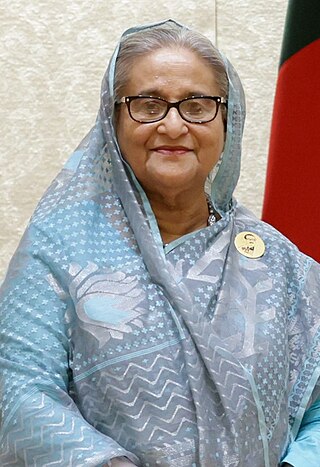
Sheikh Hasina is a Bangladeshi politician who served as the tenth prime minister of Bangladesh from June 1996 to July 2001 and again from January 2009 to August 2024. She is the daughter of Sheikh Mujibur Rahman, the first president of Bangladesh. She served in the position of prime minister for over 20 years, making her the longest-serving prime minister in history of Bangladesh. Thus, she became the world's longest-serving female head of government. Her authoritarian regime ended in self-imposed exile following an uprising in 2024.

The Bangladesh men's national cricket team, popularly known as The Tigers, is administered by the Bangladesh Cricket Board (BCB). It is a Full Member of the International Cricket Council (ICC) with Test, One-Day International (ODI) and Twenty20 International (T20I) status.

Banglapedia:theNational Encyclopedia of Bangladesh is the first Bangladeshi encyclopedia. It is available in print, CD-ROM format and online, in both Bengali and English. The print version comprises fourteen 500-page volumes. The first edition was published in January 2003 in ten volumes by the Asiatic Society of Bangladesh. with a plan to update it every two years. The second edition was issued in 2012 in fourteen volumes.

Humanists International is an international non-governmental organisation championing secularism and human rights, motivated by secular humanist values. Founded in Amsterdam in 1952, it is an umbrella organisation made up of more than 160 secular humanist, atheist, rationalist, agnostic, skeptic, freethought and Ethical Culture organisations from over 80 countries.

Ekushey Padak is the second highest civilian award in Bangladesh, introduced in memory of the martyrs of the Bengali Language Movement of 1952. The award is given to recognize contributions in a number of fields, including culture, education, and economics. The Ministry of Cultural Affairs administers the award.

The Grameen family of organizations has grown beyond Grameen Bank into a multi-faceted group of both commercial and non-profit ventures. It was first established by Muhammad Yunus, the Nobel Peace Prize-winning founder of Grameen Bank. Most of the organizations in the Grameen group have central offices at the Grameen Bank Complex in Mirpur, Dhaka, Bangladesh. The Grameen Bank started to diversify in the late 1980s when it began attending to unutilized or underutilized fishing ponds, as well as irrigation pumps like deep tubewells. In 1989, these diversified interests started growing into separate organizations, as the fisheries project became Grameen Fisheries Foundation and the irrigation project became Grameen Krishi Foundation.

The Bangladesh Armed Forces and the Bangladesh Police have been actively involved in a number of United Nations Peace Support Operations (UNPSO) since 1988. As of 2024, Bangladesh is the largest contributor in the UN peacekeeping missions.
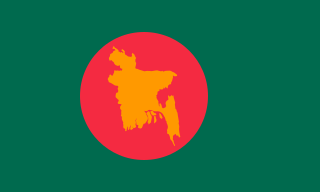
Independence Day is celebrated on 26 March as a national holiday in Bangladesh. It commemorates the country's declaration of independence from Pakistan in the early hours of 26 March 1971.
Bangladeshis in Malaysia are members of the Bangladesh diaspora who currently reside in Malaysia. Bangladeshis in Malaysia form a large proportion of Malaysia's foreign labour force. Their population was estimated to total 221,000 persons, roughly one-eighth of all the foreign workers in Malaysia as of 2017. In early 2016, a controversial agreement by Bangladeshi Prime Minister Sheikh Hasina was signed to send a total of 1.5 million Bangladeshi workers in stages for 3 years to Malaysia. This decision was met with criticism from both individuals in government and the general Malaysian public and was quickly revoked.

The National Security Intelligence, commonly known as the NSI, is the principal civilian intelligence agency of Bangladesh. The NSI's headquarters is in Segunbagicha, Dhaka. The NSI is the leading body of the Government of Bangladesh in the field of internal security, counter terrorism, counter intelligence and foreign intelligence. NSI is the largest among the intelligence agencies in Bangladesh, the others being the Directorate General of Forces Intelligence (DGFI), SB, CID, PBI and intelligence directorates of armed and paramilitary forces. The agency stands under the direct authority of the Prime Minister of Bangladesh.
The Global Health Council is a United States–based non-profit networking organization "supporting and connecting advocates, implementers and stakeholders around global health priorities worldwide". The Council is the world's largest membership alliance dedicated to advancing policies and programs that improve health around the world. The Council serves and represents thousands of public health professionals from over 150 countries. They work "to improve health globally through increased investment, robust policies and the power of the collective voice.": According to their website the Council "convenes stakeholders around key global health priorities and actively engages key decision makers to influence health policy."
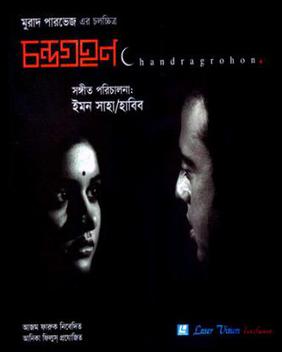
Chandragrohon: The Lunar Eclipse is a Bangladeshi film based on a short story written by Indian Bengali author Syed Mustafa Siraj. The film was released 2008 and younger director Murad Parvez first time directed the film. The film features Riaz, Sohana Saba, and Champa in lead roles along with Shahiduzzaman Selim, KS Firoz, Dilara Zaman, Kohinur, Gazi Rakayet, Azom Faruk and Kazi Riton in supporting roles. In 2008, the film won three National Film Awards and including other four awards.
Islamic Help is a UK based charity that was founded in 2003 and works both internationally and within the UK. According to their registration with the UK Charity Commission, “Islamic Help provides humanitarian assistance all around the world. Support is also provided to the needy, widows, victims of emergency natural/manmade disasters and homelessness in the UK”. Islamic help characterizes itself by its ability to inspire, motivate, and mobilize young individuals wishing to provide assistance to disaster stricken communities.
Deaths along the Bangladesh–India border occur many times a year as result of people attempting to illegally cross into India from Bangladesh, for walking along the border, cross border firing and cattle smuggling. Bangladesh and India share a 4,096 kilometer border. To prevent smuggling and illegal migration from Bangladesh, the Indian Border Security Force exercises its controversial "Shoot-on-sight" policy. Under this policy, the BSF can shoot any person on sight with or without cause. A large portion of the victims are cattle traders and farmers with land near the border. Brad Adams, stated that, "Routinely shooting poor, unarmed villagers is not how the world's largest democracy should behave."
The Bangladesh National Film Award for Best Dialogue is one of the most honourable film awards in Bangladesh. Since 1978, the awards have been given for best dialogue. The first award winner was Subhash Dutta.