The name Gonzalo has been used for two tropical cyclones in the Atlantic Ocean. The name replaced the name Gustav, which was retired after the 2008 hurricane season.
The name Olivia has been used for ten tropical cyclones in the Eastern Pacific Ocean.
The name Tina has been used for five tropical cyclones worldwide:
Tropical Storm Ophelia may refer to:
The 2014 Atlantic hurricane season was a below-average hurricane season in terms of named storms and major hurricanes, though average in terms of number of hurricanes overall. It produced nine tropical cyclones, eight of which became named storms; six storms became hurricanes and two intensified further into major hurricanes. The season officially began on June 1, and ended on November 30. These dates historically describe the period each year when most tropical cyclones form in the Atlantic basin. The first storm of the season, Arthur, developed on July 1, while the final storm, Hanna, dissipated on October 28, about a month prior to the end of the season. 2014 is the most recent year with a below average number of named Atlantic storms.
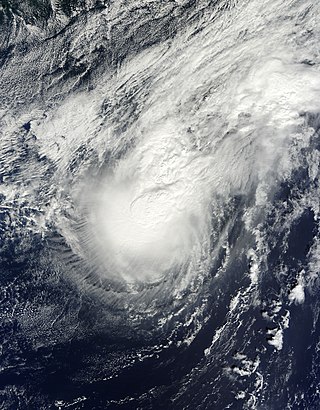
Hurricane Gonzalo was the second tropical cyclone, after Hurricane Fay, to directly strike the island of Bermuda in a one-week time frame in October 2014, and was the first Category 4 Atlantic hurricane since Hurricane Ophelia in 2011. At the time, it was the strongest hurricane in the Atlantic since Igor in 2010. Gonzalo struck Bermuda less than a week after the surprisingly fierce Hurricane Fay; 2014 was the first season in recorded history to feature two hurricane landfalls in Bermuda. A powerful Atlantic tropical cyclone that wrought destruction in the Leeward Islands and Bermuda, Gonzalo was the seventh named storm, sixth and final hurricane and only the second major hurricane of the below-average 2014 Atlantic hurricane season. The storm formed from a tropical wave on October 12, while located east of the Lesser Antilles. It made landfall on Antigua, Saint Martin, and Anguilla as a Category 1 hurricane, causing damage on those and nearby islands. Antigua and Barbuda sustained US$40 million in losses, and boats were abundantly damaged or destroyed throughout the northern Leeward Islands. The storm killed three people on Saint Martin and Saint Barthélemy. Gonzalo tracked northwestward as it intensified into a major hurricane. Eyewall replacement cycles led to fluctuations in the hurricane's structure and intensity, but on October 16, Gonzalo peaked with maximum sustained winds of 145 mph (235 km/h).
Hurricane Fay was the first hurricane to make landfall on Bermuda since Emily in 1987. The sixth named storm and fifth hurricane of the 2014 Atlantic hurricane season, Fay evolved from a broad disturbance several hundred miles northeast of the Lesser Antilles on October 10. Initially a subtropical cyclone with an expansive wind field and asymmetrical cloud field, the storm gradually attained tropical characteristics as it turned north, transitioning into a tropical storm early on October 11.