
Look up lockbox in Wiktionary, the free dictionary.
A lockbox or lock box refers to a box, container or otherwise enclosed space with a built-in lock. Examples include:
A lockbox or lock box refers to a box, container or otherwise enclosed space with a built-in lock. Examples include:

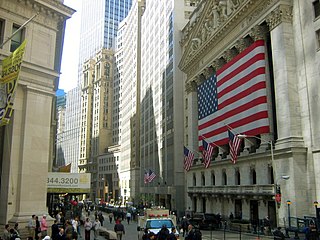
Factoring is a financial transaction and a type of debtor finance in which a business sells its accounts receivable to a third party at a discount. A business will sometimes factor its receivable assets to meet its present and immediate cash needs. Forfaiting is a factoring arrangement used in international trade finance by exporters who wish to sell their receivables to a forfaiter. Factoring is commonly referred to as accounts receivable factoring, invoice factoring, and sometimes accounts receivable financing. Accounts receivable financing is a term more accurately used to describe a form of asset based lending against accounts receivable. The Commercial Finance Association is the leading trade association of the asset-based lending and factoring industries.

A box is a container used for the storage or transportation of its contents. Most boxes have flat, parallel, rectangular sides. Boxes can be very small or very large, and can be used for a variety of purposes from functional to decorative.
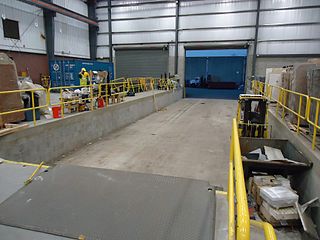
A warehouse is a building for storing goods. Warehouses are used by manufacturers, importers, exporters, wholesalers, transport businesses, customs, etc. They are usually large plain buildings in industrial parks on the outskirts of cities, towns, or villages.

A safe is a secure lockable box used for securing valuable objects against theft or fire. A safe is usually a hollow cuboid or cylinder, with one face being removable or hinged to form a door. The body and door may be cast from metal or formed out of plastic through blow molding. Bank teller safes typically are secured to the counter, have a slit opening for dropping valuables into the safe without opening it, and a time-delay combination lock to foil thieves. One significant distinction between types of safes is whether the safe is secured to a wall or structure or if it can be moved around. A less secure version is usually called a cash-box.
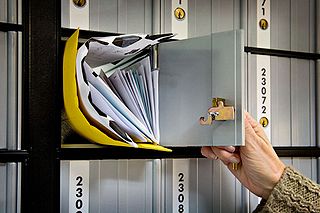
A post office box is a uniquely addressable lockable box located on the premises of a post office.

A bank vault is a secure space where money, valuables, records, and documents are stored. It is intended to protect their contents from theft, unauthorized use, fire, natural disasters, and other threats, much like a safe. Unlike safes, vaults are an integral part of the building within which they are built, using armored walls and a tightly fashioned door closed with a complex lock.

A safe deposit box, also known as a safety deposit box, is an individually secured container, usually held within a larger safe or bank vault. Safe deposit boxes are generally located in banks, post offices or other institutions. Safe deposit boxes are used to store valuable possessions, such as gemstones, precious metals, currency, marketable securities, luxury goods, important documents, or computer data, which need protection from theft, fire, flood, tampering, or other perils. In the United States, neither banks nor the FDIC insure the contents. An individual can purchase separate insurance for the safe deposit box in order to cover e.g. theft, fire, flooding or terrorist attacks.

Safe-cracking is the process of opening a safe without either the combination or the key.

A Knox Box is a small, wall-mounted safe that holds building keys for fire departments, emergency medical services, and sometimes police to retrieve in emergency situations. The term "Knox-Box" is a brand name for such products produced by the American company Knox Associates, which does business as The Knox Company. The Knox Box is part of a line of security-related products marketed as the Knox Rapid Access System.
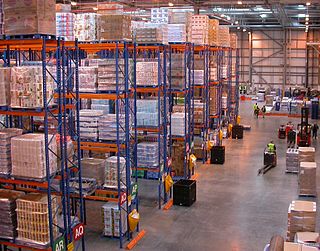
A distribution center for a set of products is a warehouse or other specialized building, often with refrigeration or air conditioning, which is stocked with products (goods) to be redistributed to retailers, to wholesalers, or directly to consumers. A distribution center is a principal part, the order processing element, of the entire order fulfillment process. Distribution centers are usually thought of as being demand driven. A distribution center can also be called a warehouse, a DC, a fulfillment center, a cross-dock facility, a bulk break center, and a package handling center. The name by which the distribution center is known is commonly based on the purpose of the operation. For example, a "retail distribution center" normally distributes goods to retail stores, an "order fulfillment center" commonly distributes goods directly to consumers, and a cross-dock facility stores little or no product but distributes goods to other destinations.

Self storage is an industry that rents storage space, also known as "storage units," to tenants, usually on a short-term basis. Self-storage tenants include businesses and individuals.
Cash management refers to a broad area of finance involving the collection, handling, and usage of cash. It involves assessing market liquidity, cash flow, and investments.
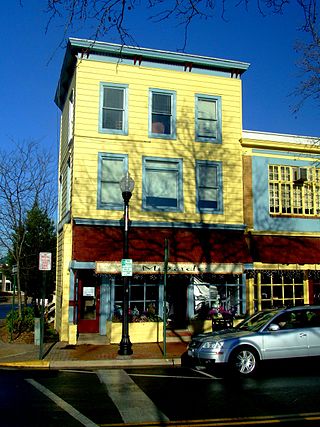
Commercial property, also called commercial real estate, investment property or income property, is real estate intended to generate a profit, either from capital gains or rental income. Commercial property includes office buildings, medical centers, hotels, malls, retail stores, multifamily housing buildings, farm land, warehouses, and garages. In many states, residential property containing more than a certain number of units qualifies as commercial property for borrowing and tax purposes.
Physical information security is the intersection, the common ground between physical security and information security. It primarily concerns the protection of tangible information-related assets such as computer systems and storage media against physical, real-world threats such as unauthorized physical access, theft, fire and flood. It typically involves physical controls such as protective barriers and locks, uninterruptible power supplies, and shredders. Information security controls in the physical domain complement those in the logical domain, and procedural or administrative controls.
In banking, a lockbox is a service offered to organizations by commercial banks to simplify collection and processing of accounts receivable by having those organizations' customers' payments mailed directly to a location accessible by the bank.

A gun safe is a safe designed for storing one or more firearms and/or ammunitions. Gun safes are primarily used to prevent access by unauthorized or unqualified persons, for burglary protection and, in more capable safes, to protect the contents from damage by flood, fire or other natural disasters.

A locker is a small, usually narrow storage compartment. They are commonly found in dedicated cabinets, very often in large numbers, in various public places such as locker rooms, workplaces, elementary schools,middle and high schools, transport hubs and the like. They vary in size, purpose, construction, and security.
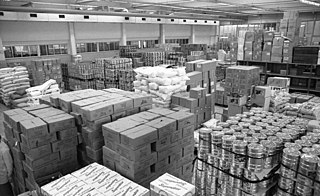
Food storage containers are widespread in use throughout the world and have probably been in use since the first human civilizations.

A real-estate lock box is a padlock-shaped box that generally hangs around the doorknob of a house that is on the market. The device holds the keys to a house to allow communal access for all real estate agents, while continuing to keep them secure. Permission is generally required from the seller, who is the owner, to install such a device on the door. Lock boxes can also be used for the general storage and security of keys for the use of familial access.