The University for Peace (UPEACE) is an intergovernmental organization with university status, established by treaty at the United Nations General Assembly in 1980 and having its main campus in Costa Rica. Its stated mission is "to provide humanity with an international institution of higher education for peace with the aim of promoting among all human beings the spirit of understanding, tolerance and peaceful coexistence, to stimulate cooperation among peoples and to help lessen obstacles and threats to world peace and progress, in keeping with the noble aspirations proclaimed in the Charter of the United Nations."

The University of Florida is an American public land-grant, sea-grant, and space-grant research university in Gainesville, Florida, United States. It is a senior member of the State University System of Florida. The university traces its origins to 1853 and has operated continuously on its Gainesville campus since September 1906.
Florida State University is a public space-grant and sea-grant research university in Tallahassee, Florida. It is a senior member of the State University System of Florida. Founded in 1851, it is located on the oldest continuous site of higher education in the state of Florida.
The Fulbright Program, including the Fulbright–Hays Program, is one of several United States Cultural Exchange Programs whose goal is to improve intercultural relations, cultural diplomacy, and intercultural competence between the people of the United States and other countries through the exchange of persons, knowledge, and skills. It is one of the most prestigious and competitive fellowship programs in the world. Via the program, competitively-selected American citizens including students, scholars, teachers, professionals, scientists and artists may receive scholarships or grants to study, conduct research, teach, or exercise their talents abroad; and citizens of other countries may qualify to do the same in the United States of America. The program was founded by United States Senator J. William Fulbright in 1946 and is considered to be one of the most widely recognized and prestigious scholarships in the world. The program provides 8,000 grants annually.
College and university rankings are rankings of institutions in higher education which have been ranked on the basis of various combinations of various factors. None of the rankings give a comprehensive overview of the strengths of the institutions ranked because all select a range of easily quantifiable characteristics to base their results on. Rankings have most often been conducted by magazines, newspapers, websites, governments, or academics. In addition to ranking entire institutions, organizations perform rankings of specific programs, departments, and schools. Various rankings consider combinations of measures of funding and endowment, research excellence and/or influence, specialization expertise, admissions, student options, award numbers, internationalization, graduate employment, industrial linkage, historical reputation and other criteria. Various rankings mostly evaluating on institutional output by research. Some rankings evaluate institutions within a single country, while others assess institutions worldwide. The subject has produced much debate about rankings' usefulness and accuracy. The expanding diversity in rating methodologies and accompanying criticisms of each indicate the lack of consensus in the field. Further, it seems possible to game the ranking systems through excessive self-citations or by researchers supporting each other in surveys. UNESCO has questioned whether rankings "do more harm than good", while acknowledging that "Rightly or wrongly, they are perceived as a measure of quality and so create intense competition between universities all over the world".

The United Nations Research Institute for Social Development (UNRISD) is "an autonomous research institute within the United Nations that undertakes multidisciplinary research and policy analysis on the social dimensions of contemporary development issues”. UNRISD was established in 1963 with the mandate of conducting policy-relevant research on social development that is pertinent to the work of the United Nations Secretariat, regional commissions and specialized agencies, and national institutions.
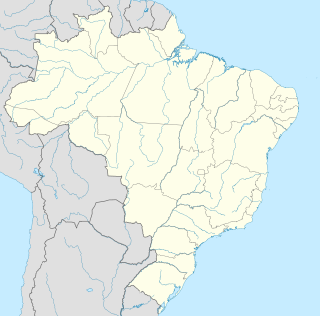
Escola Americana do Rio de Janeiro is a twin-campus international school located in Rio de Janeiro, Brazil. The school was founded in 1937 as a private, independent, coeducational, non-denominational day school. EARJ offers an educational program from Nursery through Grade 12 for students of all nationalities. In 2017-18, enrolment was 1,100 students across the Gávea and Barra campuses with 154 members of teaching faculty.

The University of South Florida (USF) is a public research university in Tampa, Florida. It is a member institution of the State University System of Florida. Founded in 1956, USF is the fourth-largest public university in the state of Florida, with an enrollment of 50,755 as of the 2018–2019 academic year. The USF system has three institutions: USF Tampa, USF St. Petersburg and USF Sarasota-Manatee. Each institution is separately accredited by the Commission on Colleges of the Southern Association of Colleges and Schools. The university is home to 14 colleges, offering more than 80 undergraduate majors and more than 130 graduate, specialist, and doctoral-level degree programs.
The Council for Higher Education Accreditation (CHEA) is a United States organization of degree-granting colleges and universities. It identifies its purpose as providing national advocacy for self-regulation of academic quality through accreditation in order to certify the quality of higher education accrediting organizations, including regional, faith-based, private, career, and programmatic accrediting organizations.

Regional accreditation is the educational accreditation of schools, colleges, and universities in the United States by one of seven regional accrediting agencies. Accreditation is a voluntary process by which colleges demonstrate to each other, and sometimes to employers and licensing agencies, that their credits and degrees meet minimum standards. It is the self-regulation of the higher education industry.

The Institute of Food and Agricultural Sciences (IFAS) is an agriculture, life science, pathogen, and invasive species research facility in Florida affiliated with University of Florida. It is a partnership between federal, state, and county governments that includes an extension office in each of Florida's 67 counties, 13 research and education centers, several demonstration sites, the University of Florida College of Agricultural and Life Sciences, the Center for Tropical Agriculture, portions of the University of Florida College of Veterinary Medicine, the Florida Sea Grant program, and the International Program for Food, Agriculture and Natural Resources.

EUCLID, also called Pôle Universitaire Euclide or Euclid University, is an international intergovernmental organization with a university charter established in 2008. It has official headquarters in The Gambia and in the Central African Republic, but also maintains an executive office in Washington, D.C. Its primary mandate is to train officials for its Participating States but its programs are also offered to the general public.
The United Nations Educational, Scientific and Cultural Organization is a specialized agency of the United Nations (UN) based in Paris, France. Its declared purpose is to contribute to promoting international collaboration in education, sciences, and culture in order to increase universal respect for justice, the rule of law, and human rights along with fundamental freedom proclaimed in the United Nations Charter. It is the successor of the League of Nations' International Committee on Intellectual Cooperation.

The history of the University of Florida is firmly tied to the history of public education in the state of Florida. The University of Florida originated as several distinct institutions that were consolidated to create a single state-supported university by the Buckman Act of 1905. The earliest of these was the East Florida Seminary, one of two seminaries of higher learning established by the Florida Legislature. The East Florida Seminary opened in 1853, becoming the first state-supported institution of higher learning in the state of Florida; the University of Florida traces its founding date to that year.
Higher education accreditation in the United States is a peer review process coordinated by accreditation commissions and member institutions. It was first undertaken in the late 19th century by cooperating educational institutions.
The United Nations Academic Impact, also known by its acronym UNAI, is a United Nations initiative to align institutions of higher education, scholarship and research with the United Nations and with each other.
Logos University, formerly known as Logos Christian College and Graduate School, is an interdenominational and non-sectarian institution in Jacksonville, Florida offering academic degree programs designed to prepare men and women for professional service in Christian ministry using distance learning.