The Grand Ducal Family of Luxembourg constitutes the House of Luxembourg-Nassau, headed by the sovereign Grand Duke, and in which the throne of the grand duchy is hereditary. It consists of heirs and descendants of the House of Nassau-Weilburg, whose sovereign territories passed cognatically from the House of Nassau to a cadet branch of the House of Bourbon-Parma, itself a branch of the Spanish Royal House which is agnatically a cadet branch of the House of Capet that originated in France. This is descended from the Capetian dynasty – itself a derivative dynasty from the Robertians.

Louis Philippe d'Orléans known as le Gros, was a French prince, a member of a cadet branch of the House of Bourbon, the dynasty then ruling France. The First Prince of the Blood after 1752, he was the most senior male at the French court after the immediate royal family. He was the father of Philippe Égalité. He greatly augmented the already huge wealth of the House of Orléans.
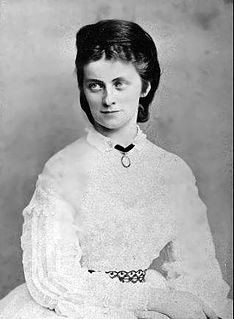
Duchess Sophie Charlotte Augustine in Bavaria was a granddaughter-in-law of King Louis Philippe of France, the favourite sister of Empress Elisabeth of Austria and fiancée of King Ludwig II of Bavaria.

William IV reigned as the Grand Duke of Luxembourg from 17 November 1905 until his death. He succeeded his father, Adolphe.

Marie-Adélaïde, reigned as Grand Duchess of Luxembourg from 1912 until her abdication in 1919. She was the first Grand Duchess regnant of Luxembourg, its first female monarch since Duchess Maria Theresa and the first Luxembourgish monarch to be born within the territory since Count John the Blind (1296–1346).

Maria Amalia Teresa of Naples and Sicily was a French queen by marriage to Louis Philippe I, King of the French.

Marie Adélaïde of Savoy was the wife of Louis, Dauphin of France, Duke of Burgundy. She was the eldest daughter of Victor Amadeus II, Duke of Savoy, and of Anne Marie d'Orléans. Her betrothal to the Duke of Burgundy in June 1696 was part of the Treaty of Turin, signed on 29 August 1696. She was the mother of the future King Louis XV of France. Styled as Duchess of Burgundy after her marriage, she became Dauphine of France upon the death of her father-in-law, Le Grand Dauphin, in 1711. She died of measles in 1712, followed by her husband a week later.
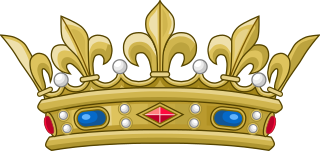
Fils de France was the style and rank held by the sons of the kings and dauphins of France. A daughter was known as a fille de France.

Princess Victoria of Saxe-Coburg and Gotha was the daughter of Prince Ferdinand of Saxe-Coburg and Gotha and Princess Maria Antonia Koháry. Her father was the second son of Francis, Duke of Saxe-Coburg-Saalfeld and Countess Augusta Reuss of Ebersdorf.
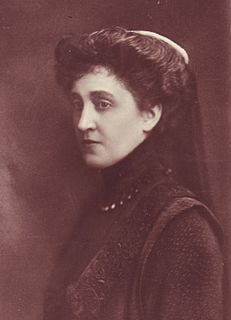
Infanta Marie Anne of Portugal was Grand Duchess of Luxembourg as the wife of Grand Duke Guillaume IV and the country's regent in the name of their daughter, Grand Duchess Marie-Adélaïde. She was a member of the House of Braganza.

Louise Marie Adélaïde de Bourbon-Penthièvre, Duchess of Orléans, was the daughter of Louis Jean Marie de Bourbon, Duke of Penthièvre and of Princess Maria Theresa Felicitas of Modena. At the death of her brother, Louis Alexandre de Bourbon-Penthièvre, prince de Lamballe, she became the wealthiest heiress in France prior to the French Revolution. She married Louis Philippe II, Duke of Orléans, the "regicide" Philippe Égalité, and was the mother of France's last king, Louis Philippe I, King of the French. She was sister-in-law to the princesse de Lamballe, and was the last member of the Bourbon-Penthièvre family.

Charlotte Aglaé d'Orléans, was the Duchess of Modena and Reggio by marriage. She was the third daughter of Philippe II, Duke of Orléans, and of his wife, Françoise-Marie de Bourbon. She was born a princesse du sang. She had ten children.
Louise-Marie or Louise Marie may refer to:

Françoise Marie de Bourbon, légitimée de France was the youngest illegitimate daughter of Louis XIV of France and his maîtresse-en-titre, Françoise-Athénaïs de Rochechouart, Marquise de Montespan. At the age of 14, she was wed to her first cousin Philippe d'Orléans, future Regent of France during the minority of Louis XV. Through two of the eight children she bore him in an unhappy marriage she became the ancestress of several of Europe's Roman Catholic monarchs of the 19th and 20th centuries, notably those of Belgium, Italy, Portugal, Spain, and France.
Mary Adelaide may refer to:

Marie Louise Élisabeth d'Orléans, Duchess of Berry, known affectionally with the moniker Joufflotte, was a member of the House of Orléans who married Charles, Duke of Berry.

Louise Adélaïde d'Orléans was the third daughter of Philippe d'Orléans, and Françoise Marie de Bourbon, a legitimised daughter of Louis XIV of France and his mistress, Madame de Montespan. She was Abbess of Chelles.

Maria Fortunata d'Este was a Modenese princess by birth and a princess du sang by marriage. By her marriage to Louis François Joseph, Prince of Conti, her first cousin, she became the Countess of La Marche and later the Princess of Conti; and was a member of the French court of King Louis XV and King Louis XVI. She was the last Princess of Conti, and died without issue.

Françoise Madeleine d'Orléans was born a Princess of France and was the Duchess of Savoy as the first wife of Charles Emmanuel II. She was a first cousin of Louis XIV as well of her husband. She was the shortest-serving Savoyard consort, dying at the age of fifteen, childless.

The Royal Chapel of Dreux situated in Dreux, France, is the traditional burial place of members of the House of Orléans. It is an important early building in the French adoption of Gothic Revival architecture, despite being topped by a dome. Starting in 1828, Alexandre Brogniart, the director of the Sèvres porcelain manufactory, produced fired enamel paintings on large panes of plate glass, for King Louis-Philippe, an important early French commission in Gothic taste, preceded mainly by some Gothic features in a few jardins paysagers.
