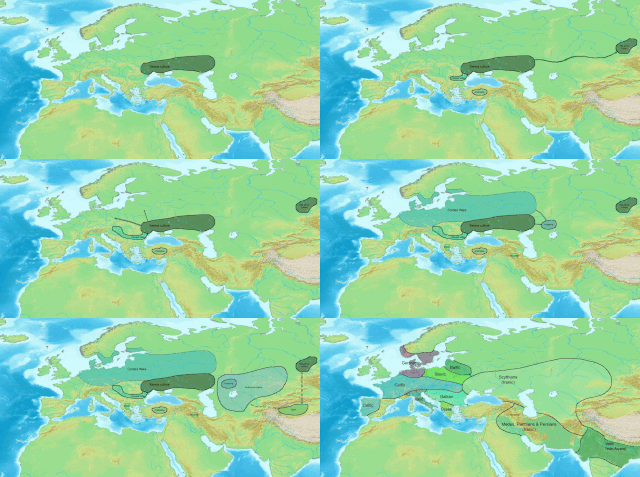
Dacian is an extinct language, generally believed to be a member of the Indo-European family, that was spoken in the Carpathian region in antiquity. In the 1st century, it was probably the predominant language of the ancient regions of Dacia and Moesia and possibly of some surrounding regions. The language was extinct by the 4th century AD.
Dacian, Geto-Dacian, Daco-Getic or Daco-Getian often refers to something of or relating to:

Motru is a city in Romania, Gorj County. It is situated on the river Motru in western Oltenia. The county capital Târgu Jiu is located about 35 km northeast. The city administers eight villages: Dealu Pomilor, Horăști, Însurăței, Leurda, Lupoița, Ploștina, Roșiuța and Râpa.

The Getae or Gets were a Thracian-related tribe that once inhabited the regions to either side of the Lower Danube, in what is today northern Bulgaria and southern Romania. Both the singular form Get and plural Getae may be derived from a Greek exonym: the area was the hinterland of Greek colonies on the Black Sea coast, bringing the Getae into contact with the ancient Greeks from an early date. Although it is believed that the Getae were related to their westward neighbours, the Dacians, several scholars, especially in the Romanian historiography, posit that the Getae and the Dacians were the same people.

The Arieș is a left tributary of the river Mureș in Transylvania, Romania. It discharges into the Mureș in Gura Arieșului, 11 km (6.8 mi) southwest of Luduș. Its total length is 166 km (103 mi), and its drainage basin area is 3,005 km2 (1,160 sq mi).

Argedava was an important Dacian town mentioned in the Decree of Dionysopolis (48 BC), and potentially located at Popești, a district in the town of Mihăilești, Giurgiu County, Muntenia, Romania.
Brebina may refer to the following places in Romania:
Ploștina may refer to several places in Romania:

The Motru is a right tributary of the river Jiu in Southwestern Romania. It discharges into the Jiu in Gura Motrului, near the town Filiași. Its length is 134 km (83 mi) and its hydrological basin size is 1,895 km2 (732 sq mi).
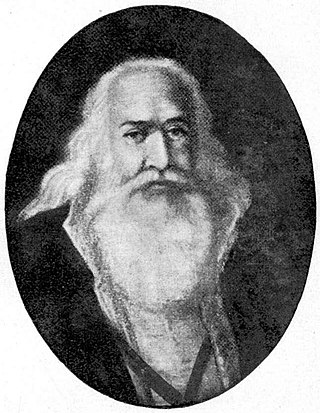
Eufrosin Poteca was a Romanian philosopher, theologian, and translator, professor at the Saint Sava Academy of Bucharest. Later in life he campaigned against slavery. He was the grandfather of the Romanian philosopher Constantin Rădulescu-Motru.

Orbeni is a commune in Bacău County, Western Moldavia, Romania. It is composed of two villages, Orbeni and Scurta.

Butoiești is a commune located in Mehedinți County, Oltenia, Romania. It is composed of eight villages: Argineşti, Butoiești, Buicești, Gura Motrului, Jugastru, Pluta, Răduțești and Țânțaru.

Argidava was a Dacian fortress town close to the Danube, inhabited and governed by the Albocense. Located in today's Vărădia, Caraș-Severin County, Romania.
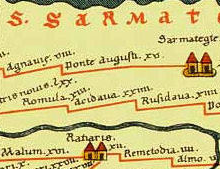
Acidava (Acidaua) was a Dacian and later Roman fortress on the Olt river near the lower Danube. The settlements remains are located in today's Enoşeşti, Olt County, Oltenia, Romania.
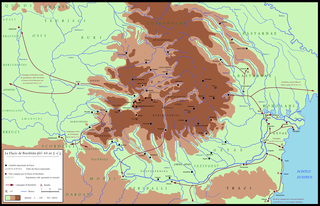
Dava was a Geto-Dacian name for a city, town or fortress. Generally, the name indicated a tribal center or an important settlement, usually fortified. Some of the Dacian settlements and the fortresses employed the Murus Dacicus traditional construction technique.
The Decree of Dionysopolis was written around 48 BC by the citizens of Dionysopolis to Akornion, who traveled far away in a diplomatic mission to meet somebody's farther in Argedauon. The decree, a fragmentary marble inscription, is located in the National Historical Museum in Sofia.
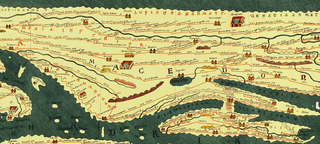
Amutria was a Dacian town close to the Danube and included in the Roman road network, after the conquest of Dacia.

Cumidava was originally a Dacian settlement, and later a Roman military camp on the site of the modern city of Râşnov in Romania.
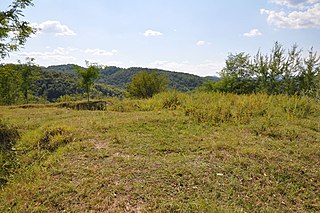
Buridava (Burridava) was a Dacian town. situated in Dacia, later Dacia Apulensis, now Romania, on the banks of the river Aluta, now Olt.
