
The Sudetendeutsches Freikorps was a paramilitary Nazi organization founded on 17 September 1938 in Germany on direct order of Adolf Hitler. The organization was composed mainly of ethnic German citizens of Czechoslovakia with pro-Nazi sympathies who were sheltered, trained and equipped by the German army and who were conducting cross border terrorist operations into Czechoslovak territory from 1938 to 1939. They played an important role in Hitler's successful effort to occupy Czechoslovakia and annex the region known as Sudetenland into the Third Reich under Nazi Germany.

Javorník is a town in Jeseník District in the Olomouc Region of the Czech Republic. It has about 2,700 inhabitants. The historic town centre is well preserved and is protected by law as an urban monument zone.

Sokolov is a town in the Karlovy Vary Region of the Czech Republic. It has about 22,000 inhabitants.

Poděbrady is a spa town in Nymburk District in the Central Bohemian Region of the Czech Republic. It has about 14,000 inhabitants. It lies on the river Elbe. The town centre is well preserved and is protected by law as an urban monument zone.

Zlaté Hory is a town in Jeseník District in the Olomouc Region of the Czech Republic. It has about 3,600 inhabitants. The historic town centre is well preserved and is protected by law as an urban monument zone.

Hnutí Brontosaurus is a large nature conservation group in the Czech Republic concentrated on the youth. Brontosaurus was founded in 1974, being the first such an organization in Czechoslovakia. It was named after Brontosaurus, name which was at the time widely used as a synonym for dinosaur among the Czechs. The chosen name was to remind the fate of dinosaurs, which died out during the Cretaceous–Paleogene extinction event.

Jeseník District is a district (okres) in the Olomouc Region of the Czech Republic. Its seat is the town of Jeseník. With approximately 38,000 inhabitants it is the least populated district of the Czech Republic.

Moravian traditional music or Moravian folk music represents a part of the European musical culture connected with the Moravian region of the Czech Republic. Styles of Moravian traditional music vary by location and subject, but much of it is characterized by a specific melodic and harmonic texture related to the Eastern European musical world. According to Czech musicologist Jiří Plocek, Moravia is the area where the European East musically meets the West.

Jindřich Štreit is a Czech photographer and pedagogue known for his documentary photography. He concentrates on documenting the rural life and people of Czech villages. He is considered one of the most important exponents of Czech documentary photography.

Jindřich Svoboda was a Czech a bomber captain of the 311th Squadron RAF, who was made a colonel posthumously.

The 2012 Reginal Council Elections were held on the 12th and 13th of October in all administrative regions of the Czech Republic, with the exception of Prague. The election was won by the Czech Social Democratic Party (ČSSD), which reeceved the most votes in 9 of the 13 regions despite experiencing a significant drop in voter share overall.

Vladimír Buřt is a Czech politician and environmentalist, and mayor of the town of Horní Jiřetín.
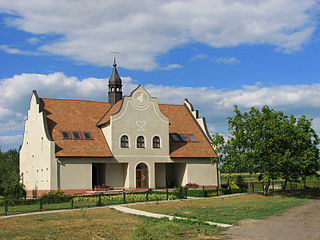
Czechs in Ukraine, often known as Volhynian Czechs, are ethnic Czechs or their descendants settled mostly in the Volhynia region of Ukraine, in the second half of the 19th century.

Martin Baxa is a Czech politician who has served as the Czech Minister of Culture in Petr Fiala's Cabinet since December 2021. He has been a member of the Chamber of Deputies (MP) for the Civic Democratic Party (ODS) since October 2017. He previously served as Mayor of Plzeň from 2010 to 2014, and returned to the position in November 2018.

Sudeten German uprising in September 1938 was a spontaneous rebellion of Sudeten Germans against Czechoslovak authorities in Sudetenland, but at the same time, an organized action orchestrated by Sudeten German Party (SdP) chaired by Konrad Henlein. Therefore, the uprising is also referred to as the Henlein's coup.

Přemysl Pitter was a Czech humanist, pacifist, pedagogue, social worker and evangelical preacher. He founded Milíč House in Prague, during World War II supported Jewish families and after the end of the war organized the “Operation Castles” in which he and his colleagues provided health and social care for children from German concentration camps as well as those from Czech internment camps. After the onset of the communist regime he was forced to emigrate. First he worked in Germany, where he provided pastoral and social support to the refugees in the Valka refugee camp near Nuremberg, later lived in Switzerland. Přemysl Pitter was named Righteous Among the Nations by the Israeli government, in 1973 he was awarded The Order of Merit Ist Class of the Federal Republic of Germany and in 1991 President Václav Havel conferred upon Přemysl Pitter the Order of Tomáš Garrigue Masaryk, in memorian.
Národní sdružení odborových organizací was a trade union centre in the Czechoslovakia. Politically it was linked to the right-wing Czechoslovak National Democratic Party. The centre was organized by the former socialist Josef Hudec. As of 1929 organization was divided in 7 sections and had 304 branches.

Václav Binovec was a Czech film director, screenwriter, and occasional actor. He was often referred to under the pseudonyms of Willy Bronx or W. Bronx, and also V. Vabin. Binovec set up the film company Wetebfilm in 1918, and began a career as a film director, launching the careers of actors such as Suzanne Marwille, Alois Sedláček and Jan W. Speerger. Among his notable earlier films are Krasavice Káťa (1919), For the Freedom of the Nation and Plameny života (1920) and Sivooký démon, Černí myslivci and Poslední radost.

The Ralsko military training area was a restricted military/munitions testing area in the Liberec Region of the Czech Republic. It was located between the towns of Mimoň, Stráž pod Ralskem, Mnichovo Hradiště and Bělá pod Bezdězem. It also included the Ralsko mountain peak, as well as the Hradčany Air Base. The area is about 250 square kilometres (97 sq mi) consisting of forests, meadows and sandstone rock formations.
