A black panther is a colour variant of any Panthera, particularly of the leopard and the jaguar.

Juche, officially the Juche idea, is the state ideology of North Korea and the official ideology of the Workers' Party of Korea. North Korean sources attribute its conceptualization to Kim Il-sung, the country's founder and first leader. Juche was originally regarded as a variant of Marxism–Leninism until Kim Jong-il, Kim Il-sung's son and successor, declared it a distinct ideology in the 1970s. Kim Jong-il further developed Juche in the 1980s and 1990s by making ideological breaks from Marxism–Leninism and increasing the importance of his father's ideas.
People's Party, Peoples Party or Popular Party may refer to one of the following political parties.
Progressive Party may refer to:
Democratic Party most often refers to:
Revolutionary Party is the name of several political parties, including:
The People's Liberation Front can refer to several political groups:

The fourth Republic of Korea was the government of South Korea from November 1972 to March 1981.
People's Revolutionary Party is a name used by several political parties around the world:

The Northeast Anti-Japanese United Army was the main anti-Japanese guerrilla army in Northeast China (Manchuria) after the Japanese invasion of Manchuria in 1931. Its predecessors were various anti-Japanese volunteer armies organized by locals and the Manchuria branches of the Chinese Communist Party (CCP). In February 1936, the CCP, in accordance with the instructions of the Communist International, issued The Declaration of the Unified Organization of Northeast Anti-Japanese United Army and marked the official formation of the organization.

The Workers' Party of Korea (WPK) is the founding and sole ruling party of the Democratic People's Republic of Korea, commonly known as North Korea. Founded in 1949 from the merger of the Workers' Party of North Korea and the Workers' Party of South Korea, the WPK is the oldest active party in Korea. It also controls the Korean People's Army, North Korea's armed forces. The WPK is the largest party represented in the Supreme People's Assembly and coexists with two other legal parties making up the Democratic Front for the Reunification of Korea. However, these minor parties are completely subservient to the WPK and must accept the WPK's "leading role" as a condition of their existence. The WPK is banned in South Korea under the National Security Act and is sanctioned by the United Nations, the European Union, Australia, and the United States.
Secretary is a title often used in organizations to indicate a person having a certain amount of authority, power, or importance in the organization. Secretaries announce important events and communicate to the organization. The term is derived from the Latin word secernere, "to distinguish" or "to set apart", the passive participle meaning "having been set apart", with the eventual connotation of something private or confidential, as with the English word secret. A secretarius was a person, therefore, overseeing business confidentially, usually for a powerful individual.
Minjudang, literally the Democratic Party, may refer to:

The 6th Congress of the Workers' Party of Korea (WPK) was held in the February 8 House of Culture in Pyongyang, North Korea, from 10 to 14 October 1980. The congress is the highest organ of the party, and is stipulated to be held every four years. 3,062 delegates represented the party's membership; 117 foreign delegates attended the congress, without the right to speak. The congress saw the reappointment of Kim Il-sung as WPK General Secretary and the Presidium of the Politburo established as the highest organ of the party between congresses.
The Labor Party (Korean: 노동당) is a socialist political party in South Korea.
Progressivism in South Korea is broadly associated with social democracy, cultural progressivism and left-wing nationalism. South Korea's "progressivism" is often used in a similar sense to 'South Korean Left' or 'leftist'.
This article deals with socialism in South Korea or South Korean Left. Socialists in South Korea are under institutional and social oppression due to the National Security Act. Socialist and anti-capitalist forces have difficulty forming political parties, but there are organizations that operate as organizations, not political parties. In a broad sense, "South Korean Left" includes (non-socialist) left-wing nationalism and liberal-progressivism, but in a narrow sense, "South Korean Left" means only socialism and green politics.
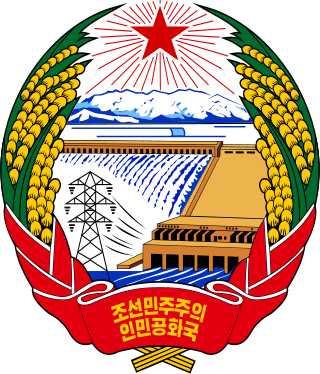
Officially, the Workers' Party of Korea (WPK) – the ruling party of North Korea – is a communist party guided by Kimilsungism–Kimjongilism, a synthesis of the ideas of Kim Il-sung and Kim Jong-il. The party is committed to Juche, an ideology attributed to Kim Il-sung which promotes national independence and development through the efforts of the popular masses. Although Juche was originally presented as the Korean interpretation of Marxism–Leninism, the party now presents it as a freestanding philosophy. The WPK recognizes the ruling Kim family as the ultimate source of its political thought. The fourth party conference, held in 2012, amended the party rules to state that Kimilsungism–Kimjongilism was "the only guiding idea of the party". Under Kim Jong-il, who governed as chairman of the National Defence Commission, communism was steadily removed from party and state documents in favour of Songun, or military-first politics. The military, rather than the working class, was established as the base of political power. However, his successor Kim Jong-un reversed this position in 2021, replacing Songun with "people-first politics" as the party's political method and reasserting the party's commitment to communism.
This page is based on this
Wikipedia article Text is available under the
CC BY-SA 4.0 license; additional terms may apply.
Images, videos and audio are available under their respective licenses.
