
The United States Department of Health & Human Services (HHS), also known as the Health Department, is a cabinet-level department of the U.S. federal government with the goal of protecting the health of all Americans and providing essential human services. Its motto is "Improving the health, safety, and well-being of America". Before the separate federal Department of Education was created in 1979, it was called the Department of Health, Education, and Welfare (HEW).
A health department or health ministry is a part of government which focuses on issues related to the general health of the citizenry. Subnational entities, such as states, counties and cities, often also operate a health department of their own. Health departments perform food inspections and other health related inspections, vaccination programs, free STD and HIV tests, tobacco enforcement and cessation programs, and other medical assistance programs. Health departments also compile statistics about health issues of their area.The role of a health department may vary from one country to the other, but their primary objective is always the same; safeguarding and promoting health. In 1986, several of the world's national health departments met to establish an international guideline by which health departments operate. The meeting was in Ottawa, Ontario, Canada, and hence the guidelines established are known as the Ottawa Charter. The Ottawa Charter was designed to 'achieve Health for All'.
The Low Income Home Energy Assistance Program (LIHEAP) is a United States federal social services program first established in 1981 and funded annually through Congressional appropriations. The mission of LIHEAP is to assist low income households, particularly those with the lowest incomes that pay a high proportion of household income for home energy, primarily in meeting their immediate home energy needs. The program, part of the United States Department of Health and Human Services (HHS), is funded by grants appropriated from the federal government.
In the United States, federal assistance, also known as federal aid, federal benefits, or federal funds, is defined as any federal program, project, service, or activity provided by the federal government that directly assists domestic governments, organizations, or individuals in the areas of education, health, public safety, public welfare, and public works, among others.

The American Indian College Fund is a nonprofit organization that helps Native American students, providing them with support through scholarships and funding toward higher education. The Fund provides an average of 6,000 annual scholarships for American Indian students and also provides support for other needs at the tribal colleges ranging from capital support to cultural preservation activities. Charity Navigator gave the College Fund an overall rating of 88.36 out of 100.
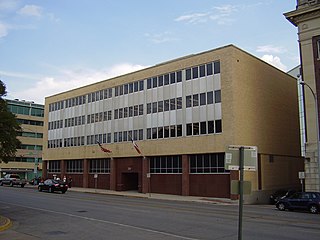
The Texas Department of Housing and Community Affairs (TDHCA) is the state's lead agency responsible for homeownership, affordable rental housing, community and energy assistance programs, and colonia activities serving primarily low income Texans. The Manufactured Housing Division of TDHCA regulates the manufactured housing industry in Texas. The Department annually administers more than $400 million through for-profit, nonprofit, and local government partnerships to deliver local housing and community-based opportunities and assistance to Texans in need. The department is headquartered at 221 East 11th Street in Austin.
Aging News Alert is a news service published in Silver Spring, MD by CD Publications.
Community Development Digest, a news service published by Silver Spring, MD-based CD Publications, is one of the oldest professional community development periodicals still being produced.
CD Housing Register is a news service published in Silver Spring, MD by CD Publications.
Selling to Seniors is a news service published in Silver Spring, MD by CD Publications.
Landlord Law & Multi-housing Report is a news service produced in Silver Spring, Maryland by CD Publications. It covers federal and state court decisions and HUD rulings on public, assisted, senior and disabled housing.
The Native American Housing Assistance and Self-Determination Act of 1996 (NAHASDA) simplifies and reorganizes the system of providing housing assistance to federally recognized Native American tribes to help improve their housing and other infrastructure. It reduced the regulatory strictures that burdened tribes and essentially provided for block grants so that they could apply funds to building or renovating housing as they saw fit. This was in line with other federal programs that recognized the sovereignty of tribes and allowed them to manage the funds according to their own priorities. A new program division was established at the Department of Housing and Urban Development (HUD) that combined several previous programs into one block grant program committed to the goal of tribal housing. The legislation has been reauthorized and amended several times since its passage.
The Native American Rights Fund (NARF) is a non-profit organization that uses existing laws and treaties to ensure that U.S. state governments and the U.S. federal government live up to their legal obligations. NARF also "provides legal representation and technical assistance to Indian tribes, organizations and individuals nationwide."
Southeast Alaska Regional Health Consortium (SEARHC) is a non-profit medical, dental, vision and mental health organization serving the health interests of the residents of Southeast Alaska.
