Related Research Articles
Non-fiction is any document or media content that intends, in good faith, to present only truth and accuracy regarding information, events, or people. Nonfictional content may be presented either objectively or subjectively. Primary and Secondary sources are used in non fiction texts. Sometimes taking the form of a story, nonfiction is one of the fundamental divisions of narrative writing — in contrast to fiction, which offers information, events, or characters expected to be partly or largely imaginary, or else leaves open if and how the work refers to reality.
Genre is any form or type of communication in any mode with socially-agreed-upon conventions developed over time. In popular usage, it normally describes a category of literature, music, or other forms of art or entertainment, whether written or spoken, audio or visual, based on some set of stylistic criteria, yet genres can be aesthetic, rhetorical, communicative, or functional. Genres form by conventions that change over time as cultures invent new genres and discontinue the use of old ones. Often, works fit into multiple genres by way of borrowing and recombining these conventions. Stand-alone texts, works, or pieces of communication may have individual styles, but genres are amalgams of these texts based on agreed-upon or socially inferred conventions. Some genres may have rigid, strictly adhered-to guidelines, while others may show great flexibility.
Defamiliarization or ostranenie is the artistic technique of presenting to audiences common things in an unfamiliar or strange way so they could gain new perspectives and see the world differently. According to the Russian formalists who coined the term, it is the central concept of art and poetry. The concept has influenced 20th-century art and theory, ranging over movements including Dada, postmodernism, epic theatre, science fiction, and philosophy; additionally, it is used as a tactic by recent movements such as culture jamming.
A narrative, story or tale is any account of a series of related events or experiences, whether nonfictional or fictional. Narratives can be presented through a sequence of written or spoken words, still or moving images, or any combination of these. The word derives from the Latin verb narrare, which is derived from the adjective gnarus. Along with argumentation, description, and exposition, narration, broadly defined, is one of four rhetorical modes of discourse. More narrowly defined, it is the fiction-writing mode in which the narrator communicates directly to the reader.

Creative nonfiction is a genre of writing that uses literary styles and techniques to create factually accurate narratives. Creative nonfiction contrasts with other nonfiction, such as academic or technical writing or journalism, which is also rooted in accurate fact but is not written to entertain based on prose style. Many writers view creative nonfiction as overlapping with the essay.
Russian formalism was a school of literary criticism in Russia from the 1910s to the 1930s. It includes the work of a number of highly influential Russian and Soviet scholars such as Viktor Shklovsky, Yuri Tynianov, Vladimir Propp, Boris Eichenbaum, Roman Jakobson, Boris Tomashevsky, Grigory Gukovsky who revolutionised literary criticism between 1914 and the 1930s by establishing the specificity and autonomy of poetic language and literature. Russian formalism exerted a major influence on thinkers like Mikhail Bakhtin and Yuri Lotman, and on structuralism as a whole. The movement's members had a relevant influence on modern literary criticism, as it developed in the structuralist and post-structuralist periods. Under Stalin it became a pejorative term for elitist art.
New Journalism is a style of news writing and journalism, developed in the 1960s and 1970s, that uses literary techniques deemed unconventional at the time. It is characterized by a subjective perspective, a literary style reminiscent of long-form non-fiction and emphasizing "truth" over "facts", and intensive reportage in which reporters immersed themselves in the stories as they reported and wrote them. This was in contrast to traditional journalism where the journalist was typically "invisible" and facts are reported as objectively as possible.
Chick lit was a term widely used in the 1990s and early 2000s to describe popular fiction targeted at younger women. The term's usage has declined since the late 2000s as writers and critics have rejected its inherent sexism.
Ethnopoetics is a method of recording text versions of oral poetry or narrative performances that uses poetic lines, verses, and stanzas to capture the formal, poetic performance elements which would otherwise be lost in the written texts. The goal of any ethnopoetic text is to show how the techniques of unique oral performers enhance the aesthetic value of their performances within their specific cultural contexts. Major contributors to ethnopoetic theory include Jerome Rothenberg, Dennis Tedlock, and Dell Hymes. Ethnopoetics is considered a subfield of ethnology, anthropology, folkloristics, stylistics, linguistics, and literature and translation studies.
Narrative criticism focuses on the stories a speaker or a writer tells to understand how they help us make meaning out of our daily human experiences. Narrative theory is a means by which we can comprehend how we impose order on our experiences and actions by giving them a narrative form. According to Walter Fisher, narratives are fundamental to communication and provide structure for human experience and influence people to share common explanations and understandings (58). Fisher defines narratives as "symbolic actions-words and/or deeds that have sequence and meaning for those who live, create, or interpret them." Study of narrative criticism, therefore, includes form, genre, structure characterization, and communicator's perspective.
Experimental literature is a genre that is, according to Professor Warren Motte of the University of Colorado in his essay Experimental Writing, Experimental Reading, "difficult to define with any sort of precision." He says the "writing is often invoked in an "offhand manner" and the focus is on "form rather than content." It can be in written form of prose narrative or poetry, but the text may be set on the page in differing configurations than that of normal prose paragraphs or in the classical stanza form of verse. It may also be entwined with images of a real or abstract nature, with the use of art or photography. Furthermore, while experimental literature was handwritten on paper or vellum, the digital age has seen an exponential leaning to the use of digital computer technologies.

Poetic diary or Nikki bungaku (日記文学) is a Japanese literary genre, dating back to Ki no Tsurayuki's Tosa Nikki, compiled in roughly 935. Nikki bungaku is a genre including prominent works such as the Tosa Nikki, Kagerō Nikki, and Murasaki Shikibu Nikki. While diaries began as records imitating daily logs kept by Chinese government officials, private and literary diaries emerged and flourished during the Heian period.
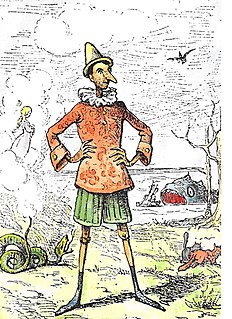
Literature broadly is any collection of written work, but it is also used more narrowly for writings specifically considered to be an art form, especially prose fiction, drama, and poetry. In recent centuries, the definition has expanded to include oral literature, much of which has been transcribed. Literature is a method of recording, preserving, and transmitting knowledge and entertainment, and can also have a social, psychological, spiritual, or political role.
Croatian literature refers to literary works attributed to the medieval and modern culture of the Croats, Croatia, and Croatian. Besides the modern language whose shape and orthography was standardized in the late 19th century, it also covers the oldest works produced within the modern borders of Croatia, written in Church Slavonic and Medieval Latin, as well as vernacular works written in Čakavian and Kajkavian dialects.
New Italian Epic is a definition suggested by the Italian literary group Wu Ming Foundation to describe a body of literary works written in Italy by various authors starting in 1993, at the end of the so called ‘First Republic’. This body of works is described as being formed of novels and other literary texts, which share various stylistic characteristics, thematic constants, and an underlying allegorical nature. They are a particular kind of metahistorical fiction, with peculiar features that derive from the Italian context.
Dogme 95 was a filmmaking movement started in 1995 by the Danish directors Lars von Trier and Thomas Vinterberg, who created the "Dogme 95 Manifesto" and the "Vows of Chastity". These were rules to create films based on the traditional values of story, acting, and theme, and excluding the use of elaborate special effects or technology. It was supposedly created as an attempt to "take back power for the directors as artists", as opposed to the studio. They were later joined by fellow Danish directors Kristian Levring and Søren Kragh-Jacobsen, forming the Dogme 95 Collective or the Dogme Brethren. Dogme is the Danish word for dogma.

Doren Robbins is a contemporary American poet, prose poet, fiction writer, essayist, mixed media artist, and educator. As a cultural activist, he has organized and developed projects for Amnesty International, the Salvadoran Medical Relief Fund, the Romero Relief Fund, and poetsagainstthewar.org. Robbins has lived most of his life in California and Oregon.

Reality Hunger: A Manifesto is a non-fiction book by American writer David Shields, published by Knopf on February 23, 2010. The book is written in a collage style, mixing quotations by the author with those from a variety of other sources. The book's manifesto is directed toward increasing art's engagement with the reality of contemporary life through the exploration of hybrid genres such as prose poetry and literary collage. In Vanity Fair, Elissa Schappell called Reality Hunger "a rousing call to arms for all artists to reject the laws governing appropriation, obliterate the boundaries between fiction and nonfiction, and give rise to a new modern form for a new century."
Human rights literature is a literary genre that deals with human rights issues, and thus - directly or indirectly - promotes values of human rights. The goal of human rights literature is to combine the literary driving force with the motivation for action, which is a fundamental and integral element of the struggle for protection of human rights. This literary genre is based on the concept of "Engaged Literature" that was articulated by the French writer and philosopher Jean-Paul Sartre.
Caroline Levine is an American literary critic. She is the David and Kathleen Ryan Professor of Humanities at Cornell University. Her published works are in the fields of Victorian literature, literary theory, literary criticism, formalism, television, and climate change.