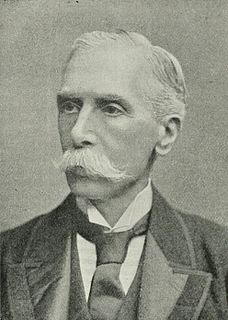
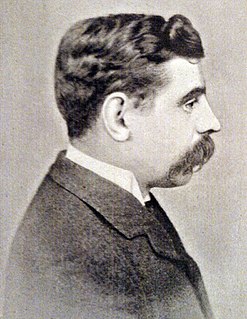
Henry Newman Howard (16 June 1861 – 5 March 1929) was an English poet and dramatist. His first book, Footsteps of Proserpine and Other Verses and Interludes, was published by Elliot Stock in 1897. He then wrote a series of critically praised blank versetragedies, which he called "the Christian Trilogy", beginning with Kiartan the Icelander in 1902, followed by Savanarola: a City's Tragedy in 1904 and Constantine the Great in 1906.[1]Kiartan (whose theme was "the introduction of Christianity into Iceland"[2]), in particular, was singled out for praise, Joseph B. Gilder remarking in the Bookman that "If anyone writing English verse today has achieved anything more imaginative or more beautiful than the last sixteen lines of Kiartan, the Icelander, it has escaped my observation."[3] His collected poems and tragedies were published by Macmillan and Co. in 1913.
Poetry is a form of literature that uses aesthetic and rhythmic qualities of language—such as phonaesthetics, sound symbolism, and metre—to evoke meanings in addition to, or in place of, the prosaic ostensible meaning.
A playwright or dramatist is a person who writes plays.
Blank verse is poetry written with regular metrical but unrhymed lines, almost always in iambic pentameter. It has been described as "probably the most common and influential form that English poetry has taken since the 16th century", and Paul Fussell has estimated that "about three quarters of all English poetry is in blank verse".
Newman Howard is the father of Gwendolen "Len" Howard (1894–1973), the British naturalist, author, and musician.
Gwendolen Howard was a British naturalist and musician. She is known for the unique amateur bird studies that were published in various periodicals and two books under her pseudonym, Len Howard.
Notes
↑ The Annual Register: a Review of Public Events at Home and Abroad for the Year 1906. Page 67. Longmans, Green and Co., 1907.
↑ Putnam's Magazine: a Magazine of Literature, Art and Life. Volume II, April–September, 1907. Page 350.
↑ The Bookman: an Illustrated Magazine of Literature and Life, Volume XVI, August, 1902-February, 1903. Pages 31-32. Joseph B. Gilder: "A New English Poet".
Bibliography
Footsteps of Proserpine and Other Verses and Interludes (1897)
Kiartan the Icelander: a Tragedy (1902)
Savonarola: a City's Tragedy (1904)
Constantine the Great: a Tragedy (1906)
Collected Poems (1913)
This page is based on this Wikipedia article Text is available under the CC BY-SA 4.0 license; additional terms may apply. Images, videos and audio are available under their respective licenses.
Related Research Articles
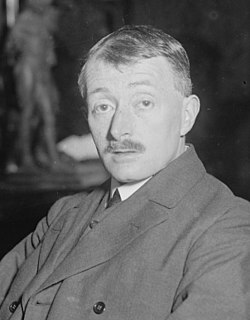
John Edward Masefield was an English poet and writer and the Poet Laureate of the United Kingdom from 1930 until 1967. Among his best known works are the children's novels The Midnight Folk and The Box of Delights, and the poems "The Everlasting Mercy" and "Sea-Fever".
Robert Laurence Binyon, CH was an English poet, dramatist and art scholar. His most famous work, "For the Fallen", is well known for being used in Remembrance Sunday services.
Andrew Lang (1844–1912) was a Scottish poet, novelist, literary critic, and contributor to the field of anthropology. He is best known as a collector of folk and fairy tales. The Andrew Lang lectures at the University of St Andrews are named after him.
Robert Seymour Bridges was Britain's poet laureate from 1913 to 1930. A doctor by training, he achieved literary fame only late in life. His poems reflect a deep Christian faith, and he is the author of many well-known hymns. It was through Bridges’ efforts that Gerard Manley Hopkins achieved posthumous fame.
Sir Arthur Thomas Quiller-Couch was a Cornish writer who published using the pseudonym Q. Although a prolific novelist, he is remembered mainly for the monumental publication The Oxford Book Of English Verse 1250–1900 and for his literary criticism. He influenced many who never met him, including American writer Helene Hanff, author of 84, Charing Cross Road and its sequel, Q's Legacy. His Oxford Book of English Verse was a favourite of John Mortimer's fictional character Horace Rumpole.
Henry Austin Dobson, commonly Austin Dobson, was an English poet and essayist.
Arthur William Symons, was a British poet, critic and magazine editor.
Alfred Austin was an English poet who was appointed Poet Laureate in 1896, after an interval following the death of Tennyson, when the other candidates had either caused controversy or refused the honour. It was claimed that he was being rewarded for his support for the Conservative leader Lord Salisbury in the General Election of 1895. Austin’s poems are little-remembered today, his most popular work being prose idylls celebrating nature.
Giovanni Placido Agostino Pascoli was an Italian poet, classical scholar and an emblematic figure of Italian literature in the late nineteenth century. He was, together with Gabriele D'Annunzio, the greatest Italian decadent poet.
John Payne was an English poet and translator. Initially he pursued a legal career, and associated with Dante Gabriel Rossetti. Later he became involved with limited edition publishing, and the Villon Society.
Barry Eric Odell Pain was an English journalist, poet and writer.
Yonejirō Noguchi was an influential Japanese writer of poetry, fiction, essays and literary criticism in both English and Japanese. He is known in the west as Yone Noguchi. He was the father of noted sculptor Isamu Noguchi.
Henry Abbey was an American poet who is best remembered for the poem, "What do we plant when we plant a tree?" He is also known for "The Bedouin's Rebuke".
Nationality words link to articles with information on the nation's poetry or literature.
This is a list of all works by Irish poet and dramatist W. B. Yeats (1865–1939), winner of the 1923 Nobel Prize in Literature and a foremost figure in 20th-century literature. Works sometimes appear twice if parts of new editions or significantly revised. Posthumous editions are also included if they are the first publication of a new or significantly revised work. Years are linked to corresponding "[year] in poetry" articles for works of poetry, and "[year] in literature" articles for other works.
Father John Banister Tabb was an American poet, Roman Catholic priest, and professor of English.
George Barlow was an English poet, who sometimes wrote under the pseudonym James Hinton.
Munsey's Weekly, later known as Munsey's Magazine, was a 36-page quarto American magazine founded by Frank A. Munsey in 1889 and edited by John Kendrick Bangs. Frank Munsey aimed to publish "a magazine of the people and for the people, with pictures and art and good cheer and human interest throughout". Soon after its inception, the magazine was selling 40,000 copies a week. In 1891, Munsey's Weekly adopted a monthly schedule and was renamed Munsey's Magazine.
Grigory Spiridonovich Petrov was a priest, public figure, and publicist.
Burton Egbert Stevenson (1872–1962) was an American author, anthologist, and librarian. He was born in Chillicothe, Ohio on 9 November 1872, and attended Princeton University 1890–1893. He married Elizabeth Shepard Butler (1869–1960) in 1895. He died 13 May 1962 and was buried in Chillicothe, Ohio.