The John Newbery Medal, frequently shortened to the Newbery, is a literary award given by the Association for Library Service to Children (ALSC), a division of the American Library Association (ALA), to the author of "the most distinguished contributions to American literature for children". The Newbery and the Caldecott Medal are considered the two most prestigious awards for children's literature in the United States. Books selected are widely carried by bookstores and libraries, the authors are interviewed on television, and master's theses and doctoral dissertations are written on them. Named for John Newbery, an 18th-century English publisher of juvenile books, the winner of the Newbery is selected at the ALA's Midwinter Conference by a fifteen-person committee. The Newbery was proposed by Frederic G. Melcher in 1921, making it the first children's book award in the world. The physical bronze medal was designed by Rene Paul Chambellan and is given to the winning author at the next ALA annual conference. Since its founding there have been several changes to the composition of the selection committee, while the physical medal remains the same.
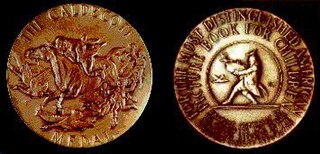
The Randolph Caldecott Medal, frequently shortened to just the Caldecott, annually recognizes the preceding year's "most distinguished American picture book for children". It is awarded to the illustrator by the Association for Library Service to Children (ALSC), a division of the American Library Association (ALA). The Caldecott and Newbery Medals are considered the most prestigious American children's book awards. Besides the Caldecott Medal, the committee awards a variable number of citations to runners-up they deem worthy, called the Caldecott Honor or Caldecott Honor Books.

Mo Willems is an American writer, animator, voice actor, and children's book author. His work includes creating the animated television series Sheep in the Big City for Cartoon Network, working on Sesame Street and The Off-Beats, and creating the children's book series Elephant and Piggie.
Peter Spier was a Dutch-American illustrator and writer who created more than thirty children's books.

David Wiesner is an American illustrator and writer of children's books, known best for picture books including some that tell stories without words. As an illustrator he has won three Caldecott Medals recognizing the year's "most distinguished American picture book for children" and he was one of five finalists in 2008 for the biennial, international Hans Christian Andersen Award, the highest recognition available for creators of children's books.
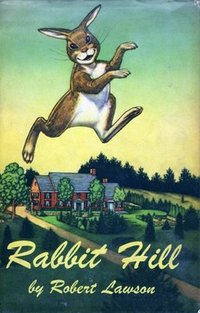
Rabbit Hill is a children's novel by Robert Lawson that won the Newbery Medal for excellence in American children's literature in 1945. In 1954 he wrote a sequel, The Tough Winter.
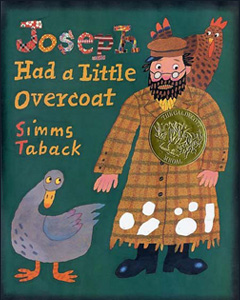
Joseph Had a Little Overcoat is a 1999 children’s picture book by Simms Taback that won the 2000 Caldecott Medal. The book is a re-illustrated version of a book of the same name by Taback that was published in 1977. The protagonist is Joseph, a Jewish farmer, who has a little striped overcoat. When it grows old, Joseph makes it into a little jacket and so on until he makes it into a button. Ultimately, Joseph loses the button, but is prompted to write a book based on his experiences. The moral of the story is "you can always make something out of nothing." In 2001, an 11-minute animated film based on the book, directed by Daniel Ivanick and narrated by Rob Reiner, was made by Weston Woods Studios, Inc.

Kadir Nelson is a Los Angeles–based painter, illustrator, and author who is best known for his paintings often featured on the covers of The New Yorker magazine, and album covers for Michael Jackson and Drake. His work is focused on African-American culture and history. The New York Times describes his work as: "sumptuous, deeply affecting work. Nelson’s paintings are drenched in ambience, and often overt symbolism. He has twice been a Caldecott honor recipient and won the 2020 Caldecott Medal for his illustrations in The Undefeated.
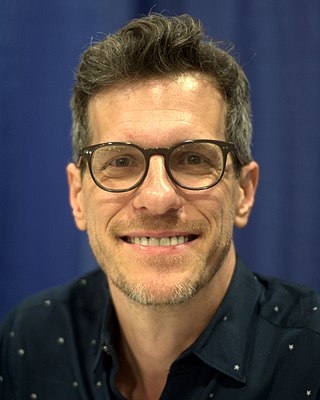
Brian Selznick is an American illustrator and author best known as the writer of The Invention of Hugo Cabret (2007), Wonderstruck (2011), The Marvels (2015) and Kaleidoscope (2021). He won the 2008 Caldecott Medal for U.S. picture book illustration recognizing The Invention of Hugo Cabret. He is also known for illustrating children's books such as the covers of Scholastic's 20th-anniversary editions of the Harry Potter series.

The Lion & the Mouse is a 2009 nearly wordless picture book illustrated by Jerry Pinkney. This book, published by Little, Brown and Company, tells Aesop's fable of The Lion and the Mouse. In the story, a mouse's life is a spared by a lion. Later, after the lion is trapped, the mouse is able to set the lion free. Adapting the fable, with the moral that the weak can help the strong, as a wordless picture book was seen as a successful way of overcoming the brief plot generally found in the source stories. While it was Pinkney's first wordless picture book, it was not the first time he had told the story, having previously included it in his Aesop's Fables, published in 2000. Pinkney, who had received five Caldecott Honors, became the first African American to win the Caldecott Medal for his illustrations in this book. His illustrations were generally praised for their realism and sense of place. The cover illustrations, featuring the title characters but no text, drew particular praise.

Jon Klassen is a Canadian writer and illustrator of children's books and an animator. He won both the American Caldecott Medal and the British Kate Greenaway Medal for children's book illustration, recognizing the 2012 picture book This Is Not My Hat, which he also wrote. He is the first person to win both awards for the same work.

A Ball for Daisy is a 2011 children's wordless picture book written and illustrated by Chris Raschka. The book tells the story of a dog named Daisy, who has a beloved ball destroyed and then replaced. Raschka won the 2012 Caldecott Medal for his illustrations in the book. The creation of the book took years but was praised for its ability to evoke emotion in the reader. A sequel, Daisy Gets Lost, was released in 2013.

Locomotive is a 2013 children's book written and illustrated by Brian Floca. A non-fiction book written primarily in free verse, the book follows a family as they ride a transcontinental steam engine train in summer of 1869. The book details the workers, passengers, landscape, and effects of building and operating the first transcontinental railroad. The book also contains prose about the earlier and later history of locomotives. The book took Floca four years to create, which included a change in perspective from following the crew of the train to following a family. Floca conducted extensive research including his own train ride and consultation with experts to ensure he had the details all correct.

This Is Not My Hat is a 2012 American children's picture book by the author and illustrator Jon Klassen. The story is told through the unreliable narration of a little fish, who has stolen a hat from a big fish and how the big fish reacts to the theft. It is a thematic follow-up to I Want My Hat Back (2011) and was meant to be a more literal sequel until Klassen took a suggestion to change which animals were in the story. The book was well received by critics, who praised its dark or ironic humor which could only be understood by comparing the words of the little fish's narration against the events of the illustrations. In addition to several positive reviews, Klassen received the 2013 Caldecott Medal and the 2014 Kate Greenaway Medal, making This is Not My Hat the first book to win both awards. This is Not My Hat was also a commercial success.
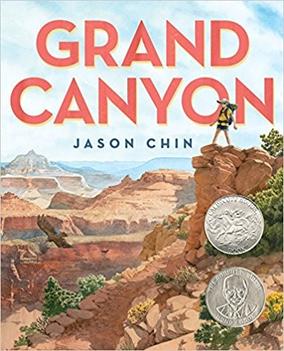
Grand Canyon by Jason Chin is a 2017 children's picture book. The book tells about the plants, animals and habitats of the Grand Canyon, both now and in the past, using the premise of a hiking trip there. The inspiration for the book was a trip in high school; Chin had originally conceived of a Grand Canyon origin story. The book marked the first time Chin used die cuts, in addition to his normal use of pen and ink, watercolors, and gouache. The book was awarded a 2018 Caldecott Honor for its illustrations and a 2018 Sibert Honor for its informative text. Grand Canyon is one of only a few non-fiction books that are not biographies to be recognized by the Caldecott.

Moses: When Harriet Tubman Led Her People to Freedom is a 2006 children's picture book by Carole Boston Weatherford and illustrated by Kadir Nelson, originally published by Hyperion Books for Children. It has received both a Caldecott Honor and the Coretta Scott King Award.

A Big Mooncake for Little Star is a 2018 picture book written and illustrated by Grace Lin. The story is about Little Star gradually eating the mooncake that her mother has baked. The book was a departure for Lin both thematically and in her use of illustrative style. The book was well reviewed and was awarded a Caldecott Honor in 2019. The illustrations feature heavy use of black and rely on both the pictures and words to convey the story and its themes.

All Around the Town is a 1948 picture book written by Phyllis McGinley and illustrated by Helen Stone. The book is a rhyming alphabet book exploring a town. The book was a recipient of a 1949 Caldecott Honor for its illustrations.
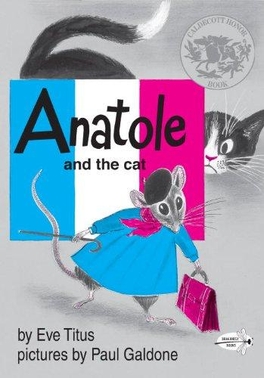
Anatole and the Cat is a 1957 picture book written by Eve Titus and illustrated by Paul Galdone. The book tells the story of a mouse who secretly works at a cheese factory and what happens when the owner brings a cat to the factory. The book was a recipient of a 1958 Caldecott Honor for its illustrations.

Bear Came Along is a 2019 picture book by Richard T. Morris and illustrated by LeUyen Pham. It tells the story of a group of animals on a river adventure. Published on June 1, 2019, Bear Came Along was based on memories Morris had of going to overnight camp for the first time. The watercolors, ink, and gouache illustrations Pham created were special for her. Critics wrote about her ability to juggle several different tones through the pictures. These illustrations were also generally seen as complementing the book's theme of being connected to others. The book was generally well reviewed and received a 2020 Caldecott Honor.