In economics, factors of production, resources, or inputs are what is used in the production process to produce output—that is, finished goods and services. The utilized amounts of the various inputs determine the quantity of output according to the relationship called the production function. There are three basic resources or factors of production: land, labor, and capital. The factors are also frequently labeled "producer goods or services" to distinguish them from the goods or services purchased by consumers, which are frequently labeled "consumer goods".

Gross domestic product (GDP) is a monetary measure of the market value of all the final goods and services produced in a period of time, often annually.
GDP (nominal) per capita does not, however, reflect differences in the cost of living and the inflation rates of the countries; therefore using a basis of GDP per capita at purchasing power parity (PPP) is arguably more useful when comparing differences in living standards between nations.
A variety of measures of national income and output are used in economics to estimate total economic activity in a country or region, including gross domestic product (GDP), gross national product (GNP), net national income (NNI), and adjusted national income also called as NNI at factor cost. All are specially concerned with counting the total amount of goods and services produced within the economy and by different sectors. The boundary is usually defined by geography or citizenship, and it is also defined as the total income of the nation and also restrict the goods and services that are counted. For instance, some measures count only goods & services that are exchanged for money, excluding bartered goods, while other measures may attempt to include bartered goods by imputing monetary values to them.
Real gross domestic product is a macroeconomic measure of the value of economic output adjusted for price changes. This adjustment transforms the money-value measure, nominal GDP, into an index for quantity of total output. Although GDP is total output, it is primarily useful because it closely approximates the total spending: the sum of consumer spending, investment made by industry, excess of exports over imports, and government spending. Due to inflation, GDP increases and does not actually reflect the true growth in an economy. That is why the GDP must be divided by the inflation rate to get the growth of the real GDP. Different organizations use different types of 'Real GDP' measures, for example the United Nations UNCTAD uses 2005 Constant prices and exchange rates while the FRED uses 2009 constant prices and exchange rates, and recently the World Bank switched from 2005 to 2010 constant prices and exchange rates.
The national income and product accounts (NIPA) are part of the national accounts of the United States. They are produced by the Bureau of Economic Analysis of the Department of Commerce. They are one of the main sources of data on general economic activity in the United States.
In business, the difference between the sale price and the production cost of a product is the unit profit. In economics, the sum of the unit profit, the unit depreciation cost, and the unit labor cost is the unit value added. Summing value added per unit over all units sold is total value added. Total value added is equivalent to revenue less intermediate consumption. Value added is a higher portion of revenue for integrated companies, e.g., manufacturing companies, and a lower portion of revenue for less integrated companies, e.g., retail companies. Total value added is very closely approximated by compensation of employees plus earnings before taxes. The first component is a return to labor and the second component is a return to capital. In national accounts used in macroeconomics, it refers to the contribution of the factors of production, i.e., capital and labor, to raising the value of a product and corresponds to the incomes received by the owners of these factors. The national value added is shared between capital and labor, and this sharing gives rise to issues of distribution.
In economics, an input–output model is a quantitative economic model that represents the interdependencies between different branches of a national economy or different regional economies. Wassily Leontief (1906–1999) is credited with developing this type of analysis and earned the Nobel Prize in Economics for his development of this model.
The gross national income (GNI), previously known as gross national product (GNP), is the total domestic and foreign output claimed by residents of a country, consisting of gross domestic product (GDP), plus factor incomes earned by foreign residents, minus income earned in the domestic economy by nonresidents. Comparing GNI to GDP shows the degree to which a nation's GDP represents domestic or international activity. GNI has gradually replaced GNP in international statistics. While being conceptually identical, it is calculated differently. GNI is the basis of calculation of the largest part of contributions to the budget of the European Union. In February 2017, Ireland's GDP became so distorted from the base erosion and profit shifting ("BEPS") tax planning tools of U.S. multinationals, that the Central Bank of Ireland replaced Irish GDP with a new metric, Irish Modified GNI*. In 2017, Irish GDP was 162% of Irish Modified GNI*.
Net national product (NNP) refers to gross national product (GNP), i.e. the total market value of all final goods and services produced by the factors of production of a country or other polity during a given time period, minus depreciation. Similarly, net domestic product (NDP) corresponds to gross domestic product (GDP) minus depreciation. Depreciation describes the devaluation of fixed capital through wear and tear associated with its use in productive activities.
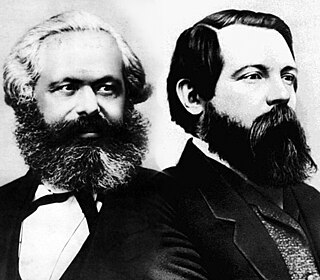
The value product (VP) is an economic concept formulated by Karl Marx in his critique of political economy during the 1860s, and used in Marxian social accounting theory for capitalist economies. Its annual monetary value is approximately equal to the netted sum of six flows of income generated by production:
Intermediate consumption is an economic concept used in national accounts, such as the United Nations System of National Accounts (UNSNA), the US National Income and Product Accounts (NIPA) and the European System of Accounts (ESA).

Buddhist economics is a spiritual and philosophical approach to the study of economics. It examines the psychology of the human mind and the emotions that direct economic activity, in particular concepts such as anxiety, aspirations and self-actualization principles. In the view of its proponents, Buddhist economics aims to clear the confusion about what is harmful and what is beneficial in the range of human activities involving the production and consumption of goods and services, ultimately trying to make human beings ethically mature. The ideology's stated purpose is to "find a middle way between a purely mundane society and an immobile, conventional society."
Operating surplus is an accounting concept used in national accounts statistics and in corporate and government accounts. It is the balancing item of the Generation of Income Account in the UNSNA. It may be used in macro-economics as a proxy for total pre-tax profit income, although entrepreneurial income may provide a better measure of business profits. According to the 2008 SNA, it is the measure of the surplus accruing from production before deducting property income, e.g., land rent and interest.
In economics, gross value added (GVA) is the measure of the value of goods and services produced in an area, industry or sector of an economy. In national accounts GVA is output minus intermediate consumption; it is a balancing item of the national accounts' production account.
Surplus value is a central concept in Karl Marx's critique of political economy. "Surplus value" is a translation of the German word "Mehrwert", which simply means value added, and is cognate to English "more worth". Surplus-value is the difference between the amount raised through a sale of a product and the amount it cost to the owner of that product to manufacture it: i.e. the amount raised through sale of the product minus the cost of the materials, plant and labour power. Conventionally, value-added is equal to the sum of gross wage income and gross profit income. However, Marx uses the term Mehrwert to describe the yield, profit or return on production capital invested, i.e. the amount of the increase in the value of capital. Hence, Marx's use of Mehrwert has always been translated as "surplus value", distinguishing it from "value-added". According to Marx's theory, surplus value is equal to the new value created by workers in excess of their own labor-cost, which is appropriated by the capitalist as profit when products are sold.
In macroeconomics, investment is the amount of goods purchased or accumulated per unit time which are not consumed at the present time. The types of investment are residential investment in housing that will provide a flow of housing services over an extended time, non-residential fixed investment in things such as new machinery or factories, human capital investment in workforce education, and inventory investment.
This glossary of economics is a list of definitions of terms and concepts used in economics, its sub-disciplines, and related fields.

