
A slaughterhouse, also called abattoir, is a facility where animals are slaughtered to provide food. Slaughterhouses supply meat, which then becomes the responsibility of a packaging facility.
An Act of Congress is a statute enacted by the United States Congress. Acts may apply only to individual entities, or to the general public. For a bill to become an act, the text must pass through both houses with a majority, then be either signed into law by the president of the United States or receive congressional override against a presidential veto.

Marine Corps Base Camp Lejeune is a 246-square-mile (640-square-kilometer) United States military training facility in Jacksonville, North Carolina. Its 14 miles of beaches make the base a major area for amphibious assault training, and its location between two deep-water ports allows for fast deployments. The main base is supplemented by six satellite facilities: Marine Corps Air Station New River, Camp Geiger, Stone Bay, Courthouse Bay, Camp Johnson, and the Greater Sandy Run Training Area. The Marine Corps port facility is in Beaufort, at the southern tip of Radio Island. It is occupied only during military port operations.
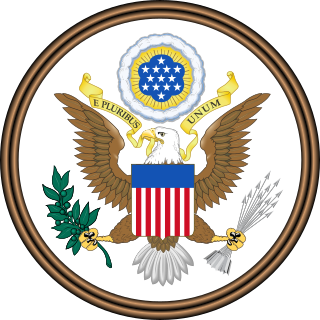
The Taiwan Security Enhancement Act was a US Congressional bill which never became law. It was passed by one of the Houses of the U.S. Congress, the House of Representatives, on February 1, 2000, by a vote of 341 to 70. It envisaged greater United States military support of the Republic of China/Taiwan, including training and equipment. It also contemplated establishing direct military communication lines between the United States and Taiwan. It was never approved by the U.S. Senate or signed into law by the U.S. president.
The United States National Agricultural Library (NAL) is one of the world's largest agricultural research libraries, and serves as a national library of the United States and as the library of the United States Department of Agriculture. Located in Beltsville, Maryland, it is one of five national libraries of the United States. It is also the coordinator for the Agriculture Network Information Center (AgNIC), a national network of state land-grant institutions and coordinator for the U.S. Department of Agriculture (USDA) field libraries.
The Animal Welfare Act was signed into law by President Lyndon B. Johnson on August 24, 1966. It is the main federal law in the United States that regulates the treatment of animals in research and exhibition. Other laws, policies, and guidelines may include additional species coverage or specifications for animal care and use, but all refer to the Animal Welfare Act as the minimally acceptable standard for animal treatment and care. The USDA and APHIS oversee the AWA and the House and Senate Agriculture Committees have primary legislative jurisdiction over the Act. Animals covered under this Act include any live or dead cat, dog, hamster, rabbit, nonhuman primate, guinea pig, and any other warm-blooded animal determined by the Secretary of Agriculture for research, pet use or exhibition. Excluded from the Act are birds, rats of the genus Rattus, mice of the genus Mus, farm animals, and all cold-blooded animals.
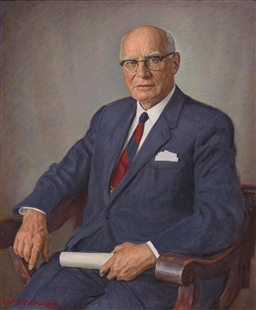
Emanuel Celler was an American politician from New York who served in the United States House of Representatives for almost 50 years, from March 1923 to January 1973. He served as the dean of the United States House of Representatives from 1965 to 1973. Celler was particularly involved in issues relating to the judiciary and immigration.
A crush fetish is a fetish and a paraphilia in which sexual arousal is associated with observing objects being crushed or being crushed oneself. The crushed objects vary from inanimate items, to injurious and/or fatal crushing of invertebrates, or vertebrates.

The 76th United States Congress was a meeting of the legislative branch of the United States federal government, composed of the United States Senate and the United States House of Representatives. It met in Washington, DC from January 3, 1939, to January 3, 1941, during the seventh and eighth years of Franklin D. Roosevelt's presidency. The apportionment of seats in the House of Representatives was based on the Fifteenth Census of the United States in 1930.

James Elroy Risch is an American lawyer and politician who has served as the junior United States senator from Idaho since 2009. A member of the Republican Party, he served as lieutenant governor of Idaho from 2003 to 2006 and from 2007 to 2009, and as governor of Idaho from 2006 to 2007.
John James Blaine was an American lawyer and politician. He was the 24th Governor of Wisconsin and a United States senator. He also served as Attorney General of Wisconsin and a member of the Wisconsin State Senate.
The US-Morocco Free Trade Agreement is a bilateral trade agreement between the United States and Morocco. The agreement was signed on June 15, 2004, followed by U.S. President George W. Bush's signing of the USMFTA Implementation Act on August 17, 2004. The United States House of Representatives ratified the pact on July 22, 2004 by a 323–99 vote. The United States Senate passed the bill by unanimous consent on July 21, 2004. The Morocco FTA came into effect on January 1, 2006.
Horse slaughter is the practice of slaughtering horses to produce meat for consumption. Humans have long consumed horse meat; the oldest known cave art, the 30,000-year-old paintings in France's Chauvet Cave, depict horses with other wild animals hunted by humans. Equine domestication is believed to have begun to raise horses for human consumption. The practice has become controversial in some parts of the world due to several concerns: whether horses are managed humanely in industrial slaughter; whether horses not raised for consumption yield safe meat, and whether it is appropriate to consume what some view as a companion animal.
The U.S.-Oman Free Trade Agreement is a trade pact between Oman and the United States. On November 15, 2004, the George W. Bush administration notified the U.S. Congress of its intent to sign a trade agreement with the Middle Eastern Sultanate of Oman. On January 19, 2006 the two countries signed the U.S.-Oman Free Trade Agreement (OFTA), which is part of the Bush administration's strategy to create a US - Middle East Free Trade Area (MEFTA) by 2013.

The 113th United States Congress was a meeting of the legislative branch of the United States federal government, from January 3, 2013, to January 3, 2015, during the fifth and sixth years of Barack Obama's presidency. It was composed of the United States Senate and the United States House of Representatives based on the results of the 2012 Senate elections and the 2012 House elections. The seats in the House were apportioned based on the 2010 United States Census. It first met in Washington, D.C. on January 3, 2013, and it ended on January 3, 2015. Senators elected to regular terms in 2008 were in the last two years of those terms during this Congress.

The 114th United States Congress was a meeting of the legislative branch of the United States of America federal government, composed of the United States Senate and the United States House of Representatives. It met in Washington, D.C. from January 3, 2015, to January 3, 2017, during the final two years of Barack Obama's presidency. The seats in the House were apportioned based on the 2010 United States Census.
The Treaty Clause of the United States Constitution establishes the procedure for ratifying international agreements. It empowers the President as the primary negotiator of agreements between the United States and other countries, and holds that the advice and consent of a two-thirds supermajority of the Senate renders a treaty binding with the force of federal law.
The Wild and Free-Roaming Horses and Burros Act of 1971 (WFRHBA), is an Act of Congress, signed into law by President Richard M. Nixon on December 18, 1971. The act covered the management, protection and study of "unbranded and unclaimed horses and burros on public lands in the United States."
The Honoring our Promise to Address Comprehensive Toxics Act of 2022, known as the Honoring our PACT Act of 2022, is an Act of Congress intended to significantly improve healthcare access and funding for veterans who were exposed to toxic substances during military service.
Eleven articles of impeachment against United States President Andrew Johnson were adopted by the United States House of Representatives on March 2 and 3, 1868 as part of the impeachment of Johnson. An impeachment resolution had previously been adopted by the House on February 24, 1868. Each of the articles were a separate charge which Johnson would be tried for in his subsequent impeachment trial before the United States Senate.
