
Padwa is a village in India.
Contents
Padwa may also refer to:
Padwa is a village in India.
Padwa may also refer to:


The New Year is the time or day at which a new calendar year begins and the calendar's year count increments by one. Many cultures celebrate the event in some manner. In the Gregorian calendar, the most widely used calendar system today, New Year occurs on January 1. This was also the first day of the year in the original Julian calendar and the Roman calendar.

Diwali, also called Deepavali, is the Hindu festival of lights, with variations celebrated in other Indian religions. It symbolises the spiritual "victory of light over darkness, good over evil, and knowledge over ignorance". Diwali is celebrated during the Hindu lunisolar months of Ashvin and Kartika—between around mid-September and mid-November. The celebrations generally last five or six days.

Ugadi or Yugadi, also known as Samvatsarādi, is New Year's Day according to the Hindu calendar and is celebrated in the Indian states of Andhra Pradesh, Telangana and Karnataka. The cycle actually consists of 60 years, each year individually named. The first day of each year is called 'Ugadi'. The word Ugadi can be split into two: Uga means Course of Stars and Adi means Starting. It is festively observed in these regions on the first day of the Hindu lunisolar calendar month of Chaitra. This typically falls in late March or early April of the Gregorian calendar. It also falls during the Tamil month of either Panguni or Chithrai, sometimes on the day after Amavasya with 27th Nakshatra Revati. Ugadi day is pivoted on the first New Moon after March Equinox.

Vishu is a festival celebrating the Malayali New Year in Kerala, Tulu Nadu, and Mahe of India. Vishu falls on the first day of the month of Medam in the Malayalam Calendar. It is the traditional new year, while the Kollam era calendar new year falls on the 1st Chingham.
Chanoch may refer to:

Chaitra is a month of the Hindu calendar.

Gudi Padwa is a spring festival marking the start of the lunisolar new year for Marathi and Konkani Hindus. It is celebrated in and around Maharashtra, Goa & Damaon at the start of Chaitra, the first month of the lunisolar Hindu calendar. The festival is characterised by colourful floor decorations called rangoli, a special gudi dvaja; which is a saari or dhoti or other piece of cloth garlanded with flowers, mango & neem leaves; a sugar crystal garland called gathi, topped with upturned silver or copper vessels. Celebration also includes street gathering, dancing & festive foods.
Padua is a city in northern Italy.

Nyepi is a Balinese "Day of Silence" that is commemorated every Isakawarsa according to the Balinese calendar.
Gudi may refer to:
There are numerous days throughout the year celebrated as New Year's Day in the different regions of India. The observance is determined by whether the lunar, solar or lunisolar calendar is being followed. For those regions which follow the solar calendar, the new year falls as Baisakhi in Punjab, Bohag Bihu in Assam, Puthandu in Tamil Nadu, Vishu in Kerala, Pana Sankranti or Odia Nababarsa in Odisha and Poila Boishakh in Bengal in the month of the calendar, i.e., Vaishakha. Generally, this day falls during 14th or 15th of the month of April. Those following the lunar calendar consider the month of Chaitra as the first month of the year, so the new year is celebrated on the first day of this month like Ugadi in Andhra Pradesh, Telangana, Karnataka and Gudi Padwa in Maharashtra. Similarly, few regions in India consider the period between consecutive Sankarantis as one month and few others take the period between consecutive Purnimas as a month. In Gujarat the new year is celebrated as the day after Diwali. As per the Hindu Calendar, it falls on Shukla Paksha Pratipada in the Hindu month of Kartik. As per the Indian Calendar based on the lunar cycle, Kartik is the first month of the year and the New Year in Gujarat falls on the first bright day of Kartik (Ekam). In other parts of India, New Year celebrations begin in the spring.

Chetri Chandra is a festival that marks the beginning of the Lunar Hindu New Year for Sindhi Hindus. The date of the festival is based on the lunar cycle of the lunisolar Hindu calendar, falling on the first day of the year, in the Sindhi month of Chet (Chaitra). It typically falls in late March or early April in the Gregorian calendar on or about the same day as Gudi Padwa in Maharashtra, Ugadi in other parts of the Deccan region and Hindu Samvat Nav Varsha or beginning on New Year in Hindu Samvat Calendar of India.

News18 Lokmat is a 24-hour Marathi-language news channel based in Mumbai, Maharashtra, India. It is a joint venture between Network18 Group and Lokmat Group the publisher of the newspaper Lokmat.
Prathama or Pratipada is the Sanskrit word for "first", and is the first day in the lunar fortnight (Paksha) of the Hindu calendar. Each month has two Prathama days, being the first day of the "bright" (Shukla) and of the "dark" (Krishna) fortnights respectively. Prathama occurs on the first and the sixteenth day of each month.
Someshwara or its variant spellings Someshwar and Someshvara may refer to:
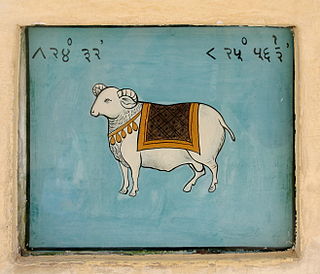
Mesha Sankranti refers to the first day of the solar cycle year, that is the solar New Year in the Hindu luni-solar calendar. The Hindu calendar also has a lunar new year, which is religiously more significant. The solar cycle year is significant in Assamese, Odia, Punjabi, Malayalam, Tamil, and Bengali calendars.
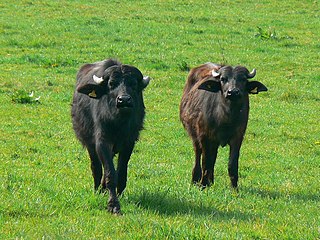
Buffalo meat, also known as buffen, is the meat of the water buffalo, a large bovid, raised for its milk and meat in many countries including India, Pakistan, Bangladesh, Nepal,the Philippines, Bulgaria, Italy, Russia, the Czech Republic, Slovakia, Australia and Egypt.
Lohra may refer to: