PaperWorks was a computer program introduced by Xerox Corporation in 1992, which allowed a business traveler to communicate with his or her personal computer while away from the office.

A computer program is a collection of instructions that performs a specific task when executed by a computer. Most computer devices require programs to function properly.

A personal computer (PC) is a multi-purpose computer whose size, capabilities, and price make it feasible for individual use. Personal computers are intended to be operated directly by an end user, rather than by a computer expert or technician. Unlike large costly minicomputer and mainframes, time-sharing by many people at the same time is not used with personal computers.

An office is generally a room or other area where an organization's employees perform administrative work in order to support and realize objects and goals of the organization. The word "office" may also denote a position within an organization with specific duties attached to it ; the latter is in fact an earlier usage, office as place originally referring to the location of one's duty. When used as an adjective, the term "office" may refer to business-related tasks. In law, a company or organization has offices in any place where it has an official presence, even if that presence consists of a storage silo rather than an establishment with desk-and-chair. An office is also an architectural and design phenomenon: ranging from a small office such as a bench in the corner of a small business of extremely small size, through entire floors of buildings, up to and including massive buildings dedicated entirely to one company. In modern terms an office is usually the location where white-collar workers carry out their functions. As per James Stephenson, "Office is that part of business enterprise which is devoted to the direction and co-ordination of its various activities."
PaperWorks could be used to send and retrieve documents between the fixed computer system and the business traveler, by using fax machines.

Fax, sometimes called telecopying or telefax, is the telephonic transmission of scanned printed material, normally to a telephone number connected to a printer or other output device. The original document is scanned with a fax machine, which processes the contents as a single fixed graphic image, converting it into a bitmap, and then transmitting it through the telephone system in the form of audio-frequency tones. The receiving fax machine interprets the tones and reconstructs the image, printing a paper copy. Early systems used direct conversions of image darkness to audio tone in a continuous or analog manner. Since the 1980s, most machines modulate the transmitted audio frequencies using a digital representation of the page which is compressed to quickly transmit areas which are all-white or all-black.
The software created special machine-readable forms, similar to the type of forms used to score standardized tests. (Related topic: OMR)
Machine-readable data, or computer-readable data, is data in a format that can be easily processed by a computer. Machine-readable data must be structured data.

A form is a document with spaces in which to write or select, for a series of documents with similar contents. The documents usually have the printed parts in common, except, possibly, for a serial number.
Optical mark recognition is the process of capturing human-marked data from document forms such as surveys and tests. They are used to read questionnaires, multiple choice examination paper in the form of lines or shaded areas.
The user would then fax the form back to the central computer, commanding one of several tasks to be performed. For example:

A user is a person who utilizes a computer or network service. Users of computer systems and software products generally lack the technical expertise required to fully understand how they work. Power users use advanced features of programs, though they are not necessarily capable of computer programming and system administration.
- the user could attach a document to the form which would be stored at the home office (for possible later processing), or
- the user could request that a particular document, stored on the computer's hard drive, be sent to the user.
- the user could request that a particular document be distributed to other users, also by fax.
A document is a written, drawn, presented, or memorialized representation of thought. a document is a form, or written piece that trains a line of thought or as in history, a significant event. The word originates from the Latin documentum, which denotes a "teaching" or "lesson": the verb doceō denotes "to teach". In the past, the word was usually used to denote a written proof useful as evidence of a truth or fact. In the computer age, "document" usually denotes a primarily textual computer file, including its structure and format, e.g. fonts, colors, and images. Contemporarily, "document" is not defined by its transmission medium, e.g., paper, given the existence of electronic documents. "Documentation" is distinct because it has more denotations than "document". Documents are also distinguished from "realia", which are three-dimensional objects that would otherwise satisfy the definition of "document" because they memorialize or represent thought; documents are considered more as 2 dimensional representations. While documents are able to have large varieties of customization, all documents are able to be shared freely, and have the right to do so, creativity can be represented by documents, also. History, events, examples, opinion, etc. all can be expressed in documents.
The underlying technology for PaperWorks, called "DataGlyphs", was developed at Xerox PARC.

The graphical user interface is a form of user interface that allows users to interact with electronic devices through graphical icons and visual indicators such as secondary notation, instead of text-based user interfaces, typed command labels or text navigation. GUIs were introduced in reaction to the perceived steep learning curve of command-line interfaces (CLIs), which require commands to be typed on a computer keyboard.

A word processor is an electronic device or computer software application that performs the task of composing, editing, formatting, and printing of documents.
WYSIWYG is an acronym for What You See Is What You Get. In computing, a WYSIWYG editor is a system in which content can be edited in a form closely resembling its appearance when printed or displayed as a finished product, such as a printed document, web page, or slide presentation.
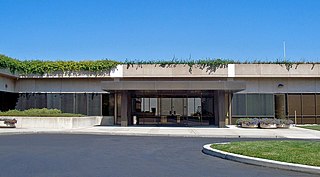
PARC is a research and development company in Palo Alto, California, with a distinguished reputation for its contributions to information technology and hardware systems.

Xerox Corporation is an American global corporation that sells print and digital document products and services in more than 160 countries. Xerox is headquartered in Norwalk, Connecticut, though its largest population of employees is based around Rochester, New York, the area in which the company was founded. The company purchased Affiliated Computer Services for $6.4 billion in early 2010. As a large developed company, it is consistently placed in the list of Fortune 500 companies.

Laser printing is an electrostatic digital printing process. It produces high-quality text and graphics by repeatedly passing a laser beam back and forth over a negatively charged cylinder called a "drum" to define a differentially charged image. The drum then selectively collects electrically charged powdered ink (toner), and transfers the image to paper, which is then heated in order to permanently fuse the text, imagery, or both. As with digital photocopiers, laser printers employ a xerographic printing process. Laser printing differs from traditional xerography as implemented in analog photocopiers in that in the latter, the image is formed by reflecting light off an existing document onto the exposed drum.
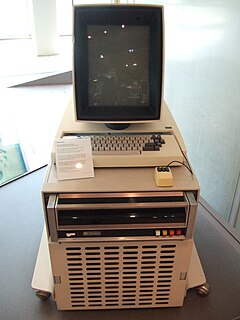
The Xerox Alto is the first computer designed from its inception to support an operating system based on a graphical user interface (GUI), later using the desktop metaphor. The first machines were introduced on 1 March 1973, a decade before mass market GUI machines became available.

The Star workstation, officially named Xerox 8010 Information System, was the first commercial system to incorporate various technologies that have since become standard in personal computers, including a bitmapped display, a window-based graphical user interface, icons, folders, mouse (two-button), Ethernet networking, file servers, print servers, and e-mail.
Project Xanadu was the first hypertext project, founded in 1960 by Ted Nelson. Administrators of Project Xanadu have declared it an improvement over the World Wide Web, with mission statement: "Today's popular software simulates paper. The World Wide Web trivialises our original hypertext model with one-way ever-breaking links and no management of version or contents."

An MFP, multi-functional, all-in-one (AIO), or multi-function device (MFD), is an office machine which incorporates the functionality of multiple devices in one, so as to have a smaller footprint in a home or small business setting, or to provide centralized document management/distribution/production in a large-office setting. A typical MFP may act as a combination of some or all of the following devices: email, fax, photocopier, printer, scanner.

In computing, the desktop metaphor is an interface metaphor which is a set of unifying concepts used by graphical user interfaces to help users interact more easily with the computer. The desktop metaphor treats the computer monitor as if it is the top of the user's desk, upon which objects such as documents and folders of documents can be placed. A document can be opened into a window, which represents a paper copy of the document placed on the desktop. Small applications called desk accessories are also available, such as a desk calculator or notepad, etc.
Bravo was the first WYSIWYG document preparation program. It provided multi-font capability using the bitmap displays on the Xerox Alto personal computer. It was produced at Xerox PARC by Butler Lampson, Charles Simonyi and colleagues in 1974.
Gypsy was the first document preparation system based on a mouse and graphical user interface to take advantage of those technologies to virtually eliminate modes. Its operation would be familiar to any user of a modern personal computer. It was the second WYSIWYG document preparation program, a successor to the ground-breaking Bravo on the seminal Xerox Alto personal computer.
A fax server is a system installed in a local area network (LAN) server that allows computer users whose computers are attached to the LAN to send and receive fax messages.
WinFax is a Microsoft Windows-based software product designed to let computers equipped with fax-modems to communicate directly to stand-alone fax machines, or other similarly equipped computers.
Internet fax, e-fax, or online fax is the use of the internet and internet protocols to send a fax (facsimile), rather than using a standard telephone connection and a fax machine. A distinguishing feature of Internet fax, compared to other Internet communications such as email, is the ability to exchange fax messages with traditional telephone-based fax machines.
Metaphor Computer Systems (1982–1994) was a Xerox PARC spin-off that created an advanced workstation, database gateway, a unique graphical office interface, and software applications that communicate. The Metaphor machine was one of the first commercial workstations to offer a complete hardware/software package and a GUI. Although the company achieved some commercial success, it never achieved the fame of either the Apple Macintosh or Microsoft Windows.
A paperless office is a work environment in which the use of paper is eliminated or greatly reduced. This is done by converting documents and other papers into digital form, a process known as digitization. Proponents claim that "going paperless" can save money, boost productivity, save space, make documentation and information sharing easier, keep personal information more secure, and help the environment. The concept can be extended to communications outside the office as well.

A photocopier is a machine that makes copies of documents and other visual images onto paper or plastic film quickly and cheaply. Most modern photocopiers use a technology called xerography, a dry process that uses electrostatic charges on a light-sensitive photoreceptor to first attract and then transfer toner particles onto paper in the form of an image. Heat, pressure or a combination of both is then used to fuse the toner onto the paper. Copiers can also use other technologies such as ink jet, but xerography is standard for office copying. Earlier versions included the Gestetner stencil duplicator, invented by David Gestetner in 1887.
