
Vynohradiv is a city in western Ukraine, Zakarpattia Oblast. It is the center of Vynohradiv Raion. Population: 25,395 (2020 est.)
Jovan Nenad, known as the Black was a Serb military commander in the service of the Kingdom of Hungary who took advantage of a Hungarian military defeat at Mohács and subsequent struggle over the Hungarian throne to carve out his own state in the southern Pannonian Plain. He styled himself emperor (tsar).

Sárospatak is a town in Borsod-Abaúj-Zemplén county, northern Hungary. It lies 70 kilometres northeast from Miskolc, in the Bodrog river valley. The town, often called simply Patak, is an important cultural centre.

Trebišov is a small industrial town in the easternmost part of Slovakia, with a population of around 25,000. The town is an administrative, economic and cultural center with machine (Vagónka) and building materials industries.

Abaújvár is a village in northeastern Hungary, next to the Slovak border. It lies 72 km (45 mi) northeast of Miskolc, and 18 km south of Košice (Kassa), Slovakia.

József Pecsovszky or Iosif Petschovschi, was a Romanian football player of Hungarian ethnicity. His nickname was Peci. He could play in any position on the pitch, he was even goalkeeper once.
Szabolcs Mihai Perényi is a Romanian-born Hungarian former professional football player.
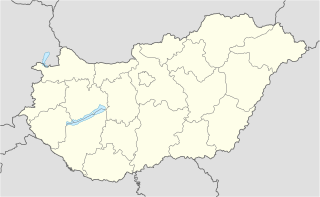
Beregsurány is a village in Szabolcs-Szatmár-Bereg county, in the Northern Great Plain region of eastern Hungary.

Balatonszemes is a village in Somogy county, Hungary.
The inaugural Hungarian Chess Championship was held in the city of Győr in 1906. Initially, there was no governing body responsible for its organisation, until the formation of the Hungarian Chess Federation. The HCF first appeared in 1911, but failed to establish itself properly until 1923.
The Battle of Szőlős or Battle of Seleš was fought on May 1, 1527 between the ethnic Serbian Rebels and Hungarian nobility. The commander of the Serb forces was Emperor Jovan Nenad, while the Hungarians were led by Péter Perényi of Transylvania. The Hungarian army suffered a total defeat while Perényi barely escaped alive.

Eleanor Spencer Stone Perényi was a gardener and author. She wrote several books including Green Thoughts, a collection of essays based on her own gardening experiences.

Baron Zsigmond Perényi de Perény was a Hungarian politician, who served as Interior Minister in 1919. During the Hungarian Soviet Republic, he was arrested by the communists. He was the governor of the Governorate of Subcarpathia between 28 June 1939 and 12 September 1940. As Crown Guard, he was a member of the House of Magnates, later Speaker of this assembly. In 1944, he resigned because of the appointment of the cabinet of Ferenc Szálasi's Hungarist Arrow Cross Party).

Miklós Perényi is a Hungarian cellist. He was born in Budapest into a musical family and studied at the Ferenc Liszt Academy of Music in Budapest with Ede Banda and Enrico Mainardi. He continued his studies at the Accademia Santa Cecilia, graduating in 1962. In 1963 he won a prize at the Pablo Casals International Violoncello Competition in Budapest.
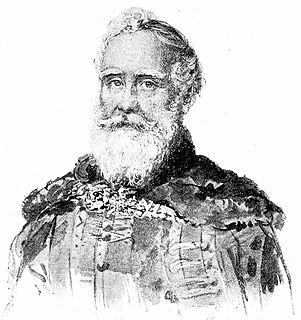
Baron Zsigmond Perényi de Perény was a Hungarian politician, who served as Speaker of the House of Magnates in 1849. After defeat of the Hungarian Revolution of 1848 he was executed because his name appeared in the Hungarian Declaration of Independence which was declared by the Diet of Hungary in Debrecen on April 14, 1849.
Edit Perényi-Weckinger was a Hungarian gymnast who competed in the 1948 Summer Olympics and in the 1952 Summer Olympics. She was born in Kispest.
Eszter Perenyi is a Budapest-born Hungarian violinist and Meritorious Artist of Hungary. She have graduated from the Franz Liszt Academy of Music and then played Erich Leinsdorf and István Kertész at the London Symphony Orchestra. She also performed abroad in such countries as Germany, Italy and Sweden and since 1975 became a teacher at Liszt Academy. In 2002 she became a recipient of the Bartók-Pásztory Prize and five years later was named a Merited Artist of the Republic of Hungary.
Béla Perényi was a Hungarian chess international master known for his work in opening theory. Two major lines in the Najdorf Sicilian are named after him. He died in a car crash in 1988, while on the way to visit his fiancé, Ildikó Mádl.

The Károlyi Castle is a 19th-century castle, of Classicist and Eclectic styles, it is located in the village of Fehérvárcsurgó in the Fejér County, Hungary. The complex was built by György Károlyi from the Károlyi noble family, designed by architects Henrich Koch and Miklós Ybl. There are 20 rooms in the building, and there is a guided tour.

Baron Péter Perényi was a Hungarian aristocrat who held the office of voivode of Transylvania from 1526 to 1529. He was an influential protector of Protestant preachers in the Kingdom of Hungary.
This page is based on this
Wikipedia article Text is available under the
CC BY-SA 4.0 license; additional terms may apply.
Images, videos and audio are available under their respective licenses.
