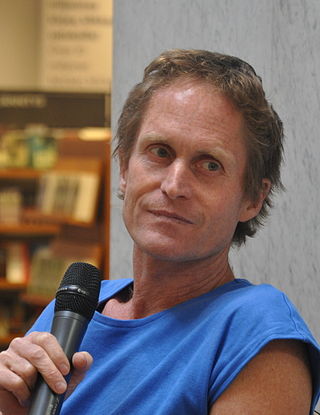
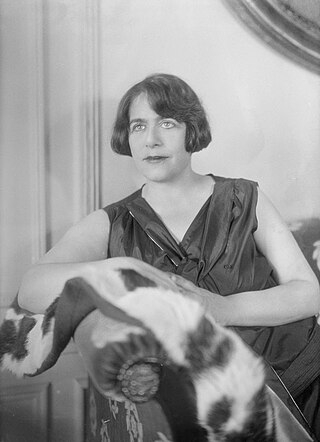
Peter H. Fogtdal (born 22 May 1956 in Copenhagen, Denmark) is a Danish novelist and poet. He has written 14 novels in Danish. Three have been translated into French, two into Portuguese, and one into English, Serbian, and Ukrainian. In Denmark he is known for writing novels with a spiritual, mystical or humorous slant.
In 2005 he won a French literary prize, Prix Littéraire des Ambassadeurs de la Francophonie for his translated novel Le front chantilly (Floedeskumsfronten). In 2001 this novel was named one of the three best novels of the year by the biggest Danish newspaper Jyllands-Posten.
Peter H. Fogtdal lives in Portland, Oregon but goes back to Copenhagen, Denmark often.
Danish is a North Germanic language from the Indo-European language family spoken by about six million people, principally in and around Denmark. Communities of Danish speakers are also found in Greenland, the Faroe Islands, and the northern German region of Southern Schleswig, where it has minority language status. Minor Danish-speaking communities are also found in Norway, Sweden, the United States, Canada, Brazil, and Argentina.
The Battle of Copenhagen of 1801, also known as the First Battle of Copenhagen to distinguish it from the Second Battle of Copenhagen in 1807, was a naval battle in which a British fleet fought and defeated a smaller force of the Dano-Norwegian Navy anchored near Copenhagen on 2 April 1801. The battle came about over British fears that the powerful Danish fleet would ally with France, and a breakdown in diplomatic communications on both sides.
Peter Høeg is a Danish writer of fiction. He is best known for his novel Miss Smilla's Feeling for Snow (1992).
Lars Saabye Christensen is a Norwegian / Danish author.
Jens Peter Jacobsen was a Danish novelist, poet, and scientist, in Denmark often just written as "J. P. Jacobsen". He began the naturalist movement in Danish literature and was a part of the Modern Breakthrough.
Andreas William Heinesen was a poet, writer, composer and painter from the Faroe Islands.
Inger Christensen was a Danish poet, novelist, essayist and editor. She is considered the foremost Danish poetic experimentalist of her generation.
Carsten Jensen is a Danish author and political columnist. He first earned recognition as a literary critic for the Copenhagen daily, Politiken. His books, including I Have Seen the World Begin (1996), deal with knowledge of the world. For this novel he won the Danish booksellers award De Gyldne Laurbær in 1996. The year 2006 saw the publication of his novel Vi, de druknede, a chronicle about the birth of modern Denmark, seen through the history of his hometown Marstal.
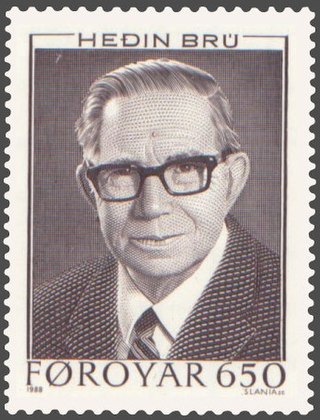
Heðin Brú was the pen-name of Hans Jacob Jacobsen, a Faroese novelist and translator.
Danish literature stretches back to the Middle Ages. The earliest preserved texts from Denmark are runic inscriptions on memorial stones and other objects, some of which contain short poems in alliterative verse. In the late 12th century Saxo Grammaticus wrote Gesta Danorum. During the 16th century, the Lutheran Reformation came to Denmark. During this era, Christiern Pedersen translated the New Testament into Danish and Thomas Kingo composed hymns. Fine poetry was created in the early 17th century by Anders Arrebo (1587–1637). The challenges faced during Denmark's absolute monarchy in 1660 are chronicled in Jammersminde by Leonora Christina of the Blue Tower. Ludvig Holberg (1684–1754), influenced by the ideas of the Enlightenment and Humanism, is considered the founder of modern Danish and Norwegian literature. Neoclassical poetry, drama, and the essay flourished during the 18th century influenced by French and English trends. German influence is seen in the verse of the leading poets of the late 18th century such as Johannes Ewald and Jens Baggesen. Other 18th century writers include the hymn writer Hans Adolph Brorson and the satirical poet Johan Herman Wessel.
Stig Dalager is a Danish writer. He is the author of 65 literary works of all kinds, mostly novels and plays, of which several have been translated or staged internationally.
Karl Ove Knausgård is a Norwegian author. He became known worldwide for a series of six autobiographical novels titled My Struggle. The Wall Street Journal has described him as "one of the 21st century's greatest literary sensations".
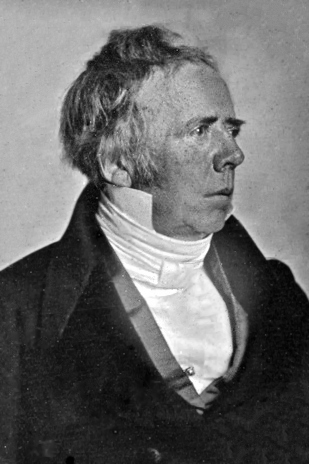
Hans Christian Ørsted was a Danish chemist and physicist who discovered that electric currents create magnetic fields. This phenomenon is known as Oersted's law. He also discovered aluminium, a chemical element.
Kirsten Thorup is a Danish author.
Johan Harstad is a Norwegian novelist, short story writer, playwright and graphic designer. He lives in Oslo.
Krass Clement Kay Christensen is a Danish photographer who has specialized in documentary work. He graduated as a film director in Copenhagen but soon turned to still photography, publishing his first book Skygger af øjeblikke in 1978. He has since become an active documentary photographer, focusing on people from both Denmark and abroad. His earlier work is black and white but since 2000 he has also worked in colour.
"Elveskud" or "Elverskud" is the Danish, and most widely used, name for one of the most popular ballads in Scandinavia.
Morten Piil was a Danish writer and film critic. He received a Bodil Honorary Award in 2002 for his "long-standing contribution to Danish film literature".
Karen Bramson was a Danish author who wrote novels and plays mostly in Danish or French although many of her writings have been translated into English.
Helle Helle is a widely translated Danish short story writer and novelist. Basing her stories on episodes in the lives of ordinary people, she gained fame in 2005 with her novel Rødby-Puttgarden. Now considered to be one of the most outstanding authors of contemporary Danish literature, since her novel This Should be Written in the Present Tense was published in English in 2014, she has also been acclaimed by American and British reviewers.
This page is based on this Wikipedia article Text is available under the CC BY-SA 4.0 license; additional terms may apply. Images, videos and audio are available under their respective licenses.