This article is being considered for deletion in accordance with Wikipedia's deletion policy. Please share your thoughts on the matter at this article's deletion discussion page. |
Peter Taylor | |
|---|---|
| Born | Manchester, England |
| Years active | 1960s – Current |
Peter Taylor is a musician and composer born in Manchester, England. He has worked with the BBC and Granada Television, and together with Cliff Twemlow formed one half of the composition partnership Peter Reno.
Taylor began his music career studying pianoforte at Ardwicke Central High School in Manchester. Inspired and entranced by the virtuosity of alto saxophonist Freddie Gardener, Peter went on to study at the Regional School of Music in Manchester as a saxophone and clarinet student under John Roadhouse, lead saxophonist with the Northern Variety Orchestra of the BBC. Soon, Peter became involved with the Northern Dance Orchestra of the BBC, where all the Regional School of Music's tutors were members in various disciplines.
In 1956 Peter became a pupil of Professor Fred Dickinson of the Royal Northern College of Music, studying clarinet. During his time there he founded his vast knowledge of the classical repertoire and became associated with members of the Halle Orchestra , which included Martin Milner as band leader, Jean Bell on Harp and Rayson Whalley on percussion.
In those early days of his musical career Peter played in many Northern 'Palais-De-Danse' orchestras, or 'dance bands', with which he regularly performed at the Ritz and Plaza ballrooms in Manchester. Peter's career developed further when he began playing for the Raymond Woodhead Band at the Ashton Palais, which was a famous band at the time. As Peter became a more accomplished baritone saxophone player it attracted more gigs for him, although he was also working as a music copyist for the BBC orchestras at the time.
His work with the BBC soon led to him joining Granada Television as a Music Librarian, Advisor, Supervisor, Head of Copyright and a Contractor.
During his time at Granada Television , Peter commissioned high-profile theme tunes and incidental music, including 'Façade Suite' by William Walton for 'Northern News', Ravel -Mussorgsky's 'Pictures at an Exhibition' for 'The Verdict Is Yours', 'English Dances' by Malcolm Arnold for 'What the Papers Say' and many other highly successful and recognisable soundtracks. Probably the most famous piece he commissioned was called 'Lancashire Blues' by Eric Spear for a new soap opera with the working title of 'Florizel Street'. The story goes that a tea lady named Agnes remarked that 'Florizel' sounded like a brand of disinfectant, so the name of the soap opera was changed. Since it first aired in 1960, the 'Lancashire Blues' chosen by Peter has become one of the Twentieth Century's most iconic theme tunes to what we now know as Coronation Street .
At Granada, Peter worked alongside music directors Peter Knight and Derek Hilton, with whom he planned many musical strategies including Mr. Hilton's composition for 'Country Matters' which was awarded an Ivor Novello Award. He also worked with drama directors Henry Kaplan, Silvio Narrizano and Cliff Owen on music content, and later with Claude Whatham, Mike Newell and Michael Apted, who all went on to become highly respected film directors.
Peter soon began composing music himself, and had pieces featured on regional programmes such as 'What's On' and 'This is Your Right' and school programmes like 'Picture Box'. Following his initial few successes, he went on to co-write the memorable theme tune for the 1970s TV series Crown Court for De Wolfe Music, performed by the Simon Park Orchestra , as well as music for an animated cartoon series called 'The Magic Ball'. [1]
After Granada bought sheet music publishers Novello and Co. in 1970, Peter resigned from the broadcasting company, but still gleaned some satisfaction from commissioning composer Derek New to write 'College Boy' for University Challenge, which is still in use today, as well as the theme to 'What The Papers Say'. Following his departure from Granada, Peter forged a new career in Personnel and Training Development having gained a professional qualification from the Chartered Members of the Institute of Personnel and Development.
Peter Taylor's most notable music supervision was for TV drama 'Double Indemnity' directed by Cliff Owen which aired in 1960 as part the 'ITV Play of the Week' series. He also cites the music content for documentary series 'The Fifties' as one of his favourite projects. Other notable projects on his credits include the 1956 documentary show 'Zoo Time', which used Prokofiev's 'Peter and the Wolf', the long-running 'World in Action' documentary series which ran from the early sixties until the end of the nineties and used a theme tune credited to Jonathan Weston (but composed and improvised by guitarist Shawn Phillips and organist Mick Weaver), which Peter commissioned. Other notable programmes on his list of credits include 'Under Fire', which included 'Rodeo Ballet' by A.Copeland, and 'Searchlight' which included a symphony by Shostakovich.
Peter is still involved in all matters musical to this day. He has written many library tracks for De Wolfe Music, some of which are available currently on '70s: The Original Soundtrack' (DWCD0255), as well as classical fanfares and pieces on 'Classics 4' (DWCD0139), while some more of his tracks appear on 'Movie Archive – The Silent Film Era' (DWCD0096) and 'Come Dancing' (DWCD0104).
Northern soul is a music and dance movement that emerged in Northern England and the English Midlands in the late 1960s from the British mod scene, based on a particular style of Black American soul music, especially from the mid-1960s, with a heavy beat and fast tempo or American soul music from northern cities such as Detroit, Chicago and others.
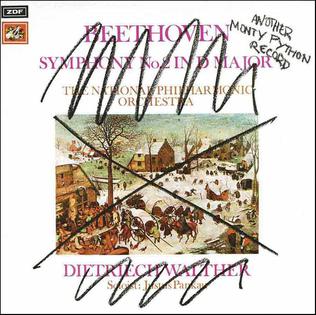
Another Monty Python Record is the second album produced by the Monty Python comedy group, released in 1971. Dissatisfied with their monaural BBC debut album released the previous year, the group took full control of the follow-up, which would be the first release of a six-album deal with Charisma Records in the UK. Most of the material is from the second BBC series of Monty Python's Flying Circus, with a few newly written pieces. One track, "Stake Your Claim", is an English-language version of a sketch from the team's first German episode.
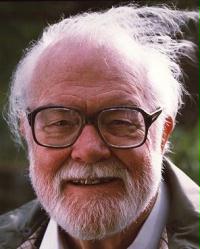
Sir Charles Barnard Groves CBE was an English conductor. He was known for the breadth of his repertoire and for encouraging contemporary composers and young conductors.
Eric Spear, was an English composer best known for his film scores and the theme of the ITV soap opera Coronation Street.
John Valmore Pearson was a British composer, orchestra leader and pianist. He led the Top of the Pops orchestra for sixteen years, wrote a catalogue of library music, and had many of his pieces used as the theme music to television series.
Roy Frederick Budd was a British jazz pianist and composer known for his film scores, including Get Carter and The Wild Geese.
Arnold Atkinson Cooke was a British composer.
"Eye Level" is a 1972 single by the Simon Park Orchestra. It was produced originally for the De Wolfe Music Library and selected by Thames Television to be the theme tune for their Netherlands-based detective series Van der Valk.
Geoffrey Love was a prolific British arranger and composer of easy listening and pop versions of film themes. He became famous in the late 1950s, playing under the pseudonym of Manuel and The Music of The Mountains.
Geoffrey Alan Burgon was an English composer best known for his television and film scores. Among his most recognisable works are Monty Python's Life of Brian for film, and Tinker Tailor Soldier Spy and Brideshead Revisited for television, the latter two earning Ivor Novello Awards in 1979 and 1981 respectively. He also won BAFTAs for his themes for the remake of The Forsyte Saga and Longitude.
Anthony Gilbert is a British composer and academic, long associated with the Royal Northern College of Music.
Johnny Hawksworth was a British bass player and composer who lived and worked in Australia beginning in 1984.
Leonard Salzedo was an English composer and conductor of Spanish descent.
Peter Knight was an English musical arranger, conductor and composer.
De Wolfe Limited is a British music production company, recognised as the originator of what has become known as library music. De Wolfe Music was established by Meyer de Wolfe in 1909 and began its recorded library in 1927 with the advent of 'Talkies'.
Peter Reno was a musical composition partnership between Peter Taylor and Cliff Twemlow. They were active throughout the sixties and seventies and had music included in popular TV shows including Queenie's Castle and Crown Court and several films including Dawn of the Dead.
New Broadcasting House (NBH) was the BBC's North West England headquarters on Oxford Road in Chorlton-on-Medlock, Manchester. The studios housed BBC Manchester, BBC North West, the BBC Philharmonic Orchestra and the BBC Religion and Ethics department. It was known as a Network Production Centre, the others being in Birmingham and Broadcasting House, Bristol.
Jenny Twigge is a British actress who studied at the Royal Scottish Academy of Music and Drama, Glasgow. She was a patron of animal rescue group All Dogs Matter.
Jan Stoeckart was a Dutch composer, conductor, trombonist and former radio producer, who often worked under various pseudonyms such as Willy Faust, Peter Milray, Julius Steffaro and Jack Trombey. In the UK he is best known for his composition Eye Level, the theme tune to the ITV series Van der Valk, which was a number one on the UK singles chart in 1973. He also composed "Homeward Bound", a theme from the film Monty Python and the Holy Grail (1975), under the pseudonym Jack Trombey.
Derek Redvers Hilton was an English musician and composer who worked for most of his professional career as musical director at Granada Television. He is mostly remembered for his television themes and is credited as writing a total of 241. He also composed under the pseudonym John Snow.