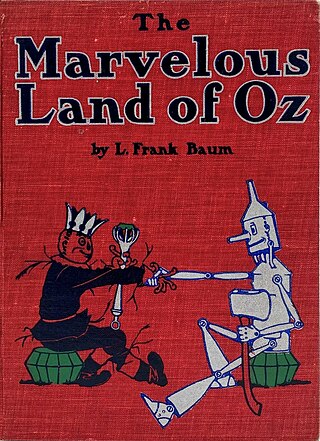
The Marvelous Land of Oz: Being an Account of the Further Adventures of the Scarecrow and the Tin Woodman, commonly shortened to The Land of Oz, published in July 1904, is the second book in L. Frank Baum's Oz series, and the sequel to The Wonderful Wizard of Oz (1900). This and the following 34 books in the series were illustrated by John R. Neill. It was followed by Ozma of Oz (1907).

Ruth Plumly Thompson was an American writer of children's stories, best known for writing many novels placed in Oz, the fictional land of L. Frank Baum's classic children's novel The Wonderful Wizard of Oz and its sequels.

Pumpkinhead is a 1988 American supernatural horror film. It was the directorial debut of special effects artist Stan Winston. The film has built up a cult following since its release. The first in the Pumpkinhead franchise, it was followed by a direct-to-video sequel, two TV film sequels, and a comic book series. The film was originally called Vengeance: The Demon and it was inspired by a poem written by poet Ed Justin. The film inspired a video game called Bloodwings: Pumpkinhead's Revenge.
Oz Squad is a comic book series using characters and setting from L. Frank Baum's Land of Oz series, "updated for a more adult audience".

Jack Pumpkinhead is a fictional character from the Land of Oz who appears in several of the classic children's series of Oz books by American author L. Frank Baum. Jack first appeared as a main character in the second Oz book by Baum, The Marvelous Land of Oz (1904), and returned often in subsequent books. He got the starring role in Ruth Plumly Thompson's 1929 book Jack Pumpkinhead of Oz.
Wizard, the wizard, or wizards may refer to:
A scarecrow is a decoy used to discourage birds from disturbing crops.
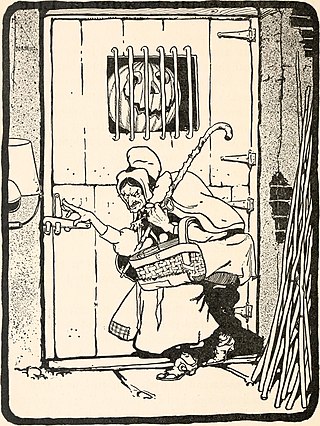
Mombi is a fictional character in L. Frank Baum's classic children's series of Oz Books. She is the most significant antagonist in the second Oz book The Marvelous Land of Oz (1904), and is alluded to in other works. Mombi plays a very important role in the fictional history of Oz.
The Emerald City is the capital city of the fictional Land of Oz in L. Frank Baum's Oz books and in the 1939 film adaptation The Wizard of Oz.
Mandy or Mandie may refer to:
Tick tock, tic toc, Tik Tok and other variants may refer to:
Ashes to Ashes may refer to:
The Wonderful Land of Oz is a 1969 film directed by Barry Mahon. It is a low budget but faithful adaptation of the 1904 novel The Marvelous Land of Oz by L. Frank Baum.
A jester is a type of entertainer employed by the nobility during the Middle Ages and the Renaissance.

The Wonderful Wizard of Oz is a 1900 children's novel written by American author L. Frank Baum. Since its first publication in 1900, it has been adapted many times by L. Frank Baum and others: for film, television, theatre, books, comics, games, and other media.

Peter Brown is a major character in the Oz novels of Ruth Plumly Thompson, who continued the series of Oz books after the death of their creator, L. Frank Baum. Thompson used Peter as the protagonist in three of her books: The Gnome King of Oz (1927), Jack Pumpkinhead of Oz (1929), and Pirates in Oz (1931).
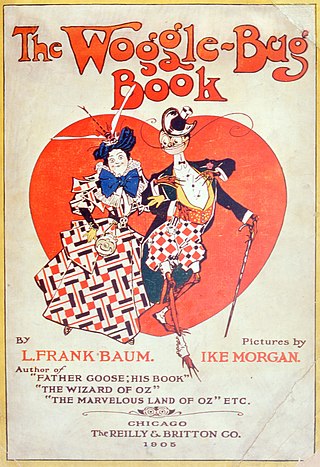
The Woggle-Bug Book is a 1905 children's book written by L. Frank Baum, creator of the Land of Oz, and illustrated by Ike Morgan. A spinoff from the Oz novels, it has long been one of the rarest items in the Baum bibliography. Baum's text has been controversial for its use of ethnic humor stereotypes.
The Marvelous Land of Oz is a comic book series published by American company Marvel Comics based on The Marvelous Land of Oz book written by L. Frank Baum. It is an eight issue limited series written by Eric Shanower, penciled by Skottie Young, and colored by Jean-Francois Beaulieu. It is a sequel to a previous adaptation of The Wonderful Wizard of Oz from the same team.

The Woggle-Bug is a 1905 musical based on the 1904 novel The Marvelous Land of Oz by L. Frank Baum, with book and lyrics by the author and music by Frederic Chapin that opened June 18, 1905 at the Garrick Theater in Chicago under the direction of Frank Smithson, a Shubert Organization employee. The musical was a major critical and commercial failure, running less than a month. Chapin, however, had proven quite saleable to the publisher, M. Witmark and Sons, and many of the songs were published. The music director was Frank Pallma. The surviving sheet music was published by Hungry Tiger Press in 2002.
This page is based on this
Wikipedia article Text is available under the
CC BY-SA 4.0 license; additional terms may apply.
Images, videos and audio are available under their respective licenses.
