
Complex analysis, traditionally known as the theory of functions of a complex variable, is the branch of mathematical analysis that investigates functions of complex numbers. It is useful in many branches of mathematics, including algebraic geometry, number theory, analytic combinatorics, applied mathematics; as well as in physics, including the branches of hydrodynamics, thermodynamics, and particularly quantum mechanics. By extension, use of complex analysis also has applications in engineering fields such as nuclear, aerospace, mechanical and electrical engineering.

In probability theory and statistics, the cumulative distribution function (CDF) of a real-valued random variable , or just distribution function of , evaluated at , is the probability that will take a value less than or equal to .

The derivative of a function of a real variable measures the sensitivity to change of the function value with respect to a change in its argument. Derivatives are a fundamental tool of calculus. For example, the derivative of the position of a moving object with respect to time is the object's velocity: this measures how quickly the position of the object changes when time advances.

In mathematics, a holomorphic function is a complex-valued function of one or more complex variables that is, at every point of its domain, complex differentiable in a neighbourhood of the point. The existence of a complex derivative in a neighbourhood is a very strong condition, for it implies that any holomorphic function is actually infinitely differentiable and equal, locally, to its own Taylor series (analytic). Holomorphic functions are the central objects of study in complex analysis.
In probability theory and statistics, a probability distribution is a mathematical function that provides the probabilities of occurrence of different possible outcomes in an experiment. In more technical terms, the probability distribution is a description of a random phenomenon in terms of the probabilities of events. For instance, if the random variable X is used to denote the outcome of a coin toss, then the probability distribution of X would take the value 0.5 for X = heads, and 0.5 for X = tails. Examples of random phenomena can include the results of an experiment or survey.

In probability and statistics, a random variable, random quantity, aleatory variable, or stochastic variable is described informally as a variable whose values depend on outcomes of a random phenomenon. The formal mathematical treatment of random variables is a topic in probability theory. In that context, a random variable is understood as a measurable function defined on a probability space whose outcomes are typically real numbers.

In signal processing, white noise is a random signal having equal intensity at different frequencies, giving it a constant power spectral density. The term is used, with this or similar meanings, in many scientific and technical disciplines, including physics, acoustical engineering, telecommunications, and statistical forecasting. White noise refers to a statistical model for signals and signal sources, rather than to any specific signal. White noise draws its name from white light, although light that appears white generally does not have a flat power spectral density over the visible band.
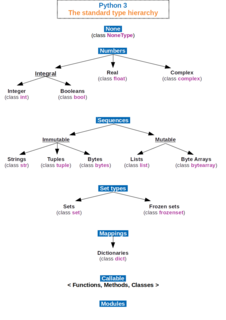
In computer science and computer programming, a data type or simply type is an attribute of data which tells the compiler or interpreter how the programmer intends to use the data. Most programming languages support basic data types of integer numbers, Floating-point numbers, characters and booleans. A data type constrains the values that an expression, such as a variable or a function, might take. This data type defines the operations that can be done on the data, the meaning of the data, and the way values of that type can be stored. A data type provides a set of values from which an expression may take its values.
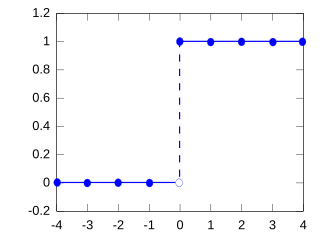
In mathematics, a degenerate distribution is a probability distribution in a space with support only on a space of lower dimension. If the degenerate distribution is univariate it is a deterministic distribution and takes only a single value. Examples include a two-headed coin and rolling a die whose sides all show the same number. This distribution satisfies the definition of "random variable" even though it does not appear random in the everyday sense of the word; hence it is considered degenerate.
In physics, an observable is a physical quantity that can be measured. Examples include position and momentum. In systems governed by classical mechanics, it is a real-valued "function" on the set of all possible system states. In quantum physics, it is an operator, or gauge, where the property of the quantum state can be determined by some sequence of operations. For example, these operations might involve submitting the system to various electromagnetic fields and eventually reading a value.

In mathematical analysis, the maxima and minima of a function, known collectively as extrema, are the largest and smallest value of the function, either within a given range or on the entire domain of a function. Pierre de Fermat was one of the first mathematicians to propose a general technique, adequality, for finding the maxima and minima of functions.

In mathematical modeling, statistical modeling and experimental sciences, the values of dependent variables depend on the values of independent variables. The dependent variables represent the output or outcome. It is the dependent variable whose variation is being studied. The independent variables are controlled inputs, and the variation in the value of the dependent variable is due to the different inputs. The independent variables are also known as regressors in a statistical context. In an experiment, any variable that the experimenter manipulates can be called an independent variable. models and experiments test the effects that the independent variables have on the dependent variables. Sometimes, even if their influence is not of direct interest, independent variables may be included for other reasons, such as to account for their potential confounding effect.

In statistical modeling, regression analysis is a set of statistical processes for estimating the relationships between a dependent variable and one or more independent variables. The most common form of regression analysis is linear regression, in which a researcher finds the line that most closely fits the data according to a specific mathematical criterion. For example, the method of ordinary least squares computes the unique line that minimizes the sum of squared distances between the true data and that line. For specific mathematical reasons, this allows the researcher to estimate the conditional expectation of the dependent variable when the independent variables take on a given set of values. Less common forms of regression use slightly different procedures to estimate alternative location parameters or estimate the conditional expectation across a broader collection of non-linear models.
In mathematical analysis, and applications in geometry, applied mathematics, engineering, and natural sciences, a function of a real variable is a function whose domain is the real numbers ℝ, or a subset of ℝ that contains an interval of positive length. Most real functions that are considered and studied are differentiable in some interval. The most widely considered such functions are the real functions, which are the real-valued functions of a real variable, that is, the functions of a real variable whose codomain is the set of real numbers.

In machine learning and statistics, classification is the problem of identifying to which of a set of categories (sub-populations) a new observation belongs, on the basis of a training set of data containing observations whose category membership is known. Examples are assigning a given email to the "spam" or "non-spam" class, and assigning a diagnosis to a given patient based on observed characteristics of the patient. Classification is an example of pattern recognition.
In mathematics, a variable is a symbol used to represent an arbitrary element of a set. In addition to numbers, variables are commonly used to represent vectors, matrices and functions.
In mathematics, value may refer to several, strongly related notions.

In mathematics, a real-valued function is a function whose values are real numbers. In other words, it is a function that assigns a real number to each member of its domain.
In mathematics and, in particular, mathematical dynamics, discrete time and continuous time are two alternative frameworks within which to model variables that evolve over time.
In mathematics, a variable may be continuous or discrete. If it can take on two particular real values such that it can also take on all real values between them, the variable is continuous in that interval. If it can take on a value such that there is a non-infinitesimal gap on each side of it containing no values that the variable can take on, then it is discrete around that value. In some contexts a variable can be discrete in some ranges of the number line and continuous in others.
