Related Research Articles

Pope Victor III, was the head of the Catholic Church and ruler of the Papal States from 24 May 1086 to his death. He was the successor of Pope Gregory VII, yet his pontificate is far less notable than his time as Desiderius, the great abbot of Monte Cassino.
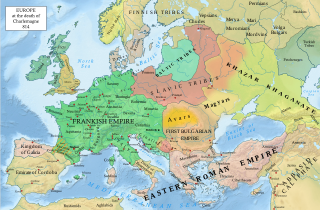
Year 814 (DCCCXIV) was a common year starting on Sunday of the Julian calendar, the 814th year of the Common Era (CE) and Anno Domini (AD) designations, the 814th year of the 1st millennium, the 14th year of the 9th century, and the 5th year of the 810s decade.

Battle Abbey is a partially ruined Benedictine abbey in Battle, East Sussex, England. The abbey was built on the site of the Battle of Hastings and dedicated to St Martin of Tours. It is a Scheduled Monument.

Saint Ceolfrid was an Anglo-Saxon Christian abbot and saint. He is best known as the warden of Bede from the age of seven until his death in 716. He was the Abbot of Monkwearmouth-Jarrow Abbey, and a major contributor to the project to produce the Codex Amiatinus Bible. He died in Burgundy while en route to deliver a copy of the codex to Pope Gregory II in Rome.

Antai-ji (安泰寺) is a Buddhist temple that belongs to the Sōtō school of Zen Buddhism. It is located in the town of Shin'onsen, Mikata District, in northern Hyōgo Prefecture, Japan, where it sits on about 50 hectares of land in the mountains, close to a national park on the Sea of Japan. It accepts visitors in the summer months, but is inaccessible during the winter due to heavy snow.
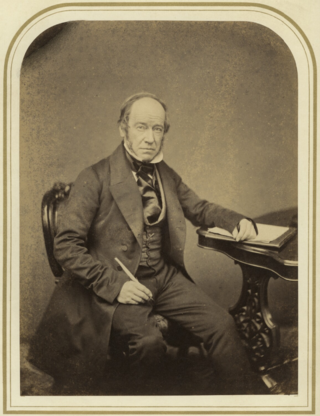
Admiral Charles Abbot, 2nd Baron Colchester PC, known as Charles Abbot before 1829, was a British naval commander and Conservative politician.

Flavigny Abbey is a former Benedictine monastery, now occupied by a little handcraft and family factory [today, the TROUBAT family for tree génération), in Flavigny-sur-Ozerain, Côte-d'Or département, France. The monks at this abbey were the original makers of the well-known aniseed confectionery Anise de Flavigny.

The Abbot and then Commendator of Melrose was the head of the monastic community of Melrose Abbey, in Melrose in the Borders region of Scotland. The abbots of the earlier Northumbrian foundation from Lindisfarne are not included here. The second abbey was founded in 1136 on the patronage of David I, King of Scots, by Cistercian monks from Rievaulx Abbey, Yorkshire. Control of the abbey was secularized in the 16th century and after the accession of James Stewart, the abbey was held by commendators. The last commendator, James Douglas of Lochleven, resigned the abbacy to William Douglas, 6th Earl of Morton in December 1606, and the abbey itself to the king in 1608. The abbey was then erected into a secular lordship for viscount Haddington, John Ramsay, who in 1609 was created "Lord Melrose". Lochleven however resumed the title of commendator in 1613 until his death in 1620.

The Diocese of Orléans is a Latin Church diocese of the Catholic Church in France. The diocese currently corresponds to the Départment of Loiret. The current bishop is Jacques André Blaquart, who was appointed in 2010.
Hugh or Hugo de Sigillo was 13th century bishop of Dunkeld, Atholl, Scotland. Little is known of his general background before becoming bishop. What is known in that he was a clerk of King William of Scotland and Abbot of Newbattle. Hugh succeeded John de Leicester as bishop on 5 October 1214. He was a frequent witness to royal charters in the period. The date of his consecration is not known. On 29 September 1226 he gave benediction to Radulf II, Abbot of Melrose. He died sometime in 1229.

Constabilis was an Italian abbot and saint. He was abbot of La Trinità della Cava, located at Cava de' Tirreni, from 1122 to 1124.
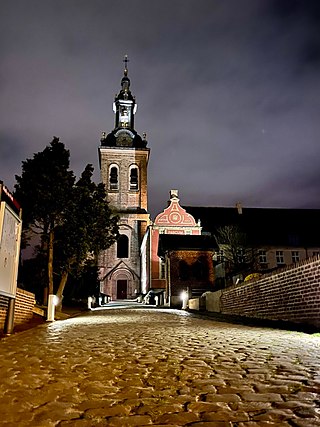
Park Abbey is a Premonstratensian abbey in Belgium, at Heverlee just south of Leuven, in Flemish Brabant.
Events from the 7th century in Ireland.
Roger de Bailleul was a medieval Benedictine monk, abbot of Bec, and archbishop-elect of Canterbury.

The Abbot of Glendalough was the head of the monastery at Glendalough, founded by Saint Kevin in the early sixth century, which is in modern-day County Wicklow, Ireland. After the death of Saint Kevin, the abbots bore the title "Comarbai Cóemgein". Until the early twelfth century, a number of abbots and others at the monastery of Glendalough had also been consecrated bishops, but this did not necessarily mean they were bishops of Glendalough, since the Diocese of Glendalough was not established until the Synod of Rathbreasail in 1111.
Botwine was a Northumbrian saint venerated at Ripon and Peterborough. He is well documented as a priest, and latter Abbot of Ripon. The Anglo-Saxon Chronicle recension E, recorded his death in the 780s in one of three Ripon abbatial obits derived from a chronicle of Northumbrian origin. Following the death of St Botwine in 786AD, his replacement, Ealdberht was elected and consecrated Abbot. Ealdberht died in 788AD, and was himself succeeded as Abbot by St. Sigered of Ripon.
Albinus was an abbot of St Augustine's Abbey, Canterbury. He assisted Bede in the compilation of his Historia Ecclesiastica, and what we know concerning him is chiefly derived from the dedicatory epistle at the beginning of that work. Albinus was a pupil of Archbishop Theodore and his coadjutor Adrian of Canterbury, abbot of St. Peter's. Through the instructions of the latter he became not only versed in the Scriptures, but likewise a master of Greek and Latin. On the death of Adrian, Albinus succeeded to the abbacy, being the first native Englishman who filled that post. Bede in his epistle says that he was indebted to Albinus for all the facts contained in his history relating to the Kentish church between the first conversion of the English and the time at which he was writing. Much of this information was collected by the presbyter Nothelm, who, at the instigation of Albinus, undertook a journey to Rome and searched the archives there. Nothelm was the medium of communication between Bede and Albinus, for it does not appear that the two ever met. Albinus died in 732, and was buried beside his master Adrian.

Farrelly is an anglicised form of Ó Faircheallaigh, a family name of the Irish nobility from County Cavan. The patronym means "descendant of Faircheallaigh", whose name means "super war". Faircheallaigh was the son of Ailill, a 7th-great-grandson of Niall, King of Ireland. He was made the heir of Saint Máedóc of Ferns in the 7th century and his Ó Faircheallaigh descendants were the Abbots of Drumlane for 7 centuries until David Ó Faircheallaigh became Bishop of Kilmore. The surname was anglicised on emigration across the Anglosphere, where Major Patrick Farrelly founded the Farrelly political family of Pennsylvania with his son David Farrelly, author of the third Pennsylvania Constitution (1836); and General Terrence Farrelly was the first judge of Arkansas County, Speaker of the General Assembly of Arkansas Territory and author of the first Arkansas Constitution (1836); his son John Farrelly was a politician and his grandson John Patrick Farrelly was Bishop of Cleveland. The surname became Farley and John Farley became Cardinal Archbishop of New York.

Matthew I was the Ecumenical Patriarch of Constantinople from 1397 to 1410, with a brief interruption in 1402–03.
Methodios II served as Ecumenical Patriarch of Constantinople for three months in 1240, when he died. He succeeded Germanus II.
References
- The Abbatial Succession at Clonmacnois, p. 505, John Ryan, in Feil-Sgribhinn Eoin Mhic Neill, Dublin, 1938.
  | This article about an Irish Roman Catholic cleric is a stub. You can help Wikipedia by expanding it. |