Renato Pengo (born 1943) is an Italian artist and painter, active since 1966 in the artistic languages of painting, photography, video, installations and performances.
Pengo was born in Padua. After his academic formation at the Arts Institute at Padua, where he mastered the different artistic techniques and disciplines, in 1969, during his first personal exhibition, the renowned Italian poet and writer Diego Valeri introduced him to the art gallery "Traghetto" in Venice. Two other important personal exhibitions of this period are at the gallery "Il Giorno" in Milan and at the gallery "La Chiocciola" in Padua.
During the first half of the 1970s, Pengo's work departed from his academic formation and the existentialistic expressiveness and reached new ways of experimentation. Rigorously cerebral serial structures led to the almost true essence of colour and to the obsessive recording of the distinct characters of an alienated and programmed society. In the wake of this new awareness, Pengo started experimenting with new art languages: performances, happenings, use of the photographic medium and industrial materials. Focused more on the authenticity of the artistic experience, on its effectiveness method that to the acknowledgments of the market, he participated in these years in two national exhibitions: in 1975 at the X Quadriennale in Rome and in 1976 at the annual exhibition of the Bevilacqua La Masa Foundation in Venice. In 1970 Pengo earned the first prize at the "Tenth Triveneta of the Joung Artists". In 1975 he was among the founders of the artistic group Azionecritica, whose artistic activities, such as performances and murales, are carried out in many neighborhoods in Padua, together with the Odin Teatret of Eugenio Barba. In the meantime photography became fundamental for Pengo, both as an experience for conceptual analysis and as a new way of pictorial interaction carried out by manipulating the photographic films. During this period Pengo's most important exhibitions were in Salzburg (Romanischer Keller Gallery), Villach (An Der Stadtmauer), Rovigo (Accademia dei Concordi), Prato (International Exhibition of New Tendencies), Padova (Stevens Gallery, "Matrici e immagini"); Pengo also taught photography during this period.
During the first years of the 1980s, Pengo explored new journeys, interior alphabets that render his research even more complex. Two great pictorial cycles belong to this period: "Itinerari dipinti dal tempo" and "Future archeologie", exhibited in Ferrara at the Palazzo Massari, Amsterdam (Italian Institute of Culture), The Hauge (Gallery Van Voorst Van Beest) and in Padua at the Stevens Gallery and at the Civic Gallery. During the same years, Pengo produced a number of videos based on the deceleration of the image, which are presented in many national and international exhibitions such as : Catodica (Rome), Ifduif (Lugano), Le arti del cinema (Verona), Festival Mondial do Minuto in Sao Paulo (Brasil) and at the FilmFestival in Turin (Italy). The strenuously self-reflective character and the strictly contemporary themes of Pengo's artistic research put him in a particular position in the Italian and European contemporary art landscape.
At the beginning of the 1990s Pengo's interest turned to anthropology and psychoanalysis. During this period Pengo participated in the many conventions as "Mind´s Cosmogonies" (Padua, 1996) by Luigi Pavan and Gian Piero Brunetta; "L'énigme du visible" (Paris, 1998) by Vanessa Delouya. The "Technological shock", Pengo's original intuition that opened up a new dimension of knowledge, belongs to this period. The "Technological shock", according to the famous French art critic Pierre Restany, is the expression of a poetry that evolves in the spiritual and imaginary universe, pregnant with vibrations and cosmic energy in a space that becomes the immaterial void. The most significant exhibitions during these years were in Madrid, Tunis, Paris and New York. Towards the end of the 1990s, his work was enriched by new materials such as plexiglas, slate and iron, while the predominant colors were the rose red and the cobalt blue. In 1999 in the Palazzo del Monte di Pieta´ in Padua an important exhibitions took place : "Percezioni mutanti" (catalog by Electa).
In 2000 Pengo created a video manifesto that gave birth to a pre-linguistic and non-readable writing, consisting of figurative signs and fugitive words. Two important cycles belong to this period : "Oltre il Titolo" and "Maree", exhibited in Padua (the Dante Vecchiato Gallery), Florence (Palazzo Vecchio), Arezzo (Sala dei Grandi) and Ancona (Mole Vanvitelliana). In 2002 an important work by Pengo was acquired by the Museo d'arte dello Splendore in Giulianova. In 2004 a multimedia installation was displayed in the house of Piero della Francesca at Sansepolcro. During 2008 the following exhibitions took place : "Traghettare il tempo" at the National Museums at Villa Pisani (Stra), "Oltre" at the Net Center in Padua and "Oltre l'immagine" at the Civic Museum at Piazza del Santo in Padua.
Piero Manzoni di Chiosca e Poggiolo, better known as Piero Manzoni was an Italian artist best known for his ironic approach to avant-garde art. Often compared to the work of Yves Klein, his own work anticipated, and directly influenced, the work of a generation of younger Italian artists brought together by the critic Germano Celant in the first Arte Povera exhibition held in Genoa, 1967. Manzoni is most famous for a series of artworks that call into question the nature of the art object, directly prefiguring Conceptual Art. His work eschews normal artist's materials, instead using everything from rabbit fur to human excrement in order to "tap mythological sources and to realize authentic and universal values".
Franco Fontana is an Italian photographer. He is best known for his abstract colour landscapes.
Domenico "Mimmo" Rotella was an Italian artist considered an important figure in post-war European art. Best known for his works of décollage and psychogeographics, made from torn advertising posters. He was associated to the Ultra-Lettrists an offshoot of Lettrism and later was a member of the Nouveau Réalisme, founded in 1960 by the art critic Pierre Restany.
Alberto Burri was an Italian visual artist, painter, sculptor, and physician based in Città di Castello. He is associated with the matterism of the European informal art movement and described his style as a polymaterialist. He had connections with Lucio Fontana's spatialism and, with Antoni Tàpies, an influence on the revival of the art of post-war assembly in America as in Europe.
Telefoni Bianchi films were made in Italy in the 1930s in imitation of American comedies of the time in a sharp contrast to the other important style of the era, calligrafismo, which was highly artistic.
Giovanni "Gio" Ponti was an Italian architect, industrial designer, furniture designer, artist, teacher, writer and publisher.
The Last Wagon is a 1943 Italian comedy film directed by Mario Mattoli and starring Aldo Fabrizi, Anna Magnani, and Anita Durante. A number of the personnel were involved in the subsequent development of neorealism. The hero is the driver of a horse-drawn carriage who objects to the competition from motorised taxis. The film's sets were designed by the art directors Piero Filippone and Mario Rappini. It was shot at the Palatino Studios in Rome and on location around the city.
Novecento Italiano was an Italian artistic movement founded in Milan in 1922 to create an art based on the rhetoric of the fascism of Mussolini.
Renato Castellani was an Italian film director and screenwriter.
Giuliano Briganti was an Italian art historian.
Luigi Veronesi was an Italian photographer, painter, scenographer and film director born in Milan.
For the 19th-century painter and sculptor, see Pier Celestino Gilardi
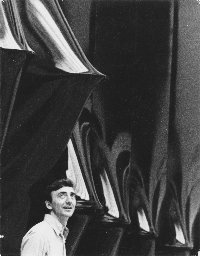
Agostino Bonalumi was an Italian painter, draughtsman and sculptor.
The Tyrant of Padua is a 1946 Italian historical film directed by Max Neufeld and starring Clara Calamai, Carlo Lombardi and Elsa De Giorgi. It is an adaptation of the 1835 play Angelo, Tyrant of Padua by Victor Hugo. It is set in Padua in the 1540s.
Gianni Berengo Gardin is an Italian photographer who has concentrated on reportage and editorial work, but whose career as a photographer has encompassed book illustration and advertising.
Renato Barisani was an Italian sculptor and painter.
Calligrafismo is an Italian style of filmmaking in the first half of the 1940s.
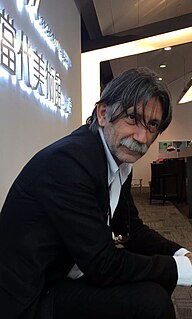
Ugo Giletta is an Italian artist.
Lea Vergine, born Lea Buoncristiano, was an Italian art critic, essayist and curator.
Gian Piero Brunetta is an Italian film critic, film historian, and academic.
*Video with a selection of his works of art on YouTube of the period 2006 - 2008