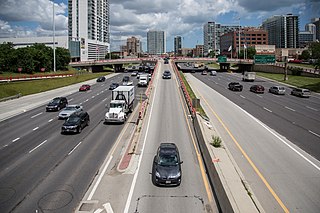
A highway is any public or private road or other public way on land. It includes not just major roads, but also other public roads and rights of way. In the United States, it is also used as an equivalent term to controlled-access highway, or a translation for motorway, Autobahn, autostrada, autoroute, etc.

As a direct consequence of the country's poverty, Yemen compares unfavorably with its Middle Eastern neighbors in terms of transportation infrastructure and communications network. The roads are generally poor, although several projects are planned to upgrade the system. There is no rail network, efforts to upgrade airport facilities have languished, and telephone and Internet usage and capabilities are limited. The Port of Aden has shown a promising recovery from a 2002 attack; container throughput increased significantly in 2004 and 2005. However, the expected imposition of higher insurance premiums for shippers in 2006 may result in reduced future throughput. The announcement in summer 2005 that the port's main facility, Aden Container Terminal, would for the next 30 or more years be run by Dubai Ports International brings with it the prospect of future expansion.

Left-hand traffic (LHT) and right-hand traffic (RHT) are the practices, in bidirectional traffic, of keeping to the left side and to the right side of the road, respectively. They are fundamental to traffic flow, and are sometimes called the rule of the road. The terms right- and left-hand drive refer to the position of the driver and the steering wheel in the vehicle and are, in automobiles, the reverse of the terms right- and left-hand traffic. The rule also includes where on the road a vehicle is to be driven, if there is room for more than one vehicle in the one direction, and the side on which the vehicle in the rear overtakes the one in the front. For example, a driver in an LHT country would typically overtake on the right of the vehicle being overtaken.

Highways in Australia are generally high capacity roads managed by state and territory government agencies, though Australia's federal government contributes funding for important links between capital cities and major regional centres. Prior to European settlement, the earliest needs for trade and travel were met by narrow bush tracks, used by tribes of Indigenous Australians. The formal construction of roads began in 1788, after the founding of the colony of New South Wales, and a network of three major roads across the colony emerged by the 1820s. Similar road networks were established in the other colonies of Australia. Road construction programs in the early 19th century were generally underfunded, as they were dependent on government budgets, loans, and tolls; while there was a huge increase in road usage, due to the Australian gold rushes. Local government authorities, often known as Road Boards, were therefore established to be primarily responsible for funding and undertaking road construction and maintenance. The early 1900s saw both the increasingly widespread use of motorised transportation, and the creation of state road authorities in each state, between 1913 and 1926. These authorities managed each state's road network, with the main arterial roads controlled and maintained by the state, and other roads remaining the responsibility of local governments. The federal government became involved in road funding in the 1920s, distributing funding to the states. The depression of the 1930s slowed the funding and development of the major road network until the onset on World War II. Supply roads leading to the north of the country were considered vital, resulting in the construction of Barkly, Stuart, and Eyre Highways.
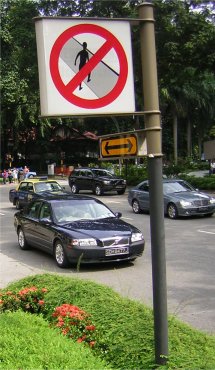
Jaywalking is the act of pedestrians walking in or crossing a roadway if that act contravenes traffic regulations. The term originated in the United States as a derivation of the phrase jay-drivers, people who drove horse-drawn carriages and automobiles on the wrong side of the road, before taking its current meaning. Jaywalking was coined as the automobile arrived in the street in the context of the conflict between pedestrian and automobiles, more specifically the nascent automobile industry.

Road rage is aggressive or angry behavior exhibited by motorists. These behaviors include rude and verbal insults, yelling, physical threats or dangerous driving methods targeted at other drivers, pedestrians or cyclists in an effort to intimidate or release frustration. Road rage can lead to altercations, damage to property, assaults, and collisions that result in serious physical injuries or even death. Strategies include cutting motorists off, inappropriate honking, using obscene gestures, flipping off another driver, swerving, tailgating, brake checking, and attempting to fight.

A parking enforcement officer (PEO), traffic warden, parking inspector/parking officer, or civil enforcement officer is a member of a traffic control agency, local government, or police force who issues tickets for parking violations. The term parking attendant is sometimes considered a synonym but sometimes used to refer to the different profession of parking lot attendant.

A controlled-access highway is a type of highway that has been designed for high-speed vehicular traffic, with all traffic flow—ingress and egress—regulated. Common English terms are freeway, motorway, and expressway. Other similar terms include throughway or thruway and parkway. Some of these may be limited-access highways, although this term can also refer to a class of highways with somewhat less isolation from other traffic.
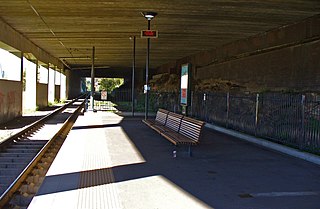
City West Link is a 5.0-kilometre (3.1 mi) link road connecting Parramatta Road and the Western Distributor through the Inner West suburbs of Sydney, New South Wales, Australia. It was bypassed by the WestConnex project upon its completion in November 2023. This name covers a few consecutive roads and is widely known to most drivers, but the entire allocation is also known – and signposted – by the names of its constituent parts: Wattle Street, Dobroyd Parade, City West Link proper and The Cresent.

M1 Pacific Motorway is a 127-kilometre motorway linking Sydney to Newcastle via the Central Coast and Hunter regions of New South Wales. Formerly known but still commonly referred to by both the public and the government as the F3 Freeway, Sydney–Newcastle Freeway, and Sydney–Newcastle Expressway, it is part of the AusLink road corridor between Sydney and Brisbane.

Warringah Freeway is a 3.5-kilometre (2.2 mi) divided freeway in Sydney, New South Wales that is part of the Sydney Orbital Network. The primary function of the freeway is to provide an alternative high-grade route from the Sydney Harbour Tunnel and Bradfield Highway at Milsons Point to the A8 and Gore Hill Freeway. The freeway reduces traffic demands on Pacific Highway throughout Sydney's Lower North Shore, bypassing North Sydney and Crows Nest, and provides a vital link to access most of the suburbs in Sydney and is also a major route to the north, south, east and west of the central business district.

The M4 Motorway is a 55-kilometre (34 mi) series of partially tolled dual carriageway motorways in Sydney designated as route M4. The M4 designation is part of the wider A4 and M4 route designation, the M4 runs parallel and/or below ground to Great Western Highway, Parramatta Road and City West Link, which are part of route A44.

Western Distributor is a 4.3-kilometre-long (2.7 mi) grade-separated motorway that is primarily elevated for the majority of its route on the western fringe of the Sydney central business district. It links the southern end of Bradfield Highway at the Sydney Harbour Bridge to Victoria Road in Rozelle, at its western terminus near White Bay. It is a constituent part of the A4 route.

Ireland has an extensive network of public roads which connect all parts of the country with each other. Roads in Ireland are currently classified as motorways, National Primary routes, National secondary routes, Regional roads and Local roads. The introduction of this classification system began in 1977.
The Eastern Freeway, is a controlled-access highway, in Mumbai, that connects P D'Mello Road in South Mumbai to the Eastern Express Highway (EEH) at Chembur. It is 16.8 km (10.4 mi) long and its estimated cost is ₹1,436 crore (US$170 million). The Eastern Freeway was built by the Mumbai Metropolitan Region Development Authority (MMRDA) and funded by the Central Government through the Jawaharlal Nehru National Urban Renewal Mission (JnNURM). Construction was contracted to Simplex Infrastructure Ltd. A 13.59 km stretch of the freeway, comprising two of three segments with one of the twin tunnels, from Orange Gate on P D'Mello Road up to Panjarpol, near RK Studios in Chembur, was opened to the public on 14 June 2013. The second tunnel was opened on 12 April 2014. The third and final segment from Panjarpol to Jeejabai Bhosle Marg at Chembur was opened on 16 June 2014.
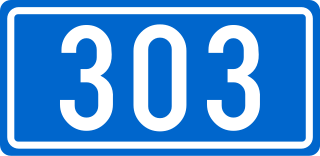
D303 is a state road connecting A9 and A8 motorways to Rovinj. The road is 13.5 km long.

Newcastle Link Road is a limited-access road in New South Wales linking the interchange of Pacific Motorway and Hunter Expressway at Cameron Park, to Wallsend in western Newcastle. It is designated part of route A15.

The Motor Vehicles Act is an Act of the Parliament of India which regulates all aspects of road transport vehicles. The Act provides in detail the legislative provisions regarding licensing of drivers/conductors, registration of motor vehicles, control of motor vehicles through permits, special provisions relating to state transport undertakings, traffic regulation, insurance, liability, offences and penalties, etc. For exercising the legislative provisions of the Act, the Government of India made the Central Motor Vehicles Rules 1989.

Welsh Government traffic officers are civilian staff employed by the trunk road agents on behalf of the Welsh Government as a means to ease traffic congestion on major trunk roads in Wales. Their role and powers are similar to their English counterparts working for National Highways, the National Highways traffic officers.
