Slavic, Slav or Slavonic may refer to:

The Israel Security Agency, better known by the acronyms Shabak or Shin Bet, is Israel's internal security service. Its motto is "Magen v'lo Yera'eh". The Shin Bet's headquarters are located in northwest Tel Aviv, north of Yarkon Park.

Human rights in post-invasion Iraq have been the subject of concerns and controversies since the 2003 U.S. invasion. Concerns have been expressed about conduct by insurgents, the U.S.-led coalition forces and the Iraqi government. The U.S. is investigating several allegations of violations of international and internal standards of conduct in isolated incidents by its own forces and contractors. The UK is also conducting investigations of alleged human rights abuses by its forces. War crime tribunals and criminal prosecution of the numerous crimes by insurgents are likely years away. In late February 2009, the U.S. State Department released a report on the human rights situation in Iraq, looking back on the prior year (2008).

Amichai "Ami" Ayalon is an Israeli politician and a former member of the Knesset for the Labor Party. He was previously head of the Shin Bet, Israel's secret service, and commander-in-chief of the Navy. He came in second to Ehud Barak in a Labor party leadership election in June 2007, and was appointed a Minister without Portfolio in September 2007. He is one of the recipients of Israel's highest decoration, the Medal of Valor.

Israeli hip hop refers to hip hop and rap music in Israel. Israeli hip hop artists have mainly emerged from the populations of Mizrahi Jews, Ethiopian Jews, and Israeli-Arabs, though there have also been numerous artists from Israeli Ashkenazi Jews especially Hasidim. Israeli hip hop artists enjoy wide popularity in Israel and have succeeded in appealing to international markets particularly the United States.
Shabak Samech is one of the first recognized hip-hop groups to come out of Israel. Their sound is primarily hip-hop, but it includes elements of rapcore, dancehall, ska, and funk. Their sound has been compared to the Beastie Boys and Rage Against the Machine. The group had two and three vocalists, two guitarists, a drummer and a bassist. The group placed minimal reliance on beats and samples.

Dan Halutz is an Israeli Air Force lieutenant general and former Chief of Staff of the Israel Defense Forces and commander of the Israeli Air Force. Halutz served as chief of staff in 2005–2007.
Minorities in Iraq have been incredibly influential to the history of the country, and consist of various ethnic and religious groups. The largest minority group in Iraq is the Kurds, with Turkmen following shortly after. Prior to the 2003 invasion of Iraq, Assyrians constituted a sizeable population of 1.5 million, and belonged to various different churches such as the Assyrian Church of the East, Chaldean Catholic Church, and the Syriac Orthodox/Catholic Churches. Other minority groups in Iraq include Armenians, Mandaeans, Baha'i, and Marsh Arabs, among others.
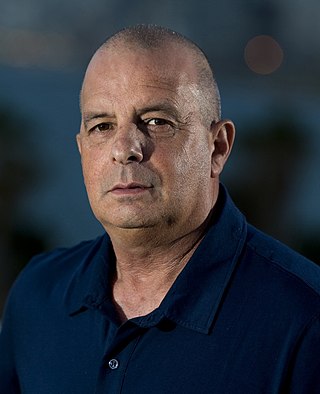
Yuval Diskin is a former director of the Israeli internal security service Shin Bet, serving as its 13th director from 2005 to 2011. He was appointed by Prime Minister Ariel Sharon, and later served under subsequent Prime Ministers Ehud Olmert and Benjamin Netanyahu.

Shabaks are a group of people who live east of Mosul in Iraq. Their origin is uncertain and they are considered Kurds by some scholars. They speak Shabaki and live in a religious community (ta'ifa) in the Nineveh Plains. The ancestors of Shabaks were followers of the Safaviyya order, which was founded by the Kurdish mystic Safi-ad-din Ardabili in the early 14th century. The primary Shabak religious text is called the Buyruk or Kitab al-Manaqib, which is written in Turkmen.
Shabaki is an Indo-Iranian language and belongs to the subgroup Zaza-Gorani of the Northwestern Iranian languages. The Shabaki language is spoken by the Shabak people in the Mosul region of northern Iraq. It has similarities with the Northwestern Iranian language Gorani, which is often referred as a "Kurdish dialect", although the Kurdish languages form an independent group within the Northwestern Iranian languages. Shabaki is a distinct language. It also has elements of Arabic, Turkish and Persian language. The number of speakers of Shabaki was estimated in 1989 to be between 10,000 and 20,000. Currently, the number of native speakers of Shabaki is estimated at 250,000. As Shabaki is one of the Zaza–Gorani languages, it is most similar to other languages in the Northwestern Iranian branch like Gorani (Hewrami), Bajelani, Sarli and Zazaki.

The Palestinian Preventive Security, also known as Preventive Security Force (PSF), Preventive Security Service (PSS), is one of the security organs of the State of Palestine. It was established in 1994 by president Yasser Arafat in accordance with the Oslo Accords.

Ethnic groups in the Middle East are ethnolinguistic groupings in the "transcontinental" region that is commonly a geopolitical term designating the intercontinental region comprising West Asia without the South Caucasus, and also comprising Egypt in North Africa. The Middle East has historically been a crossroad of different cultures and languages. Since the 1960s, the changes in political and economic factors have significantly altered the ethnic composition of groups in the region. While some ethnic groups have been present in the region for millennia, others have arrived fairly recently through immigration. The largest socioethnic groups in the region are Egyptians, Arabs, Turks, Persians, Kurds, and Azerbaijanis but there are dozens of other ethnic groups that have hundreds of thousands, and sometimes millions of members.
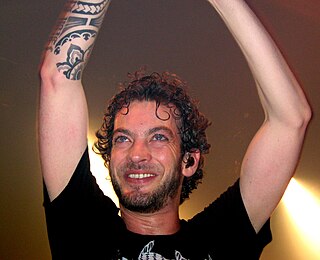
Danny Niv, better known as Mooki is an Israeli singer and rapper, best known as the frontman for the Israeli hip hop/punk act Shabak Samech between 1992 and 2000, and again since 2007. He is also a successful solo artist. In Shabak Samech, he was also known by the nickname Mookie D, given him due to the resemblance of his voice to the voice of Mike D of the Beastie Boys.
Diskin is a family name. Notable people with the surname include:
