The Taj Mahal is a mausoleum in Agra, India, built by Mughal Emperor Shah Jahan.

Nawab Begum Sajida Sultan Ali Khan Pataudi was the daughter of the Nawab of Bhopal, Hamidullah Khan, and the wife and Begum Consort of Iftikhar Ali Khan Pataudi, the 8th Nawab of Pataudi, and in her own right, the 12th Nawab Begum of Bhopal.
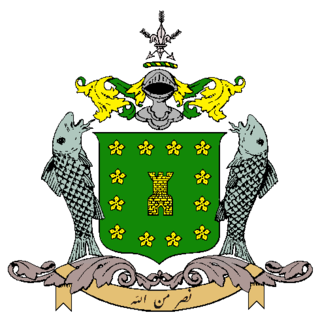
The Nawabs of Bhopal were the Muslim rulers of Bhopal, now part of Madhya Pradesh, India. The nawabs first ruled under the Mughal Empire from 1707 to 1737, under the Maratha Empire from 1737 to 1818, then under British rule from 1818 to 1947, and independently thereafter until it was acceded to the Union of India in 1949. The female nawabs of Bhopal held the title Nawab Begum of Bhopal.

Shahjahan Begum was the Nawab Begum of Bhopal for two periods: 1844–60, and secondly during 1868–1901.

Bhopal State was an Islamic principality founded in the beginning of 18th-century India by the Afghan Mughal noble Dost Muhammad Khan. It was a tributary state during 18th century, a princely salute state with 19-gun salute in a subsidiary alliance with British India from 1818 to 1947, and an independent state from 1947 to 1949. Islamnagar was founded and served as the State's first capital, which was later shifted to the city of Bhopal.

Bhopal District is a district of Madhya Pradesh state in central India. The city of Bhopal serves as its administrative headquarters. The district is part of Bhopal Division.
Raj Bhavan is the official residence of the governor of Madhya Pradesh. It is located in the capital city of Bhopal, Madhya Pradesh.

Princess Suraya Jah, Nawab Gowhar-i-Taj, Abida Sultan Begum Sahiba was the eldest daughter of Hamidullah Khan, the last Nawab of the Bhopal state, and his wife Begum Maimoona Sultan.

The Taj-ul-Masajid or Tāj-ul-Masjid, is a mosque situated in Bhopal, Madhya Pradesh, India. It is the largest mosque in India and one of the largest mosques in the world.
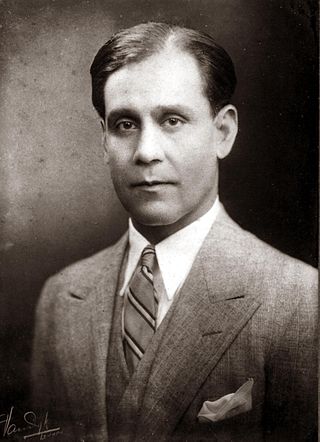
Hamidullah Khan was the last ruling Nawab of the princely salute state of Bhopal. He ruled from 1926 when his mother, Begum Kaikhusrau Jahan Begum, abdicated in his favor, until 1949 and held the honorific title until his death in 1960. A delegate to the Round Table Conference in London, he served as Chancellor of the Chamber of Princes from 1944–1947, when India became independent.
Events in the year 1901 in India.

Sultan Jahan was the ruling Begum of Bhopal between 1901 and 1926.

Taj Mahal is a palace built by Sultan Shah Jahan, Begum of Bhopal. It is located beside the Taj-ul-Masajid in Bhopal, India.
Munshi Hakimuddin (1839–1894) was Chief Secretary at Bhopal state during the period of Nawab Shah Jahan Begum.
Hafiz Mazhar Husain (1857–1912) was Chief Justice at Bhopal state during the period of Nawab Sultan Jahan Begum.
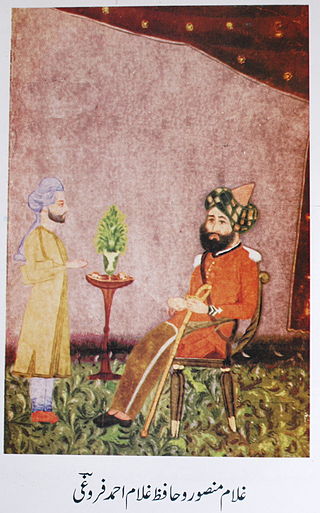
Hafiz Ghulam Ahmad Faroghi (1861–1919) was a scholar of repute of Arabic and Persian language at Bhopal state. He was first appointed as 'Head Maulvi' at Sulaimania School and then worked as a teacher at Jahangiria School. These two schools were very famous for affluent class during the princely state of Bhopal.
Begum is a female title which is also used in Mirza families/lineages, Daughter of Beg or Wife of Beg, a given name and surname.

Jagdishpur is a panchayat village in the Bhopal district of Madhya Pradesh, India. It is located in the Huzur tehsil and the Phanda block.

Sikander Begum, was the Nawab of Bhopal from 1860 until her death in 1868. Although she was initially appointed regent of her nine-year old daughter Shah Jahan Begum in 1844, she was recognized as nawab in 1860. During the 1857 Sepoy Mutiny, Sikandar's pro-British stance made her a Knight Grand Commander. In 1863, she was the first Indian ruler to perform Hajj. Sikandar enacted many reforms in the state, including the creation of a mint, a secretariat, a parliament and a modern judiciary.
Sultan Shah may refer to:
This page is based on this
Wikipedia article Text is available under the
CC BY-SA 4.0 license; additional terms may apply.
Images, videos and audio are available under their respective licenses.
