The 8th century BC started the first day of 800 BC and ended the last day of 701 BC. The 8th century BC is a period of great change for several historically significant civilizations. In Egypt, the 23rd and 24th dynasties lead to rule from Nubia in the 25th Dynasty. The Neo-Assyrian Empire reaches the peak of its power, conquering the Kingdom of Israel as well as nearby countries.
This article concerns the period 729 BC – 720 BC.
Luli or Elulaios was king of the Phoenician city of Tyre. During his reign, Tyre lost what remained of its power to Assyria.
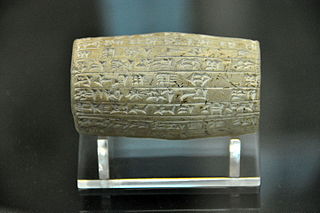
Nabopolassar (; cuneiform: 𒀭𒀝𒌉𒍑𒌶dAG.IBILA.URU3Akkadian: Nabû-apla-uṣur; c. 658 BC – 605 BC) was a Babylonian king and a central figure in the fall of the Neo-Assyrian Empire. The death of Assyrian king Ashurbanipal in 631 BC resulted in political instability. In 626 BC, a native dynasty arose under Nabopolassar. He made Babylon his capital and ruled over Babylonia for a period of about twenty years (626–605 BC). He is credited with founding the Neo-Babylonian Empire. By 616 BC, Nabopolassar had united the entire area under his rule.
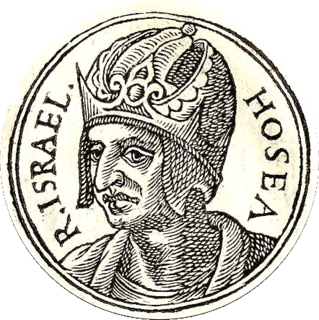
Hoshea was the nineteenth and last king of the Israelite Kingdom of Israel and son of Elah. William F. Albright dated his reign to 732–721 BC, while E. R. Thiele offered the dates 732–723 BC.
The King of Tyre was the ruler of Tyre, the ancient Phoenician city in what is now Lebanon.

Ashur-nasir-pal II was king of Assyria from 883 to 859 BC.

The ancient history of Cyprus shows a precocious sophistication in the neolithic era visible in settlements such as at Choirokoitia dating from the 9th millennium BC, and at Kalavassos from about 7500 BC.

Baal I was a king of Tyre. His name is the same as that of the Phoenician deity, Baal. He was tributary to the Assyrians, who had conquered the rest of Phoenicia.
The history of ancient Lebanon traces the course of events in what is now known as Lebanon from the beginning of history to the beginning of Arab rule.

The Tyre District is a district in the South Governorate of Lebanon.
During the Middle Assyrian Empire and the Neo-Assyrian Empire, Phoenicia, what is today known as Lebanon and coastal Syria, came under Assyrian rule on several occasions.
The land of Phoenicia was ruled by the Neo-Babylonian Empire from around 605 BC to 538 BC.

The Neo-Assyrian Empire arose in the 10th century BC. Ashurnasirpal II is credited for utilizing sound strategy in his wars of conquest. While aiming to secure defensible frontiers, he would launch raids further inland against his opponents as a means of securing economic benefit, as he did when campaigning in the Levant. The result meant that the economic prosperity of the region would fuel the Assyrian war machine.

The Neo-Assyrian Empire was an Iron Age Mesopotamian empire, in existence between 911 and 609 BC, and became the largest empire of the world up until that time. The Assyrians perfected early techniques of imperial rule, many of which became standard in later empires. The Assyrians were the first to be armed with iron weapons, and their troops employed advanced, effective military tactics.
The Fall of Harran refers to the siege and capture of the Assyrian city of Harran by the Median and Neo-Babylonian empires.

Amida was an ancient city in Mesopotamia located where modern Diyarbakır, Turkey now stands.

The Twenty-fifth Dynasty of Egypt, also known as the Nubian Dynasty or the Kushite Empire, was the last dynasty of the Third Intermediate Period of Egypt that occurred after the Nubian invasion.
Ashur-uballit II, also spelled Assur-uballit II and Ashuruballit II, was the final king of Assyria, ruling from his predecessor Sinsharishkun's death at the Fall of Nineveh in 612 BC to his own defeat at Harran in 609 BC. He was possibly the son of Sinsharishkun and likely the same person as a crown prince mentioned in inscriptions at the Assyrian capital of Nineveh in 626 and 623 BC.

The Siege of Tyre was waged by Nebuchadnezzar II of Babylon for 13 years from 586 to 573 BC. The siege of Tyre, in Phoenicia, has a significant connection to the Book of Ezekiel where it was prophesied that the city would fall to Babylonian forces after a years-long siege.
This page is based on this
Wikipedia article Text is available under the
CC BY-SA 4.0 license; additional terms may apply.
Images, videos and audio are available under their respective licenses.
