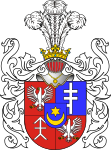
Sieniawa, is a town in southeastern Poland. It had a population of 2,127 inhabitants (02.06.2009). Since 1999, Sieniawa has been part of Subcarpathian Voivodeship.

Chodkiewicz is a Polish coat of arms. It was used by the Chodkiewicz family in the times of the Polish–Lithuanian Commonwealth. A variant of the Kościesza with the Gryf coat of arms and the notable longer family line as well as much bigger family than shown here.

The Czartoryski coat of arms is a Polish–Lithuanian coat of arms, a variant of the Pogoń Litewska arms. It has been used by the Gediminid Czartoryski family.
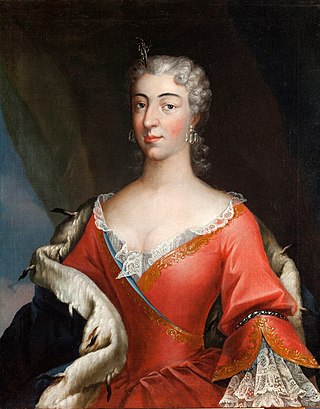
Countess Maria Zofia Czartoryska née Sieniawska was a Polish szlachcianka (noblewoman). By birth she was member of powerful Sieniawski family and by marriage she was member of House of Dönhoff and House of Czartoryski.
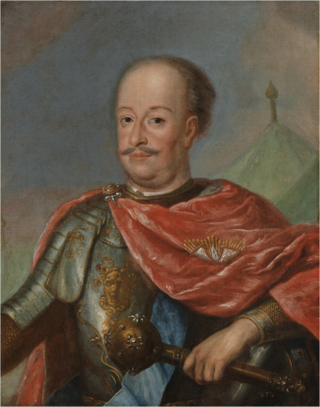
Adam Mikołaj Sieniawski (1666–1726) was a Polish nobleman, aristocrat and military leader.

Mikołaj Hieronim Sieniawski (1645–1683) was a Polish noble (szlachcic), military leader and politician.

Countess Zofia Tarnowska (1534–1570) was a Polish–Lithuanian noblewoman and heiress.

Mikołaj Mielecki h. Gryf was a Polish nobleman and politician. Since 1569 Mielecki was the voivod of Podolian Voivodship, between 1578 and 1580 he also served in the Polish Army as the Grand Hetman of the Crown.
Adam Hieronim Sieniawski was a Polish noble
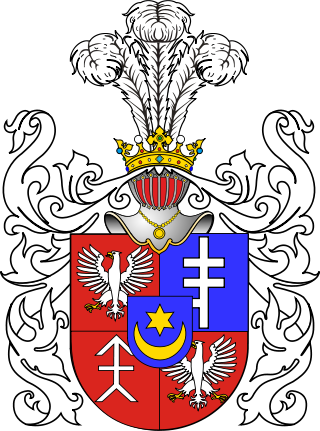
Prokop Sieniawski was a Polish noble.

The House of Czartoryski is a Polish princely family of Lithuanian-Ruthenian origin, also known as the Familia. The family, which derived their kin from the Gediminids dynasty, by the mid-17th century had split into two branches, based in the Klevan Castle and the Korets Castle, respectively. They used the Czartoryski coat of arms and were a noble family of the Polish–Lithuanian Commonwealth in the 18th century.

Albrycht Władysław Radziwiłł was a Polish–Lithuanian noble. Castellan of Troki from 1626 until 1633, castellan of Wilno from 1633. The 3rd ordynat of the Nieśwież Fee Tail, stolnik of Lithuania since 1620 and krajczy of Lithuania since 1622. Starost of Ryki and Szerszewy.

The House of Wiśniowiecki was a Polish-Lithuanian princely family of Ruthenian-Lithuanian origin, notable in the history of the Polish–Lithuanian Commonwealth. They were powerful magnates with estates predominantly in the Ruthenian lands of the Crown of the Kingdom of Poland, and they used the Polish coat of arms of Korybut.
Jan Hieronimowicz Chodkiewicz was a 16th-century Lithuanian noble. He was Grand Pantler of Lithuania from 1559, Elder of Samogitia (1564–1579), Governor of Livonia (1566–1578), Grand Marshal of Lithuania (1566–1579), Count of Shklow 1568, Castellan of Vilnius (1574–1579). He was the elder of Telšiai and Plateliai from 1566, of Rumšiškės from 1568, and of Kaunas from 1569.

Zborowski of the Jastrzębiec coat of arms was a Polish noble family from Greater Poland, It played a significant role in Polish politics in the 16th century.
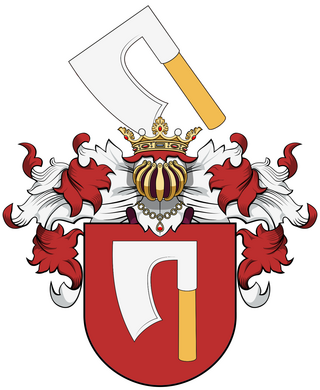
Tarło was a Polish magnate (szlachta) family. The seats of the family in the 16th century were, among others: Laszki Murowane near Chyrów, Sambor, Dębowiec near Jasło, Samoklęski and Potok near Krosno.
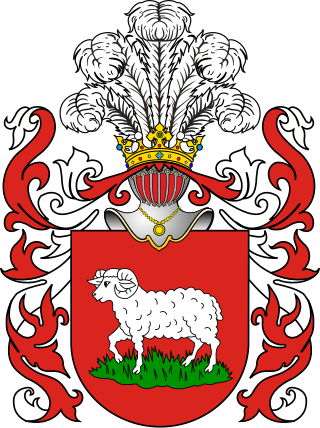
Koła was a Polish noble family, Magnates in the Polish–Lithuanian Commonwealth. The family declined at the beginning of the 17th century. The possessions of the family passed to the other magnates like the Mielecki, Sieniawski, Kmita and Odrowąż families.
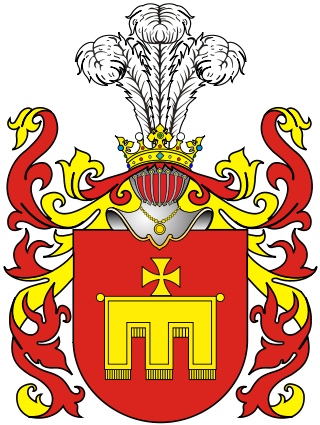
The Zebrzydowski was a Polish noble family.
Mielecki was a family of knights, a branch of the Gryffin Clan. The founders and former owners of the City of Mielec.
This page is based on this
Wikipedia article Text is available under the
CC BY-SA 4.0 license; additional terms may apply.
Images, videos and audio are available under their respective licenses.