Related Research Articles
Group dynamics is a system of behaviors and psychological processes occurring within a social group, or between social groups. The study of group dynamics can be useful in understanding decision-making behaviour, tracking the spread of diseases in society, creating effective therapy techniques, and following the emergence and popularity of new ideas and technologies. These applications of the field are studied in psychology, sociology, anthropology, political science, epidemiology, education, social work, leadership studies, business and managerial studies, as well as communication studies.

In the social sciences, a social group is defined as two or more people who interact with one another, share similar characteristics, and collectively have a sense of unity. Regardless, social groups come in a myriad of sizes and varieties. For example, a society can be viewed as a large social group. The system of behaviors and psychological processes occurring within a social group or between social groups is known as group dynamics.
In-group favoritism, sometimes known as in-group–out-group bias, in-group bias, intergroup bias, or in-group preference, is a pattern of favoring members of one's in-group over out-group members. This can be expressed in evaluation of others, in allocation of resources, and in many other ways.

National identity is a person's identity or sense of belonging to one or more states or to one or more nations. It is the sense of "a nation as a cohesive whole, as represented by distinctive traditions, culture, and language". National identity may refer to the subjective feeling one shares with a group of people about a nation, regardless of one's legal citizenship status. National identity is viewed in psychological terms as "an awareness of difference", a "feeling and recognition of 'we' and 'they'". National identity also includes the general population and diaspora of multi-ethnic states and societies that have a shared sense of common identity identical to that of a nation while being made up of several component ethnic groups. Hyphenated ethnicities are an example of the confluence of multiple ethnic and national identities within a single person or entity.

In sociology and social psychology, an in-group is a social group to which a person psychologically identifies as being a member. By contrast, an out-group is a social group with which an individual does not identify. People may for example identify with their peer group, family, community, sports team, political party, gender, sexual orientation, religion, or nation. It has been found that the psychological membership of social groups and categories is associated with a wide variety of phenomena.
In social psychology, superordinate goals are goals that are worth completing but require two or more social groups to cooperatively achieve. The idea was proposed by social psychologist Muzafer Sherif in his experiments on intergroup relations, run in the 1940s and 1950s, as a way of reducing conflict between competing groups. Sherif's idea was to downplay the two separate group identities and encourage the two groups to think of themselves as one larger, superordinate group. This approach has been applied in many contexts to reduce intergroup conflict, including in classrooms and business organizations. However, it has also been critiqued by other social psychologists who have proposed competing theories of intergroup conflict, such as contact theory and social categorization theory.
The minimal group paradigm is a method employed in social psychology. Although it may be used for a variety of purposes, it is best known as a method for investigating the minimal conditions required for discrimination to occur between groups. Experiments using this approach have revealed that even arbitrary distinctions between groups, such as preferences for certain paintings, or the color of their shirts, can trigger a tendency to favor one's own group at the expense of others, even when it means sacrificing in-group gain.

Henri Tajfel was a Polish social psychologist, best known for his pioneering work on the cognitive aspects of prejudice and social identity theory, as well as being one of the founders of the European Association of Experimental Social Psychology.
Social identity is the portion of an individual's self-concept derived from perceived membership in a relevant social group.
Michael A. Hogg is a British psychologist, and Professor of Social Psychology in the Department of Psychology at Claremont Graduate University in Los Angeles. He is also an honorary Professor of Social Psychology at the University of Kent in the UK.
Stephen David Reicher is Bishop Wardlaw Professor of Social Psychology at the University of St Andrews.
Optimal distinctiveness is a social psychological theory seeking to understand ingroup–outgroup differences. It asserts that individuals desire to attain an optimal balance of inclusion and distinctiveness within and between social groups and situations These two motives are in constant opposition with each other; when there is too much of one motive, the other must increase in order to counterbalance it and vice versa. The theory of optimal distinctiveness was first proposed by Dr. Marilynn B. Brewer in 1991 and extensively reviewed in 2010 by Drs. Geoffrey J. Leonardelli, Cynthia L. Pickett, and Marilynn Brewer.
Self-categorization theory is a theory in social psychology that describes the circumstances under which a person will perceive collections of people as a group, as well as the consequences of perceiving people in group terms. Although the theory is often introduced as an explanation of psychological group formation, it is more accurately thought of as general analysis of the functioning of categorization processes in social perception and interaction that speaks to issues of individual identity as much as group phenomena. It was developed by John Turner and colleagues, and along with social identity theory it is a constituent part of the social identity approach. It was in part developed to address questions that arose in response to social identity theory about the mechanistic underpinnings of social identification.
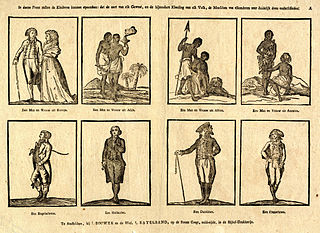
In social psychology, a stereotype is a generalized belief about a particular category of people. It is an expectation that people might have about every person of a particular group. The type of expectation can vary; it can be, for example, an expectation about the group's personality, preferences, appearance or ability. Stereotypes are sometimes overgeneralized, inaccurate, and resistant to new information, but can sometimes be accurate.

The term social identity approach refers to research and theory pertaining to social identity theory and self-categorization theory—two intertwined, but distinct, social psychological theories. The term "social identity approach" arose as an attempt to mitigate against the tendency to conflate the two theories, as well as the tendency to mistakenly believe one theory to be a component of the other. These theories should be thought of as overlapping. While there are similarities, self categorisation theory has greater explanatory scope and has been investigated in a broader range of empirical conditions. Self-categorization theory can also be thought of as developed to address limitations of social identity theory. Specifically the limited manner in which social identity theory deals with the cognitive processes that underpin the behaviour it describes. Although this term may be useful when contrasting broad social psychological movements, when applying either theory it is thought of as beneficial to distinguish carefully between the two theories in such a way that their specific characteristics can be retained.
John Charles Turner was a British social psychologist who, along with colleagues, developed the self-categorization theory. Amongst other things, the theory states that the self is not a foundational aspect of cognition, but rather that the self is an outcome of cognitive processes and an interaction between the person and the social context. The self-categorization theory was developed as a companion theory to the social identity theory, and the two theories taken together are known as the social identity approach.
There is a great deal of research on the factors that lead to the formation of prejudiced attitudes and beliefs. There is also a lot of research on the consequences of holding prejudiced beliefs and being the target of such beliefs. It is true that advances have been made in understanding the nature of prejudice. A consensus on how to end prejudice has yet to be established, but there are a number of scientifically examined strategies that have been developed in attempt to solve this social issue.
Consumer identity is the consumption pattern through which a consumer describes themselves.

Intergroup relations refers to interactions between individuals in different social groups, and to interactions taking place between the groups themselves collectively. It has long been a subject of research in social psychology, political psychology, and organizational behavior.
Diversity ideology refers to individual beliefs regarding the nature of intergroup relations and how to improve them in culturally diverse societies. A large amount of scientific literature in social psychology studies diversity ideologies as prejudice reduction strategies, most commonly in the context of racial groups and interracial interactions. In research studies on the effects of diversity ideology, social psychologists have either examined endorsement of a diversity ideology as individual difference or used situational priming designs to activate the mindset of a particular diversity ideology. It is consistently shown that diversity ideologies influence how individuals perceive, judge and treat cultural outgroup members. Different diversity ideologies are associated with distinct effects on intergroup relations, such as stereotyping and prejudice, intergroup equality, and intergroup interactions from the perspectives of both majority and minority group members. Beyond intergroup consequences, diversity ideology also has implications on individual outcomes, such as whether people are open to cultural fusion and foreign ideas, which in turn predict creativity.
References
- Roccas, S. & Brewer M. B. (2002). Social identity complexity. Personality and Social Psychology Review, 6, 88 - 106. doi:10.1207/S15327957PSPR0602_01
- Tajfel, H. & Turner, J. C. (1986). The social identity theory of inter-group behavior. In S. Worchel & W. G. Austin (Eds.) Psychology of intergroup relations (2nd ed., 7 - 24). Chicago, IL: Nelson Hall.
- Miller, K. & Brewer, M. B. & Arbuckle, N. L. (2009) Social Identity Complexity: Its Correlates and Antecedents. Group Processes & Intergroup Relations, (2009 Vol 12, 79–94). Los Angeles, London, New Delhi, Singapore and Washington DC: SAGE Publications.
- Kok, J. (2014).‘Social Identity Complexity Theory as heuristic tool in New Testament Studies’, HTS Teologiese Studies/Theological Studies 70(1), Art. #2708, 9 pages. http://dx.doi.org/10.4102/hts.v70i1.2708