 |
The Swiss Solvency Test (SST) is a risk based capital standard for insurance companies in Switzerland, in use since 2006. The SST was developed by the Swiss Federal Office of Private Insurance (FOPI) in cooperation with the Swiss insurance industry.
| |
The Swiss Solvency Test (SST) is a risk based capital standard for insurance companies in Switzerland, in use since 2006. The SST was developed by the Swiss Federal Office of Private Insurance (FOPI) in cooperation with the Swiss insurance industry.
  | This bank and insurance-related article is a stub. You can help Wikipedia by expanding it. |

Financial regulation is a form of regulation or supervision, which subjects financial institutions to certain requirements, restrictions and guidelines, aiming to maintain the stability and integrity of the financial system. This may be handled by either a government or non-government organization. Financial regulation has also influenced the structure of banking sectors by increasing the variety of financial products available. Financial regulation forms one of three legal categories which constitutes the content of financial law, the other two being market practices and case law.
SST may refer to:
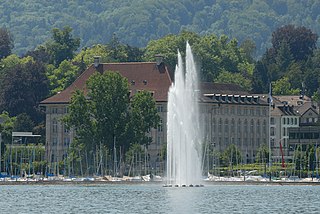
Swiss Reinsurance Company Ltd, commonly known as Swiss Re, is a reinsurance company based in Zurich, Switzerland. It is the world's largest reinsurer, as measured by net premiums written. Swiss Re operates through offices in more than 25 countries and was ranked 118th in Forbes Global 2000 leading companies list in 2016. It was also ranked 313th in Fortune Global 500 in 2015.
Operational risk is "the risk of a change in value caused by the fact that actual losses, incurred for inadequate or failed internal processes, people and systems, or from external events, differ from the expected losses". This positive definition, adopted by the European Solvency II Directive for insurers, is a variation adopted from the Basel II regulations for banks. Before, operational risk was negatively defined in Basel I, namely that operational risk are all risks which are not market risk and not credit risk. Some banks have therefore also used the term operational risk synonymously with non-financial risks.
Catastrophe modeling is the process of using computer-assisted calculations to estimate the losses that could be sustained due to a catastrophic event such as a hurricane or earthquake. Cat modeling is especially applicable to analyzing risks in the insurance industry and is at the confluence of actuarial science, engineering, meteorology, and seismology.
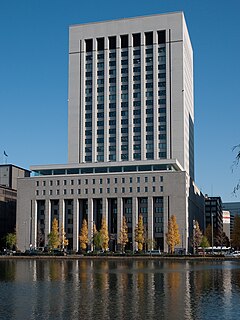
The Dai-ichi Life Insurance Company, Limited, or Dai-ichi Life for short, is the third-largest life insurer in Japan by revenue, behind Japan Post Insurance and Nippon Life.
Financial Reinsurance, is a form of reinsurance which is focused more on capital management than on risk transfer. In the non-life segment of the insurance industry this class of transactions is often referred to as finite reinsurance.
In finance, mainly for financial services firms, economic capital (ecap) is the amount of risk capital, assessed on a realistic basis, which a firm requires to cover the risks that it is running or collecting as a going concern, such as market risk, credit risk, legal risk, and operational risk. It is the amount of money that is needed to secure survival in a worst-case scenario. Firms and financial services regulators should then aim to hold risk capital of an amount equal at least to economic capital.

The New India Assurance Co. Ltd., based in Mumbai, Maharashtra is a nationalised general insurance company. It is under the ownership of Ministry of Finance, Government of India. "It is the largest nationalised general insurance company of India on the basis of gross premium collection inclusive of foreign operations". It was founded by Sir Dorabji Tata in 1919, and was nationalized in 1973.
An insurance commissioner is a public official in the executive branch of a state or territory in the United States who, along with his or her office, regulate the insurance industry. The powers granted to the office of an insurance commissioner differ in each state. The office of an insurance commissioner is established either by the state constitution or by statute. While most insurance commissioners are appointed, in some jurisdictions they are elected. The office of the insurance commissioner may be part of a larger regulatory agency, or an autonomous department.
Solvency II is a Directive in European Union law that codifies and harmonises the EU insurance regulation. Primarily this concerns the amount of capital that EU insurance companies must hold to reduce the risk of insolvency.
The International Credit Insurance & Surety Association (ICISA) was founded in April 1928, forming the first trade credit insurance association. The Association is registered in Zurich (Switzerland) under Swiss Civil Code. The Secretariat is based in Amsterdam.
The CAEL Rating System is a standard used by the United States Federal Deposit Insurance Corporation (FDIC) to evaluate the financial solvency of US banks. The rating is based on the capital adequacy, asset quality, profitability, and liquidity of the bank, and is reported as a composite score. The composite score runs on a scale of 1 to 5, with 1 being excellent and 5 being indicative of imminent regulatory action.

The European Insurance and Occupational Pensions Authority (EIOPA) is a European Union financial regulatory institution that replaced the Committee of European Insurance and Occupational Pensions Supervisors (CEIOPS). It is established under EU Regulation 1094/2010.
A solvency ratio measures the extent to which assets cover commitments for future payments, the liabilities.
The New Jersey Department of Banking and Insurance (DOBI) is one of 15 principal departments in New Jersey government. The department's mission is to regulate the banking, insurance and real estate industries in a professional and timely manner that protects and educates consumers and promotes the growth, financial stability and efficiency of these industries. The Commissioner of DOBI is Marlene Caride.
At the heart of the prudential Solvency II directive, the own risk and solvency assessment (ORSA) is defined as a set of processes constituting a tool for decision-making and strategic analysis. It aims to assess, in a continuous and prospective way, the overall solvency needs related to the specific risk profile of the insurance company. Risk Management and own risk and solvency assessment is a similar regulation that has been enacted in the US by the NAIC. Other jurisdictions are enacting similar regulations to comply with the Insurance Core Principle 16 enacted by the IAIS.

The Office of Insurance Commission (OIC) is the regulator of Thailand’s insurance industry has been regulated by the (OIC) which operates under the supervision of the Thai Minister of Finance. The OIC is empowered to regulate insurance companies, brokers and agents and was established under the Thailand Government Insurance Commission Act B.E. 2550 which summarized the role of the Commission ‘to supervise and promote insurance business conduct’. Prior to this insurance regulation occurred within the Department of Insurance, part of the Thai Ministry of Commerce.

Covéa is a French mutual insurance company that covers property, liability and reinsurance businesses headquartered in Paris. It was formed from the merger of three separate French mutual insurance companies Garantie Mutuelle des Fonctionnaires (GMF), Mutuelle d'assurance des artisans de France (MAAF) and Mutuelle du Mans Assurance (MMA).

Damir Filipović is a Swiss mathematician specializing in quantitative finance. He holds the Swissquote Chair in Quantitative Finance and is the director of the Swiss Finance Institute at EPFL.