
Raja Ram Mohan Roy was an Indian reformer who was one of the founders of the Brahmo Sabha in 1828, the precursor of the Brahmo Samaj, a social-religious reform movement in the Indian subcontinent. He was given the title of Raja by Akbar II, the Mughal emperor. His influence was apparent in the fields of politics, public administration, education and religion. He was known for his efforts to abolish the practices of sati and child marriage. Roy is considered to be the "Father of Indian Renaissance" by many historians.
Sharma is a Hindu Brahmin surname. The Sanskrit stem ṣárman- can mean 'joyfulness', 'comfort', 'happiness'. Sarma and Sarmah are alternative English spellings of the name, commonly used by Assamese Brahmins.
Varmā, Verma, Varman, or Burman are surnames found in India and Southeast Asia. These surnames are commonly used by people of different castes and ethnic groups across the region. The surname is used in North India by some of the groups among cluster of castes called Kayasthas. However, in the same region along with Central India, it can also be found among castes like Lodhi rajputs, Prajapats, Kurmis and Koeris.
Rajkumari or Raj Kumari may refer to:
Das is a common last name in South Asia, among adherents of Hinduism and Sikhism, as well as those who converted to Islam or Christianity. It is a derived from the Sanskrit word Dasa meaning servant, devotee, or votary. "Das" may be inferred to be one who has surrendered to God. The surname is often used by those in the Vaishnav community.
Kumaraswamy or Coomaraswamy or Kumarasamy is a South Indian male given name. Due to the South Indian tradition of using patronymic surnames it may also be a surname for males and females. Kumaraswamy is one of the many names of the Hindu god Murugan.
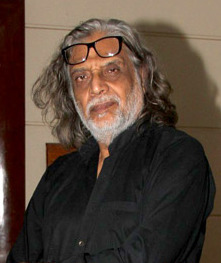
Muzaffar Ali is an Indian filmmaker, fashion designer, poet, artist, cultural revivalist, and social worker.

Raja Sir Panaganti RamarayaningarKCIE, also known as the Raja of Panagal, was a zamindar of Kalahasti, a Justice Party leader and the First Minister of Madras Presidency from 11 July 1921 to 3 December 1926.
Chaudhary is a common surname in the Indian subcontinent, originally derived from an Indian hereditary title. "Chaudhary" is a term adapted from the Sanskrit word caturdhara, literally "holder of four". 'Chaudhary' was first bestowed by the various rulers of the Delhi Sultanate, and the custom was continued by the breakaway Bengal Sultanate. Later, the Mughals and the Nawabs conferred the same title in great numbers. Chaudharies were "local magnates" responsible for land taxes alongside an amil and a karkun (accountant) in the local-level administrative units known as parganas.
Mehta is an Indian surname, derived from the Sanskrit word mahita meaning 'great' or 'praised'. It is found among several Indian religious groups, including Hindus, Jains, Parsis, and Sikhs. Among Hindus, it is used by a wide range of castes and social groups, including Khatris, Rajputs, Brahmins and Banias. Mehta is also a common surname found among the Koeri caste of Bihar, who are commonly known as Kushwaha.
Thakkar is an Indian family name found amongst the Lohana caste. Alternative spellings of the name include Thakker, Thaker, Thakkar, Thakrar and Thacker. The surname is widely used in the Indian states of Gujarat, Rajasthan, Punjab and Jammu.
Rajagopal or Raja Gopal is a common name in India. Notable persons with that name include:

Rastogi is a surname of Kshatriya Varg within Hindu Society. The legacy of King Harishchandra's son, Rohitashva, whose name signifies "lineage of the sun", gave rise to a series of surnames associated with the Solar Dynasty of Kshatriya (Ikshvaku), or the Warrior Clan. However, as time passed, they shifted their focus to commerce and were subsequently recognized as members of the Vaishya (Bania) elite community, renowned for their trading prowess. The Rastogis have a rich history as money lenders and businessmen. After the introduction of the Nesfield theory in 1885, they were officially classified as Vaishya based on their occupation. The Mahabharata recounts the glory of Rohitaka's kingdom founded by Rohitashva, whose glory is preserved in its 4 parva, 35 upa-parva, and 5 adhyayas.
The 2G spectrum case was a political controversy in which politicians and private officials of the United Progressive Alliance (UPA) coalition government India were allegedly involved in selling or allotting 122 2G spectrum licenses on conditions that provided an advantage to specific telecom operators. A. Raja, then Telecom Minister, was accused of selling 2G spectrum licenses at a very low cost which resulted in the loss of ₹1,760 billion in government revenue. Raja was also accused of not following rules and regulations as well as not recognizing any advice from the Ministries of Finance and Law and Justice of India while allotting 2G spectrum licenses to telecom operators. Series of allegations were made on allotting 2G spectrum licenses including allegations from Central Bureau of Investigation after investigating the case alleging Raja for intentionally advancing the cut-off date to favour some specific firms, which were allegedly ineligible for applying for telecom licenses, in return for bribes.
Rajalakshmi (1930–1965) was a Malayalam writer and poet in India
Raja is a common given name and a surname, derived from Sanskrit राजन् (rajan), meaning "king", "ruler".
Velaikaran or Velaikkaran (transl. Worker) may refer to:

Gordhandas Bhagwandas Narottamdas was an Indian physician and social worker from Bombay, India. He founded the Sir Harkisandas Narottamdas Hospital in 1925 and served patients until his death. He was awarded the Padma Shri in 1965.
