
In most biological nomenclature, a scale is a small rigid plate that grows out of an animal's skin to provide protection. In lepidopteran species, scales are plates on the surface of the insect wing, and provide coloration. Scales are quite common and have evolved multiple times through convergent evolution, with varying structure and function.

Jan Swammerdam was a Dutch biologist and microscopist. His work on insects demonstrated that the various phases during the life of an insect—egg, larva, pupa, and adult—are different forms of the same animal. As part of his anatomical research, he carried out experiments on muscle contraction. In 1658, he was the first to observe and describe red blood cells. He was one of the first people to use the microscope in dissections, and his techniques remained useful for hundreds of years.

A tile is a thin object usually square or rectangular in shape. Tile is a manufactured piece of hard-wearing material such as ceramic, stone, metal, baked clay, or even glass, generally used for covering roofs, floors, walls, or other objects such as tabletops. Alternatively, tile can sometimes refer to similar units made from lightweight materials such as perlite, wood, and mineral wool, typically used for wall and ceiling applications. In another sense, a tile is a construction tile or similar object, such as rectangular counters used in playing games. The word is derived from the French word tuile, which is, in turn, from the Latin word tegula, meaning a roof tile composed of fired clay.

Morphology is a branch of biology dealing with the study of the form and structure of organisms and their specific structural features.

The imbrex and tegula were overlapping roof tiles used in ancient Greek and Roman architecture as a waterproof and durable roof covering. They were made predominantly of fired clay, but also sometimes of marble, bronze or gilt. In Rome, they replaced wooden shingles, and were used on almost every type of structure, from humble outbuildings to grand temples and public facilities.
An invasion is a military action of soldiers entering a foreign land.

The prothorax is the foremost of the three segments in the thorax of an insect, and bears the first pair of legs. Its principal sclerites are the pronotum (dorsal), the prosternum (ventral), and the propleuron (lateral) on each side. The prothorax never bears wings in extant insects, though some fossil groups possessed wing-like projections. All adult insects possess legs on the prothorax, though in a few groups the forelegs are greatly reduced. In many groups of insects, the pronotum is reduced in size, but in a few it is hypertrophied, such as in all beetles (Coleoptera), in which the pronotum is expanded to form the entire dorsal surface of the thorax, and most treehoppers, in which the pronotum is expanded into often fantastic shapes that enhance their camouflage or mimicry. Similarly, in the Tetrigidae, the pronotum is extended backward to cover the flight wings, supplanting the function of the tegmina.
The mesothorax is the middle of the three segments in the thorax of an insect, and bears the second pair of legs. Its principal sclerites are the mesonotum (dorsal), the mesosternum (ventral), and the mesopleuron (lateral) on each side. The mesothorax is the segment that bears the forewings in all winged insects, though sometimes these may be reduced or modified, as in beetles (Coleoptera) or Dermaptera, in which they are sclerotized to form the elytra, and the Strepsiptera, in which they are reduced to form halteres. All adult insects possess legs on the mesothorax. In some groups of insects, the mesonotum is hypertrophied, such as in Diptera, Hymenoptera, and Lepidoptera), in which the anterior portion of the mesonotum forms most of the dorsal surface of the thorax. In these orders, there is also typically a small sclerite attached to the mesonotum that covers the wing base, called the tegula. In one group of insects, the Hemiptera, the dorsal surface of the thorax is typically formed primarily of the prothorax, but also in part by the enlarged posterior portion of the mesonotum, called the scutellum; in the Coleoptera, the scutellum may or may not be visible, usually as a small triangular plate between the elytral bases, thus similar in position to the Hemipteran scutellum. In Diptera and Hymenoptera the mesothoracic scutellum is also distinct, but much smaller than the mesoscutum.

A tegula is a small sclerite situated above the base of the costal vein in the wings of various insects such as Orthoptera, Lepidoptera, Hymenoptera, Diptera, and Auchenorrhyncha, and attached to the antero-lateral portion of the mesonotum.
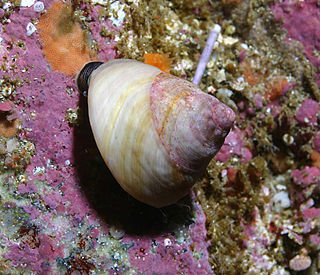
Tegula is a genus of small to medium-sized sea snails, marine gastropod molluscs in the family Tegulidae.

Teulada is a comune (municipality) in the Province of South Sardinia in the Italian region Sardinia, located about 40 kilometres (25 mi) southwest of Cagliari.
Saint Tegulus is venerated as a member of the legendary Theban Legion, whose members were led by Saint Maurice in the 3rd century. The center of Tegulus' cult is at Ivrea. Veneration for Saint Tegulus actually arose at the end of the 10th century, when during the episcopate of Blessed Warmondus (Varmondo), the saint's relics were discovered in a sepulcher situated a short distance away from Ivrea. The relics were solemnly translated to the cathedral of Ivrea within the city walls, and placed in the chapel of San Giacomo. The relics were later translated, with those of Saint Bessus, to the chapel of Santissimo Sacramento.

Roof tiles are designed mainly to keep out rain, and are traditionally made from locally available materials such as terracotta or slate. Modern materials such as concrete and plastic are also used and some clay tiles have a waterproof glaze.
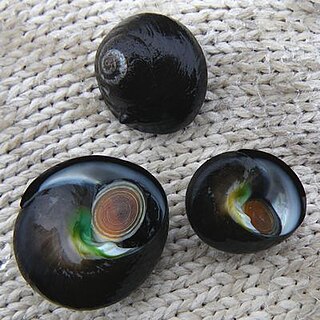
Chlorostoma is a genus of sea snails, marine gastropod mollusks in the family Tegulidae.

Monk and Nun is a style of roof similar to Imbrex and tegula, but instead of using a flat tile (tegula) and an arched tile (imbrex), two arched imbrex tiles are used.
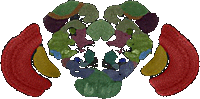
Virtual Fly Brain, or VFB, is an interactive, web-based tool that allows neurobiologists to explore the detailed neuroanatomy, transgene expression and associated phenotypes of the Drosophila melanogaster brain. Users can browse painted 3D image stacks of the Drosophila brain, choosing any plane of section they want and clicking on painted regions to find names' definitions, references and synonyms for the chosen region. For each region, they can run queries to find neurons, transgene expression and phenotypes. For each neuron found, users can browse definitions, references and synonyms.
Ceramic building material, often abbreviated to CBM, is an umbrella term used in archaeology to cover all building materials made from baked clay. It is particularly, but not exclusively, used in relation to Roman building materials.
The Diptera is a very large and diverse order of mostly small to medium-sized insects. They have prominent compound eyes on a mobile head, and one pair of functional, membraneous wings, which are attached to a complex mesothorax. The second pair of wings, on the metathorax, are reduced to halteres. The order's fundamental peculiarity is its remarkable specialization in terms of wing shape and the morpho-anatomical adaptation of the thorax – features which lend particular agility to its flying forms. The filiform, stylate or aristate antennae correlate with the Nematocera, Brachycera and Cyclorrhapha taxa respectively. It displays substantial morphological uniformity in lower taxa, especially at the level of genus or species. The configuration of integumental bristles is of fundamental importance in their taxonomy, as is wing venation. It displays a complete metamorphosis, or holometabolous development. The larvae are legless, and have head capsules with mandibulate mouthparts in the Nematocera. The larvae of "higher flies" (Brachycera) are however headless and wormlike, and display only three instars. Pupae are obtect in the Nematocera, or coarcate in Brachycera.

The subphylum Hexapoda constitutes the largest number of species of arthropods and includes the insects as well as three much smaller groups of wingless arthropods: Collembola, Protura, and Diplura. The Collembola are very abundant in terrestrial environments. Hexapods are named for their most distinctive feature: a consolidated thorax with three pairs of legs. Most other arthropods have more than three pairs of legs.
Tegulidae is a family of small to large sea snails, marine gastropod mollusks in the superfamily Trochoidea.
