Alien primarily refers to:
Charleston most commonly refers to:

The Eagles are an American rock band formed in Los Angeles in 1971. With five number-one singles and six number-one albums, six Grammy Awards and five American Music Awards, the Eagles were one of the most successful musical acts of the 1970s in North America. Founding members Glenn Frey, Don Henley, Bernie Leadon, and Randy Meisner were recruited by Linda Ronstadt as band members, some touring with her, and all playing on her third solo album, before venturing out on their own on David Geffen's new Asylum Records label.
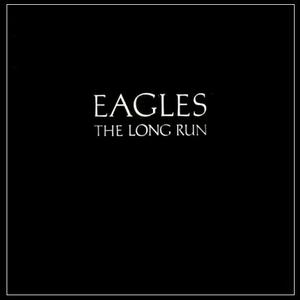
The Long Run is the sixth studio album by American rock group the Eagles. It was released in 1979, on Asylum in the United States and the United Kingdom. This was the first Eagles album to feature Timothy B. Schmit, who had replaced founding member Randy Meisner, and the last full studio album to feature Don Felder before his termination from the band in 2001.

Joseph Fidler Walsh is an American guitarist, singer, and songwriter. Best known as a member of the rock band the Eagles, his five-decade career has also included solo work and stints in two other successful rock bands: James Gang and Ringo Starr & His All-Starr Band. He was also part of the New Zealand band Herbs. In the 1990s, he was a member of the short-lived supergroup The Best.
Long Walk, A Long Walk or The Long Walk may refer to:

John David "J. D." Souther is an American singer, songwriter, and actor. He has written and co-written songs recorded by Linda Ronstadt and the Eagles. Souther is probably best known for his songwriting abilities, especially in the field of country rock. He co-wrote some of the biggest hits for the Eagles, including "Best of My Love", "Victim of Love", "Heartache Tonight", and "New Kid in Town". "How Long", which appears on the Eagles' Long Road Out of Eden, was written by Souther and originally recorded on his first solo album in 1972. Souther recorded two major hit songs in his solo career: "You're Only Lonely" (1979) and "Her Town Too" (1981), a duet with his longtime friend James Taylor.
Victim of Love may refer to:

Timothy Bruce Schmit is an American musician, singer, and songwriter. He has performed as the bassist and vocalist for Poco and the Eagles, having replaced bassist and vocalist Randy Meisner in both cases. Schmit has also worked for decades as a session musician and solo artist. In 1998, he was inducted into the Rock and Roll Hall of Fame as a member of the Eagles.
A last resort is something that is used when all other options have been exhausted. Last Resort or The Last Resort may refer to:
Out of Control may refer to:
King of Hollywood may refer to:
"In the City" is a rock song written by Barry De Vorzon and Joe Walsh. It was first recorded by Walsh and released on the soundtrack for the 1979 film The Warriors. Another version of the song, recorded by Walsh's band the Eagles, was included on their album The Long Run, released the same year.

"The Long Run" is a song written by Don Henley and Glenn Frey and recorded by the Eagles. The sound of the song is viewed as a tribute to the Stax / Memphis rhythm and blues sound. It was the title track of their album The Long Run and was released as a single in November 1979. It reached No. 8 on the U.S. Billboard Hot 100 in early 1980. It was the second of three singles released from The Long Run album, preceded by "Heartache Tonight," which reached No. 1 on the Billboard Hot 100 in November 1979, and followed by "I Can't Tell You Why," which also reached No. 8 on the Billboard Hot 100, in the spring of 1980.
Here is an adverb that means "in, on, or at this place". It may also refer to:
Run for Your Life, or variants, may refer to:
The Eagle Has Landed may refer to:
This page is based on this
Wikipedia article Text is available under the
CC BY-SA 4.0 license; additional terms may apply.
Images, videos and audio are available under their respective licenses.
