
The Philharmonia Orchestra is a British orchestra based in London. It was founded in 1945 by Walter Legge, a classical music record producer for EMI. Among the conductors who worked with the orchestra in its early years were Richard Strauss, Wilhelm Furtwängler and Arturo Toscanini; of the Philharmonia's younger conductors, the most important to its development was Herbert von Karajan who, though never formally chief conductor, was closely associated with the orchestra in the late 1940s and early 1950s. The Philharmonia became widely regarded as the finest of London's five symphony orchestras in its first two decades.

James Legge was a Scottish linguist, missionary, sinologist, and translator who was best known as an early translator of Classical Chinese texts into English. Legge served as a representative of the London Missionary Society in Malacca and Hong Kong (1840–1873) and was the first Professor of Chinese at Oxford University (1876–1897). In association with Max Müller he prepared the monumental Sacred Books of the East series, published in 50 volumes between 1879 and 1891.

William Legge, 2nd Earl of Dartmouth, PC, FRS, styled as Viscount Lewisham from 1732 to 1750, was a British statesman who is most remembered as the namesake of Dartmouth College.

Tiān (天) is one of the oldest Chinese terms for heaven and a key concept in Chinese mythology, philosophy, and religion. During the Shang dynasty, the Chinese referred to their supreme god as Shàngdì or Dì (帝,"Lord"). During the following Zhou dynasty, Tiān became synonymous with this figure. Before the 20th century, worship of Tiān was an orthodox state religion of China.
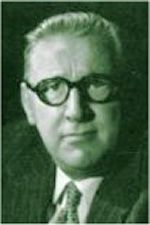
Harry Walter Legge was an English classical music record producer, most especially associated with EMI. His recordings include many sets later regarded as classics and reissued by EMI as "Great Recordings of the Century". He worked in the recording industry from 1927, combining this with the post of junior music critic of The Manchester Guardian. He was assistant to Sir Thomas Beecham at the Royal Opera House, Covent Garden, and in World War II played a role in bringing music to the armed forces and civilians.
Michael Legge may refer to:

Henry Bilson-Legge was an English statesman. He notably served three times as Chancellor of the Exchequer in the 1750s and 1760s.
Legge is a surname. Notable people with the surname include:

Katherine Anne Legge is a British professional auto racing driver, competing in the IMSA SportsCar Championship.
George Legge may refer to:

Lieutenant General James Gordon Legge, was an Australian Army senior officer who served in the First World War and was the Chief of the General Staff, Australia's highest ranking army officer between 1914 and 1915 and again from 1917 to 1920. His son, Stanley Ferguson Legge, reached the rank of major general.

William Legge was an English royalist army officer, a close associate of Prince Rupert of the Rhine.

Callitris rhomboidea, commonly known as the Oyster Bay pine, Tasmanian cypress pine, Port Jackson pine, Illawarra Mountain pine, or dune cypress pine, is a species of conifer in the family Cupressaceae. It is native to Australia, occurring in South Australia, Queensland, New South Wales, Victoria and Tasmania. It has become naturalized near Auckland, New Zealand and can be found on the island of Taillefer Rocks in Tasmania.
Legge-Bourke may refer to:
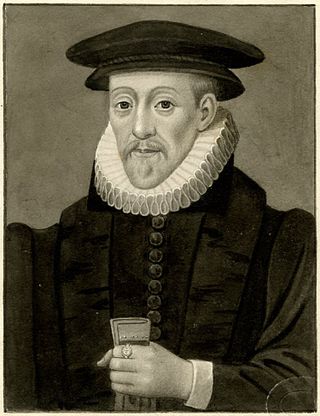
Thomas Legge was an English playwright, prominently known for his play Richardus Tertius, which is considered to be the first history play written in England.

Holy Trinity, Minories, was a Church of England parish church outside the eastern boundaries of the City of London, but within the Liberties of the Tower of London. The liberty was incorporated in the Metropolitan Borough of Stepney in 1899, and today is within the City of London. Converted from the chapel of a nunnery, Holy Trinity was in use as a church from the 16th century until the end of the 19th century. It survived as a parish hall until it was destroyed by bombing during World War II.
Edward Legge may refer to:

Leon Clinton Elliott Legge is an English former professional footballer.

Dizzy Digs Paris is a compilation album by trumpeter Dizzy Gillespie and his band featuring concert and studio performances recorded in Paris in 1953 and originally released on the French Disques Vogue and Blue Star labels. Many of the tracks were first released as 78 rpm records but were later released on albums including Dizzy Over Paris (Roost) and Dizzy Gillespie and His Operatic Strings Orchestra (Fontana). The album also includes eight tracks recorded by Dizzy's rhythm section led by Wade Legge but without Gillespie that were originally released on a 10" album.
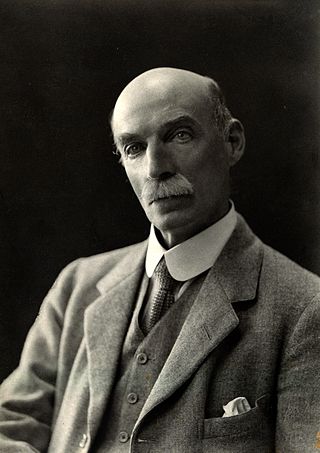
Sir Thomas Morison Legge CBE was a British physician who served as medical inspector to improve industrial hygiene.
This page is based on this
Wikipedia article Text is available under the
CC BY-SA 4.0 license; additional terms may apply.
Images, videos and audio are available under their respective licenses.
