
Look up Tongo in Wiktionary, the free dictionary.
Tongo may refer to:
Tongo may refer to:


This is a demography of the population of Suriname, including population density, ethnicity, education level, health of the populace, economic status, religious affiliations, and other aspects of the population.
Sranan Tongo is an English-based creole language that is spoken as a lingua franca by approximately 519,600 people in Suriname.
Kreyol may mean:
Saramaccan is a creole language spoken by about 58,000 people of West African descent near the Saramacca and the upper Suriname River, as well as in Paramaribo, capital of Suriname. The language also has 25,000 speakers in French Guiana and 8,000 in the Netherlands. It has three main dialects. The speakers are mostly descendants of fugitive slaves who were native to West and Central Africa; they form a group called Saamacca, also spelled Saramaka.
Taki may refer to:
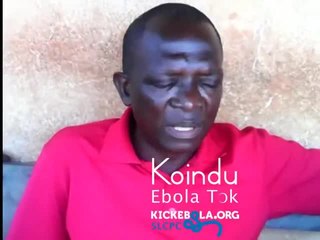
The Sierra Leonean Creole or Krio is an English-based creole language that is lingua franca and de facto national language spoken throughout the West African nation of Sierra Leone. Krio is spoken by 96 percent of the country's population, and it unites the different ethnic groups in the country, especially in their trade and social interaction with each other. Krio is the primary language of communication among Sierra Leoneans at home and abroad, and has also heavily influenced Sierra Leonean English. The language is native to the Sierra Leone Creole people, or Krios, a community of about 104,311 descendants of freed slaves from the West Indies, Canada, United States and the British Empire, and is spoken as a second language by millions of other Sierra Leoneans belonging to the country's indigenous tribes. Krio, along with English, is the official language of Sierra Leone.
Tonga is a Pacific Island nation whose people are known as Tongans.

Ian Francis Hancock is a linguist, Romani scholar and political advocate. He was born and raised in England and is one of the main contributors in the field of Romani studies.

Ndyuka, also called Aukan, Okanisi, Ndyuka tongo, Aukaans, Businenge Tongo, Eastern Maroon Creole, or Nenge is a creole language of Suriname and French Guiana, spoken by the Ndyuka people. The speakers are one of six Maroon peoples in the Republic of Suriname and one of the Maroon peoples in French Guiana. Most of the 25 to 30 thousand speakers live in the interior of the country, which is a part of the country covered with tropical rainforests. Ethnologue lists two related languages under the name Ndyuka, the other being a dialect of Lutos.

A Dutch creole is a creole language whose main lexifier is the Dutch language, a West Germanic language of the Low Countries. These creoles usually developed from Dutch-based pidgins or through language mixing where Dutch served as a major influence.
Krio may refer to:
West African Pidgin English, also known as Guinea Coast Creole English, is a West African pidgin language lexified by English and local African languages. It originated as a language of commerce between British and African slave traders during the period of the transatlantic slave trade. As of 2017, about 75 million people in Nigeria, Cameroon, Ghana and Equatorial Guinea used the language.
Jamaican Maroon language, Maroon Spirit language, Kromanti, Jamaican Maroon Creole or Deep patwa is a ritual language and formerly mother tongue of Jamaican Maroons. It is an English-based creole with a strong Akan component, specifically from the Fante dialect of the Central Region of Ghana. It is distinct from usual Jamaican Creole, being similar to the creoles of Sierra Leone (Krio) and Suriname such as Sranan and Ndyuka. It is also more purely Akan than regular Patois, with little to no contribution from other African languages. Today, the Maroon Spirit language is used by Jamaican Maroons. Another distinct ritual language consisting mostly of words and phrases from Akan languages, is also used by Jamaican Maroons in certain rituals including some involving possession by ancestral spirits during Kromanti ceremonies or when addressing those who are possessed and sometimes used as a kind of code.

Surinamese people are people who identify with the country of Suriname. This connection may be residential, legal, historical or cultural. For most Surinamese, several of these connections exist and are collectively the source of their being Surinamese.
Kwinti is an English-based creole of Suriname closely related to Ndyuka. The language has less than 300 speakers, and split from Plantation Creole which is nowadays known as Sranan Tongo in the middle 18th century. Code-switching with Sranan Tongo and Dutch was common among the younger generation in 1973, and about 70% of the tribe have moved to the urban areas. UNESCO considers the language endangered.

The Matawai are a tribe of Surinamese Maroons. The Matawai were originally part of the Saramaka, and signed a peace agreement with the Dutch colonists in 1762. The tribe split from the Saramaka, and in 1769, they were recognized as a separate tribe.

Julius Gustaaf Arnout Koenders was a Surinamese teacher and fervent activist for Sranan Tongo. As a teacher, he was forced to use the Dutch language thus denying the children their own language. He was an early advocate of Sranan and Creole culture.
Sranan Tongo, or for short Sranan, an English-based creole language spoken by many people in Suriname, is not an officially recognized language. Until the middle of the 20th century, most written texts in Sranan, seen at the time as a low-prestige language, used a spelling that was not standardized but based on Dutch orthography, recording an approximation of how Sranan words sound to Dutch ears. In view of the considerable differences between the phonologies of Sranan and Dutch, this was not a satisfactory situation.

Christiaan Hendrik "Hein" Eersel was a Surinamese linguist and cultural researcher.