
The solar eclipse of August 21, 2017, dubbed the "Great American Eclipse" by the media, was a total solar eclipse visible within a band that spanned the entire contiguous United States, passing from the Pacific to the Atlantic coasts. As a partial solar eclipse, it was visible on land from Nunavut in northern Canada to as far south as northern South America. In northwestern Europe and Africa, it was partially visible in the late evening. In northeastern Asia, it was partially visible at sunrise.

A solar eclipse occurs when a portion of the Earth is engulfed in a shadow cast by the Moon which fully or partially blocks sunlight. This occurs when the Sun, Moon and Earth are aligned. Such alignment coincides with a new moon (syzygy) indicating the Moon is closest to the ecliptic plane. In a total eclipse, the disk of the Sun is fully obscured by the Moon. In partial and annular eclipses, only part of the Sun is obscured.
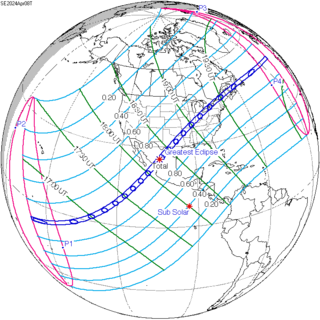
A total solar eclipse will take place at the Moon’s ascending node of the orbit on Monday, April 8, 2024, visible across North America and dubbed the Great North American Eclipse by some of the media. A solar eclipse occurs when the Moon passes between Earth and the Sun, thereby totally or partly obscuring the image of the Sun for a viewer on Earth. A total solar eclipse occurs when the Moon's apparent diameter is larger than the Sun's, blocking all direct sunlight, turning day into darkness. Totality occurs in a narrow path across Earth's surface, with the partial solar eclipse visible over a surrounding region thousands of kilometres wide. Occurring only 1 day after perigee, the Moon's apparent diameter will be larger. With a magnitude of 1.0566, its longest duration of totality will be of four minutes and 28.13 seconds near the town of Nazas, Durango, Mexico, and the nearby city of Torreón, Coahuila.
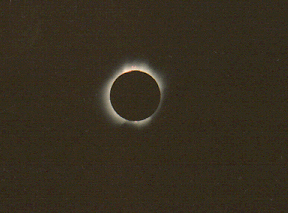
A total solar eclipse occurred on Thursday, July 11, 1991. A solar eclipse occurs when the Moon passes between Earth and the Sun, thereby totally or partly obscuring the image of the Sun for a viewer on Earth. A total solar eclipse occurs when the Moon's apparent diameter is larger than the Sun's, blocking all direct sunlight, turning day into darkness. Totality occurs in a narrow path across Earth's surface, with the partial solar eclipse visible over a surrounding region thousands of kilometres wide. Totality began over the Pacific Ocean and Hawaii moving across Mexico, down through Central America and across South America ending over Brazil. It lasted for 6 minutes and 53.08 seconds at the point of maximum eclipse. There will not be a longer total eclipse until June 13, 2132.
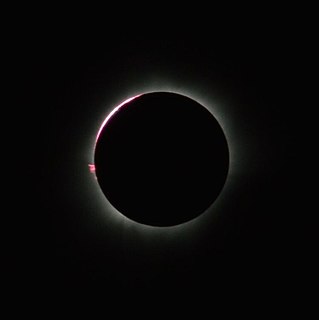
A total solar eclipse took place at the Moon’s descending node of the orbit on March 8–9, 2016. If viewed from east of the International Date Line, the eclipse took place on March 8 and elsewhere on March 9. A total solar eclipse occurs when the Moon's apparent diameter is larger than the Sun's and the apparent path of the Sun and Moon intersect, blocking all direct sunlight and turning daylight into darkness; the sun appears to be black with a halo around it. Totality occurs in a narrow path across Earth's surface, with the partial solar eclipse visible over a surrounding region thousands of kilometres wide. The eclipse of March 8–9, 2016 had a magnitude of 1.0450 visible across an area of Pacific Ocean, which started in the Indian Ocean, and ended in the northern Pacific Ocean.
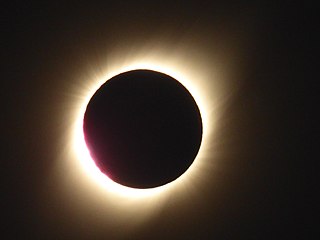
A total solar eclipse occurred at the ascending node of the Moon's orbit on July 2, 2019, with an eclipse magnitude of 1.0459. Totality was visible from the southern Pacific Ocean east of New Zealand to the Coquimbo Region in Chile and Central Argentina at sunset, with the maximum of 4 minutes 32 seconds visible from the Pacific Ocean.

A total solar eclipse occurred at the Moon's ascending node on 3 November 2013. It was a hybrid eclipse of the Sun with a magnitude of 1.0159, with a small portion over the western Atlantic Ocean at sunrise as an annular eclipse, and the rest of the path as a narrow total solar eclipse. A solar eclipse occurs when the Moon passes between Earth and the Sun, thereby totally or partly obscuring the image of the Sun for a viewer on Earth. A hybrid solar eclipse occurs when the Moon's apparent diameter is smaller than the Sun's in sunrise and sunset, but at Greatest Eclipse the Moon's apparent diameter is larger than the Sun's.

A total solar eclipse occurred on June 30, 1954. A solar eclipse occurs when the Moon passes between Earth and the Sun, thereby totally or partly obscuring the image of the Sun for a viewer on Earth. A total solar eclipse occurs when the Moon's apparent diameter is larger than the Sun's, blocking all direct sunlight, turning day into darkness. Totality occurs in a narrow path across Earth's surface, with the partial solar eclipse visible over a surrounding region thousands of kilometres wide.

A total solar eclipse will occur at the Moon’s descending node of the orbit on Saturday, March 30, 2052. A solar eclipse occurs when the Moon passes between Earth and the Sun, thereby totally or partly obscuring the image of the Sun for a viewer on Earth. A total solar eclipse occurs when the Moon's apparent diameter is larger than the Sun's, blocking all direct sunlight, turning day into darkness. Totality occurs in a narrow path across Earth's surface, with the partial solar eclipse visible over a surrounding region thousands of kilometres wide. The path of totality will cross central Mexico and the southeastern states of the United States. Almost all of North America and the northern edge of South America will see a partial eclipse. It will be the 2nd total eclipse visible from the Florida Panhandle and southwest Georgia in 7 years. It will be the first total solar eclipse visible from Solar Saros 130 in 223 synodic months.

A total solar eclipse occurred on July 22, 1990. A solar eclipse occurs when the Moon passes between Earth and the Sun, thereby totally or partly obscuring the image of the Sun for a viewer on Earth. A total solar eclipse occurs when the Moon's apparent diameter is larger than the Sun's, blocking all direct sunlight, turning day into darkness. Totality occurs in a narrow path across Earth's surface, with the partial solar eclipse visible over a surrounding region thousands of kilometres wide. Totality was visible in southern Finland, the Soviet Union, and eastern Andreanof Islands and Amukta of Alaska.
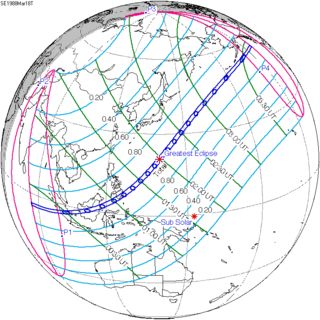
A total solar eclipse occurred on March 18, 1988. A solar eclipse occurs when the Moon passes between Earth and the Sun, thereby totally or partly obscuring the image of the Sun for a viewer on Earth. A total solar eclipse occurs when the Moon's apparent diameter is larger than the Sun's, blocking all direct sunlight, turning day into darkness. Totality occurs in a narrow path across Earth's surface, with the partial solar eclipse visible over a surrounding region thousands of kilometres wide. Totality was visible in Indonesia and southern Philippines.
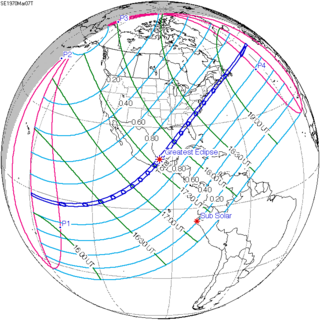
A total solar eclipse occurred on Saturday, March 7, 1970, visible across most of North America and Central America.

A total solar eclipse occurred on February 3, 1916. A solar eclipse occurs when the Moon passes between Earth and the Sun, thereby totally or partly obscuring the image of the Sun for a viewer on Earth. A total solar eclipse occurs when the Moon's apparent diameter is larger than the Sun's, blocking all direct sunlight, turning day into darkness. Totality occurs in a narrow path across Earth's surface, with the partial solar eclipse visible over a surrounding region thousands of kilometres wide. Totality was visible in Colombia, Venezuela, and the whole Guadeloupe except Marie-Galante, Saint Martin and Saint Barthélemy.
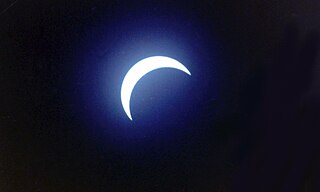
A total solar eclipse occurred on November 22, 1984. A solar eclipse occurs when the Moon passes between Earth and the Sun, thereby totally or partly obscuring the image of the Sun for a viewer on Earth. A total solar eclipse occurs when the Moon's apparent diameter is larger than the Sun's, blocking all direct sunlight, turning day into darkness. Totality occurs in a narrow path across Earth's surface, with the partial solar eclipse visible over a surrounding region thousands of kilometres wide. Totality was visible in Indonesia, Papua New Guinea and southern Pacific Ocean. West of the International Date Line the eclipse took place on November 23, including all land in the path of totality.

A total solar eclipse occurred on September 9, 1904. A solar eclipse occurs when the Moon passes between Earth and the Sun, thereby totally or partly obscuring the image of the Sun for a viewer on Earth. A total solar eclipse occurs when the Moon's apparent diameter is larger than the Sun's, blocking all direct sunlight, turning day into darkness. Totality occurs in a narrow path across Earth's surface, with the partial solar eclipse visible over a surrounding region thousands of kilometres wide. Totality was visible from German New Guinea on September 10 and Chile on September 9.

A total solar eclipse occurred on November 1, 1948. A solar eclipse occurs when the Moon passes between Earth and the Sun, thereby totally or partly obscuring the image of the Sun for a viewer on Earth. A total solar eclipse occurs when the Moon's apparent diameter is larger than the Sun's, blocking all direct sunlight, turning day into darkness. Totality occurs in a narrow path across Earth's surface, with the partial solar eclipse visible over a surrounding region thousands of kilometres wide. Totality was visible from Belgian Congo, Uganda Protectorate including the capital city Kampala, British Kenya including the capital city Nairobi, British Seychelles, and British Mauritius . During this eclipse, comet C/1948 V1, also known as the Eclipse Comet of 1948, was discovered shining near the sun.

A total solar eclipse occurred on October 21, 1930. A solar eclipse occurs when the Moon passes between Earth and the Sun, thereby totally or partly obscuring the image of the Sun for a viewer on Earth. A total solar eclipse occurs when the Moon's apparent diameter is larger than the Sun's, blocking all direct sunlight, turning day into darkness. Totality occurs in a narrow path across Earth's surface, with the partial solar eclipse visible over a surrounding region thousands of kilometres wide. Totality was visible from Niuafoʻou in Tonga, Chile, and a tiny part of Santa Cruz Province, Argentina.
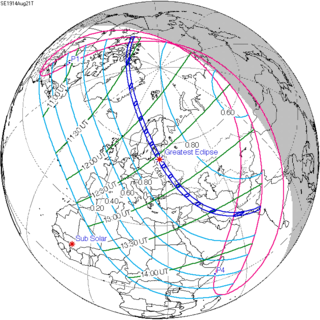
A total solar eclipse occurred on August 21, 1914. A solar eclipse occurs when the Moon passes between Earth and the Sun, thereby totally or partly obscuring the image of the Sun for a viewer on Earth. A total solar eclipse occurs when the Moon's apparent diameter is larger than the Sun's, blocking all direct sunlight, turning day into darkness. Totality occurs in a narrow path across Earth's surface, with the partial solar eclipse visible over a surrounding region thousands of kilometres wide. The totality of this eclipse was visible from northern Canada, Greenland, Norway, Sweden, Russian Empire, Ottoman Empire, Persia and British Raj . It was the first of four total solar eclipses that would be seen from Sweden during the next 40 years.

A total solar eclipse occurred on May 17, 1882. A solar eclipse occurs when the Moon passes between Earth and the Sun, thereby totally or partly obscuring the image of the Sun for a viewer on Earth. A total solar eclipse occurs when the Moon's apparent diameter is larger than the Sun's, blocking all direct sunlight, turning day into darkness. Totality occurs in a narrow path across Earth's surface, with the partial solar eclipse visible over a surrounding region thousands of kilometres wide. Totality was visible across central Africa, the Middle East, and southeastern Asia.
Yi,, literally "justice, righteousness; meaning," is an important concept in Confucianism. It involves a moral disposition to do good, and also the intuition and sensibility to do so competently.

