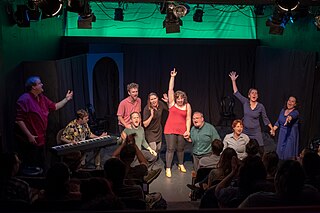
The story of Tracy's Tiger was adapted into an original musical in two acts for the Oregon Shakespeare Festival's 2007 season.[1] This world-premiere production, with books and lyrics by Linda Alper, Douglas Langworthy and Penny Metropulos and music and additional lyrics by Sterling Tinsley, was directed by Penny Metropolus. Produced in the New Theatre, the smallest of Oregon Shakespeare Festival's theaters, the musical met with a warm reception from critics and played to sold-out audiences for the entire season.
The Saroyan story was transplanted from New York to 1950s San Francisco for the musical. Twentysomething Tracy, whose jivey tiger is invisible to all but him (and the audience), falls instantly for Laura, who has her own invisible and very seductive tigress. But on his first visit to Laura's home, Tracy makes a possibly irremediable mistake. The tiger becomes visible and is hunted down on the streets of San Francisco by a compassionate police officer, under the orders of his bumbling chief. The moving finale is a scene of redemption and reincarnation of characters not seen since Act 1.
Tinsley, who also played the piano in this production, worked in a wide range of musical genres, matching the genre to the character.
Notes
↑ "Tracy's Tiger". Oregon Shakespeare Festival. Retrieved May 21, 2012.
This article about a 1950s novel is a stub. You can help Wikipedia by expanding it.
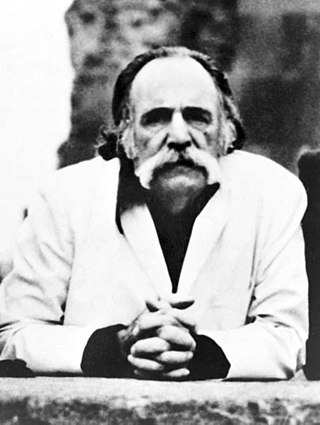
William Saroyan was an Armenian-American novelist, playwright, and short story writer. He was awarded the Pulitzer Prize for Drama in 1940, and in 1943 won the Academy Award for Best Story for the film The Human Comedy. When the studio rejected his original 240-page treatment, he turned it into a novel, The Human Comedy.
David Henry Hwang is an American playwright, librettist, screenwriter, and theater professor at Columbia University in New York City. He has won three Obie Awards for his plays FOB, Golden Child, and Yellow Face. Three of his works have been finalists for the Pulitzer Prize for Drama.
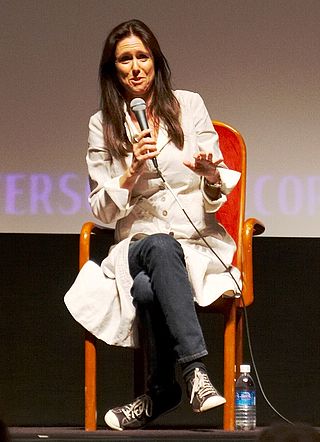
Julie Taymor is an American director and writer of theater, opera, and film. Her stage adaptation of The Lion King debuted in 1997 and received eleven Tony Award nominations, with Taymor receiving Tony Awards for her direction and costume design. Her 2002 film Frida, about Mexican artist Frida Kahlo, was nominated for five Academy Awards, including a Best Original Song nomination for Taymor's composition "Burn It Blue." She also directed the 2007 jukebox musical film Across the Universe, based on the music of the Beatles.
The Comedy of Errors is one of William Shakespeare's early plays. It is his shortest and one of his most farcical comedies, with a major part of the humour coming from slapstick and mistaken identity, in addition to puns and word play. It has been adapted for opera, stage, screen and musical theatre numerous times worldwide. In the centuries following its premiere, the play's title has entered the popular English lexicon as an idiom for "an event or series of events made ridiculous by the number of errors that were made throughout".
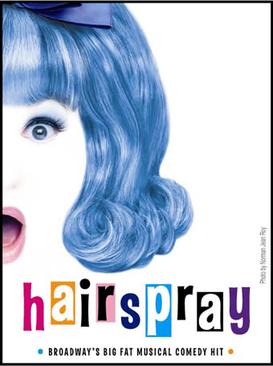
Hairspray is an American musical with music by Marc Shaiman and lyrics by Marc Shaiman and Scott Wittman, with a book by Mark O'Donnell and Thomas Meehan, based on John Waters's 1988 film of the same name. The songs include 1960s-style dance music and "downtown" rhythm and blues. Set in 1962 Baltimore, Maryland, the production follows teenage Tracy Turnblad's dream to dance on The Corny Collins Show, a local TV dance program based on the real-life Buddy Deane Show. When Tracy wins a role on the show, she becomes a celebrity overnight, leading to social change as Tracy campaigns for the show's integration.
The Oregon Shakespeare Festival (OSF) is a regional repertory theatre in Ashland, Oregon, United States, founded in 1935 by Angus L. Bowmer. The Festival now offers matinee and evening performances of a wide range of classic and contemporary plays not limited to Shakespeare. During the Festival, between five and eleven plays are offered in daily rotation six days a week in its three theatres. It welcomed its millionth visitor in 1971, its 10-millionth in 2001, and its 20-millionth visitor in 2015.
Robert Frederic Schenkkan Jr. is an American playwright, screenwriter, and actor. He received the Pulitzer Prize for Drama in 1992 for his play The Kentucky Cycle and his play All the Way earned the 2014 Tony Award for Best Play. He has three Emmy nominations and one WGA Award.
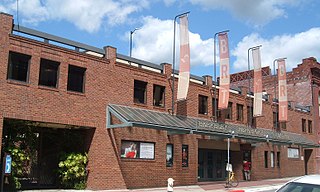
The San Jose Repertory Theatre was the first resident professional theatre company in San Jose, California. It was founded in 1980 by James P. Reber. In 2008, after the demise of the American Musical Theatre of San Jose, the San Jose Rep became the largest non-profit, professional theatre company in the South Bay with an annual operating budget of $5 million. In 2006, it was saved from impending insolvency by a $2 million bailout loan from the city of San Jose; this was later restructured into a long-term loan similar to a mortgage.
Berkeley Repertory Theatre is a regional theater company located in Berkeley, California. It runs seven productions each season from its two stages in Downtown Berkeley.
Carolyn Gage is an American playwright, actor, theatrical director and author. She has written nine books on lesbian theater and sixty-five plays, musicals, and one-woman shows. A lesbian feminist, her work emphasizes non-traditional roles for women and lesbian characters.
"The Daring Young Man on the Flying Trapeze", originally published under the title "The Flying Trapeze" and also known as "The Man on the Flying Trapeze", is a 19th-century popular song about a flying trapeze circus performer, Jules Léotard. The refrain states:
South Coast Repertory (SCR) is a professional theatre company located in Costa Mesa, California.
The Un-Scripted Theater Company, was an improvisational theater company in San Francisco, California. The company performed many kinds of improv formats, such as comedy, mystery, drama, adventure, and musicals, each presented in 4 to 6 week runs each season, each with its own director, format, and vision. Un-Scripted specialized in narrative and genre-based "single-story" improvised theater.
TheatreWorks Silicon Valley is an American non-profit, professional theatre company based in Palo Alto, California, founded in July, 1970. The company is a member of the League of Resident Theatres (LORT) and employs Equity and non-Equity actors, directors, designers, and specialty artists. The company stages a year-round season of comedies, dramas, and musicals in the Mountain View Center for the Performing Arts and in the California Mission-style Lucie Stern Theatre complex in Palo Alto.
The Pennsylvania Shakespeare Festival (PSF) is a professional theatre company in residence at DeSales University in Center Valley, Pennsylvania and the official Shakespeare Festival of the Commonwealth of Pennsylvania.
As You Like It is a pastoral comedy by William Shakespeare believed to have been written in 1599 and first published in the First Folio in 1623. The play's first performance is uncertain, though a performance at Wilton House in 1603 has been suggested as a possibility.
A play is a form of drama that primarily consists of dialogue between characters and is intended for theatrical performance rather than mere reading. The creator of a play is known as a playwright.
Shakespeare in the Park is a term for outdoor festivals featuring productions of William Shakespeare's plays. The term originated with the New York Shakespeare Festival in New York City's Central Park, originally created by Joseph Papp. This concept has been adapted by many theatre companies, and over time, this name has expanded to encompass outdoor theatre productions of the playwright's works performed all over the world.
Michael O'Sullivan was an American actor, "larger than life," who appeared on Broadway, at Lincoln Center, on the London stage, at San Francisco's Actor's Workshop and in many regional theaters and festivals of America throughout his brief career in the late 1950s and '60s.
This page is based on this Wikipedia article Text is available under the CC BY-SA 4.0 license; additional terms may apply. Images, videos and audio are available under their respective licenses.