
Acupuncture is a form of alternative medicine and a key component of traditional Chinese medicine (TCM) in which thin needles are inserted into the body. Acupuncture is a pseudoscience because the theories and practices of TCM are not based on scientific knowledge, and it has been characterized as quackery. There is a range of acupuncture variants which originated in different philosophies, and techniques vary depending on the country in which it is performed. It is most often used to attempt pain relief, though acupuncturists say that it can also be used for a wide range of other conditions. Acupuncture is generally used only in combination with other forms of treatment.

Traditional Chinese medicine (TCM) is a branch of traditional medicine that is said to be based on more than 3,500 years of Chinese medical practice that includes various forms of herbal medicine, acupuncture, cupping therapy, gua sha, massage, bonesetter (die-da), exercise (qigong), and dietary therapy, but recently also influenced by modern Western medicine.
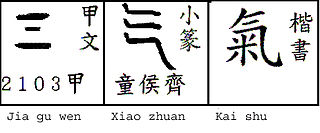
In traditional Chinese culture, qi or ch'i is believed to be a vital force forming part of any living entity. Qi translates as "air" and figuratively as "material energy", "life force", or "energy flow". Qi is the central underlying principle in Chinese traditional medicine and in Chinese martial arts. The practice of cultivating and balancing qi is called qigong.

Acupressure is an alternative medicine technique similar in principle to acupuncture. It is based on the concept of life energy which flows through "meridians" in the body. In treatment, physical pressure is applied to acupuncture points with the aim of clearing blockages in these meridians. Pressure may be applied by hand, by elbow, or with various devices.

Chinese herbology is the theory of traditional Chinese herbal therapy, which accounts for the majority of treatments in traditional Chinese medicine (TCM). A Nature editorial described TCM as "fraught with pseudoscience", and said that the most obvious reason why it has not delivered many cures is that the majority of its treatments have no logical mechanism of action.
The zàng-fǔ organs are functional entities stipulated by Traditional Chinese medicine (TCM). They constitute the centre piece of TCM's general concept of how the human body works. The term zàng (脏) refers to the organs considered to be yin in nature – Heart, Liver, Spleen, Lung, Kidney – while fǔ (腑) refers to the yang organs – Small Intestine, Large Intestine, Gall Bladder, Urinary Bladder, Stomach and Sānjiaō.

Tui na is a branch of Traditional Chinese Medicine and as such is often used in conjunction with acupuncture, moxibustion, fire cupping, Chinese herbalism, t'ai chi or other Chinese internal martial arts, and qigong.
The Liver is one of the zàng organs stipulated by traditional Chinese medicine (TCM). It is a functionally defined entity and not equivalent to the anatomical organ of the same name.

Traditional Korean medicine is traditional medicine practiced in Korea. It originates from traditional Chinese medicine principles.
Hilot (/HEE-lot/) is an ancient Filipino art of healing. It uses manipulation and massage to achieve the treatment outcome, although techniques differ from one practitioner to another. It emerged from the shamanic tradition of the ancient Filipinos with healers considering their practice as derived from their calling from visions or from having been born by breech.
Traditional Mongolian medicine developed over many years among the Mongolian people. Mongolian medical practice spread across their empire and became an ingrained part of many other people's medical systems.

Veterinary acupuncture is the pseudoscientific practice of performing acupuncture on animals. It is a form of traditional Chinese medicine as applied to animals.
Alternative veterinary medicine is the use of alternative medicine in the treatment of animals. Types alternative therapies used for veterinary treatments may include, but are not limited to, acupuncture, herbal medicine, homeopathy, ethnomedicine and chiropractic.
Yakchim is one of the many treatments in traditional Korean medicine treatment. It is also called pharmacopuncture, Korean herb acupuncture and acupuncture with medicinal herbs.
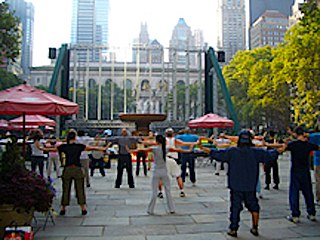
Qigong, qi gong, chi kung, or chi gung is a centuries-old system of coordinated body-posture and movement, breathing, and meditation used for the purposes of health, spirituality, and martial-arts training. With roots in Chinese medicine, philosophy, and martial arts, qigong is traditionally viewed by the Chinese and throughout Asia as a practice to cultivate and balance qi, translated as "life energy".
Hara. In the Japanese medical tradition and in Japanese martial arts traditions, the word Hara is used as a technical term for a specific area (physical/anatomical) or energy field (physiological/energetic) of the body. An alternative Japanese reading of the character is Hufu, the Chinese reading is Fu.

Annie Harvilicz DVM CVA is a veterinarian and an activist for the animal rights and animal welfare movement. She is the founder and chief medical officer of Animal Wellness Centers, a veterinary hospital in Marina Del Rey, California. Until recently, she served on the national leadership council of the Humane Society Veterinary Medical Association.
Chinese ophthalmology is part of the Traditional Chinese medicine (TCM). Here diseases of the eyes are treated with Chinese herbs, acupuncture/moxibustion, tuina, Chinese dietary therapy as well as qigong and taijiquan.


