
Amadora is a city and municipality in the northwest of the Lisbon metropolitan area and 10 km from central Lisbon. The population in 2011 was 175,136, in an area of 23.78 km2. It is the fourth biggest, and most densely populated, city in Portugal.
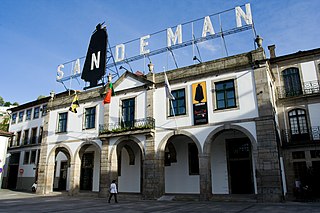
Vila Nova de Gaia, or simply Gaia, is a city and a municipality in Porto District in Norte Region, Portugal. It is located south of the city of Porto on the other side of the Douro River. The city proper had a population of 178,255 in 2001. The municipality has an area of 168.46 square kilometres (65.04 sq mi) and a population of 303,824 inhabitants in 2021, making it the most populous municipality in Norte Region, and the third most populous in the country, after Lisbon and Sintra. Gaia along with Porto and 16 other municipalities make up the Porto metropolitan area.
São José is Portuguese for Saint Joseph, and often refers to:

Andrade is a surname of Galician origin, which emerged in the 12th century as the family name of the knights and lords of the small parish of San Martiño de Andrade, in the municipality of Pontedeume. The first mention of this small territory is to be found in the documentation of the monastery of San Xoán de Caaveiro, and belong chronologically to the 9th century. It was part of the region of Pruzos, which was created as an administrative and ecclesiastical territory of Kingdom of Galicia in the sixth century by King Teodomiro through a document written in Latin called Parrochiale suevum, Parochiale suevorum or Theodomiri Divisio. From the 12th century Pruzos, and therefore Andrade, were integrated into the county of Trastámara that belonged to the lineage Traba, the most powerful Galician family. By this same time the family group: Fortúnez, begins to unite their names Andrade as surname, since in this parish their family home was located. The knights of Andrade were faithful vassals of their lords the Counts of Trastámara throughout the middle centuries of the Middle Ages.
Gomes is a common Portuguese and Old Galician surname.
Pires is a common surname in the Portuguese language, namely in Portugal and Brazil. It was originally a patronymic, meaning Son of Pedro or Son of Pero. Its Spanish equivalent is Pérez. It is a variant form of Peres. It may mean different things:

Fafe is a municipality in the northern Portuguese district of Braga. The population in 2021 was 48,502, in an area of approximately 219.08 square kilometres (84.59 sq mi). The city itself had a population of 15,703 in 2011. The present mayor is Antero Barbosa, elected by the Socialist Party. The municipal holiday is May 16.

Vasconcelos is a Portuguese surname. Today it can be found in Portugal, Brazil, and elsewhere in the Portuguese-speaking world.
Paiva is a Portuguese family surname, of toponymic origin in Paiva, today Castelo de Paiva, Portugal.
De Freitas or DeFreitas may refer to:
Diogo is a Portuguese masculine given name and surname.
Haroldo Pereira Travassos was a Brazilian ichthyologist. He taught the faculty of philosophy at the La-Fayette Institute, the Fluminense Federal University and the University of Rio de Janeiro.
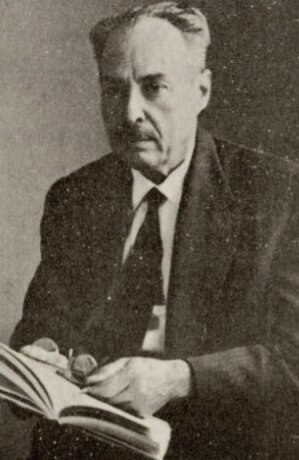
Lauro Pereira Travassos was a Brazilian parasitologist. He collected helminth specimens from across South America and studied their life-histories. He built a Brazilian school of parasitology through his students. His son Lauro Pereira Travassos Filho (1918–1989) became an entomologist while another son Haroldo Pereira became an ichthyologist.
This page is based on this
Wikipedia article Text is available under the
CC BY-SA 4.0 license; additional terms may apply.
Images, videos and audio are available under their respective licenses.

