CD64 is a type of integral membrane glycoprotein known as an Fc receptor that binds monomeric IgG-type antibodies with high affinity. It is more commonly known as Fc-gamma receptor 1 (FcγRI). After binding IgG, CD64 interacts with an accessory chain known as the common γ chain, which possesses an ITAM motif that is necessary for triggering cellular activation.
CD16, also known as FcγRIII, is a cluster of differentiation molecule found on the surface of natural killer cells, neutrophils, monocytes, and macrophages. CD16 has been identified as Fc receptors FcγRIIIa (CD16a) and FcγRIIIb (CD16b), which participate in signal transduction. The most well-researched membrane receptor implicated in triggering lysis by NK cells, CD16 is a molecule of the immunoglobulin superfamily (IgSF) involved in antibody-dependent cellular cytotoxicity (ADCC). It can be used to isolate populations of specific immune cells through fluorescent-activated cell sorting (FACS) or magnetic-activated cell sorting, using antibodies directed towards CD16.

Cluster of differentiation antigen 135 (CD135) also known as fms like tyrosine kinase 3 (FLT-3), receptor-type tyrosine-protein kinase FLT3, or fetal liver kinase-2 (Flk2) is a protein that in humans is encoded by the FLT3 gene. FLT3 is a cytokine receptor which belongs to the receptor tyrosine kinase class III. CD135 is the receptor for the cytokine Flt3 ligand (FLT3L).
NKG2 also known as CD159 is a receptor for natural killer cells. There are 7 NKG2 types: A, B, C, D, E, F and H. NKG2D is an activating receptor on the NK cell surface. NKG2A dimerizes with CD94 to make an inhibitory receptor (CD94/NKG2).

EGF-like module-containing mucin-like hormone receptor-like 3 is a protein encoded by the ADGRE3 gene. EMR3 is a member of the adhesion GPCR family. Adhesion GPCRs are characterized by an extended extracellular region often possessing N-terminal protein modules that is linked to a TM7 region via a domain known as the GPCR-Autoproteolysis INducing (GAIN) domain.

TYRO protein tyrosine kinase-binding protein is an adapter protein that in humans is encoded by the TYROBP gene.

P2Y purinoceptor 14 is a protein that in humans is encoded by the P2RY14 gene.

P2Y purinoceptor 8 is a protein that in humans is encoded by the P2RY8 gene.
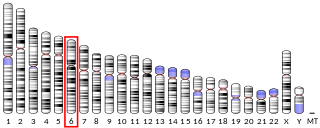
Natural cytotoxicity triggering receptor 3 is a protein that in humans is encoded by the NCR3 gene. NCR3 has also been designated as CD337 and as NKp30. NCR3 belongs to the family of NCR membrane receptors together with NCR1 (NKp46) and NCR2 (NKp44).

Triggering receptor expressed on myeloid cells 1 (TREM-1) is a protein that in humans is encoded by the TREM1 gene. TREM-1 is a surface receptor that amplifies inflammatory processes in vitro.
Leukocyte immunoglobulin-like receptor subfamily B member 4 is a protein that in humans is encoded by the LILRB4 gene.

Natural cytotoxicity triggering receptor 1 is a protein that in humans is encoded by the NCR1 gene. NCR1 has also been designated as CD335 (cluster of differentiation, NKP46, NKp46, NK-p46, and LY94.

Natural cytotoxicity triggering receptor 2 is a protein that in humans is encoded by the NCR2 gene. NCR2 has also been designated as CD336, NKp44, NKP44; NK-p44, LY95, and dJ149M18.1.
Leukocyte immunoglobulin-like receptor subfamily B member 3 is a protein that in humans is encoded by the LILRB3 gene.
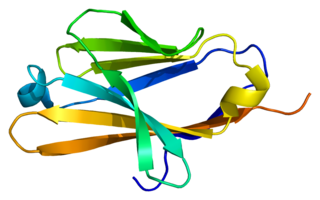
Trem-like transcript 1 protein is a protein that in humans is encoded by the TREML1 gene.
Leukocyte immunoglobulin-like receptor subfamily A member 2 is a protein that in humans is encoded by the LILRA2 gene.
Triggering receptor expressed on myeloid cells 2 also known as TREM-2 is a protein that in humans is encoded by the TREM2 gene.

Interleukin-2 receptor alpha chain is a protein that in humans is encoded by the IL2RA gene.

C-type lectin domain family 12 member A is a protein that in humans is encoded by the CLEC12A gene.
Nasu–Hakola disease also known as polycystic lipomembranous osteodysplasia with sclerosing leukoencephalopathy is a rare disease characterised by early-onset dementia and multifocal bone cysts. It is caused by autosomal recessive loss of function mutations in either the TREM2 or TYROBP gene that are found most frequently in the Finnish and Japanese populations.
This page is based on this
Wikipedia article Text is available under the
CC BY-SA 4.0 license; additional terms may apply.
Images, videos and audio are available under their respective licenses.
