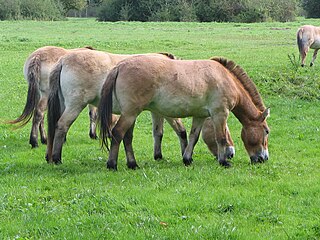
Equidae is the taxonomic family of horses and related animals, including the extant horses, donkeys, and zebras, and many other species known only from fossils. All extant species are in the genus Equus. Equidae belongs to the order Perissodactyla, which includes the extant tapirs and rhinoceros, and several extinct families.
A genus is a taxonomic rank used in the biological classification of living and fossil organisms, as well as viruses, in biology. In the hierarchy of biological classification, genus comes above species and below family. In binomial nomenclature, the genus name forms the first part of the binomial species name for each species within the genus.
Binomial nomenclature, also called binominal nomenclature or binary nomenclature, is a formal system of naming species of living things by giving each a name composed of two parts, both of which use Latin grammatical forms, although they can be based on words from other languages. Such a name is called a binomial name, a binomen, binominal name or a scientific name; more informally it is also called a Latin name. The first part of the name – the generic name – identifies the genus to which the species belongs, while the second part – the specific name or specific epithet – identifies the species within the genus. For example, humans belong to the genus Homo and within this genus to the species Homo sapiens. Tyrannosaurus rex is probably the most widely known binomial. The formal introduction of this system of naming species is credited to Carl Linnaeus, effectively beginning with his work Species Plantarum in 1753. But Gaspard Bauhin, in as early as 1623, had introduced in his book Pinax theatri botanici many names of genera that were later adopted by Linnaeus.
Family is one of the eight major hierarcical taxonomic ranks in Linnaean taxonomy; it is classified between order and genus. A family may be divided into subfamilies, which are intermediate ranks between the ranks of family and genus. The official family names are Latin in origin; however, popular names are often used: for example, walnut trees and hickory trees belong to the family Juglandaceae, but that family is commonly referred to as being the "walnut family".

Euphorbia is a very large and diverse genus of flowering plants, commonly called spurge, in the spurge family (Euphorbiaceae). "Euphorbia" is sometimes used in ordinary English to collectively refer to all members of Euphorbiaceae, not just to members of the genus. Some euphorbias are commercially widely available, such as poinsettias at Christmas. Some are commonly cultivated as ornamentals, or collected and highly valued for the aesthetic appearance of their unique floral structures, such as the crown of thorns plant. Euphorbias from the deserts of Southern Africa and Madagascar have evolved physical characteristics and forms similar to cacti of North and South America, so they are often incorrectly referred to as cacti. Some are used as ornamentals in landscaping, because of beautiful or striking overall forms, and drought and heat tolerance.

The Rutaceae are a family, commonly known as the rue or citrus family, of flowering plants, usually placed in the order Sapindales.

Pitcher plants are several different carnivorous plants which have modified leaves known as pitfall traps—a prey-trapping mechanism featuring a deep cavity filled with digestive liquid. The traps of what are considered to be "true" pitcher plants are formed by specialized leaves. The plants attract and drown their prey with nectar.

The thrushes are a family, Turdidae, of passerine birds with a worldwide distribution. The family was once much larger before biologists determined the subfamily Saxicolinae, which includes the chats and European robins, were Old World flycatchers. Thrushes are small to medium-sized ground living birds that feed on insects, other invertebrates and fruit. Some unrelated species around the world have been named after thrushes due to their similarity to birds in this family.
A raceme is an unbranched, indeterminate type of inflorescence bearing pedicellate flowers along its axis. In botany, an axis means a shoot, in this case one bearing the flowers. In indeterminate inflorescence-like racemes, the oldest flowers are borne towards the base and new flowers are produced as the shoot grows, with no predetermined growth limit. A plant that flowers on a showy raceme may have this reflected in its scientific name, e.g. Cimicifuga racemosa. A compound raceme, also called a panicle, has a branching main axis. Examples of racemes occur on mustard and radish plants.
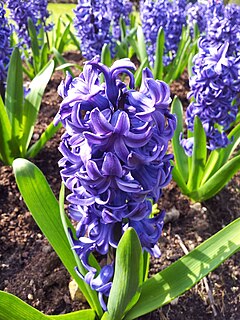
Hyacinthus is a small genus of bulbous, fragrant flowering plants in the family Asparagaceae, subfamily Scilloideae. These are commonly called hyacinths. The genus is native to the eastern Mediterranean.

In biology, a monotypic taxon is a taxonomic group (taxon) that contains only one immediately subordinate taxon.

A botanical name is a formal scientific name conforming to the International Code of Nomenclature for algae, fungi, and plants (ICN) and, if it concerns a plant cultigen, the additional cultivar or Group epithets must conform to the International Code of Nomenclature for Cultivated Plants (ICNCP). The code of nomenclature covers "all organisms traditionally treated as algae, fungi, or plants, whether fossil or non-fossil, including blue-green algae (Cyanobacteria), chytrids, oomycetes, slime moulds and photosynthetic protists with their taxonomically related non-photosynthetic groups ."

In biological classification, taxonomic rank is the relative level of a group of organisms in a taxonomic hierarchy. Examples of taxonomic ranks are species, genus, family, order, class, phylum, kingdom, domain, etc.
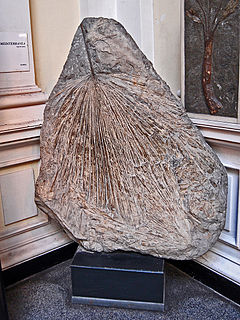
Flabellaria is a genus in the Malpighiaceae, a family of about 75 genera of flowering plants in the order Malpighiales. Flabellaria includes one variable species, Flabellaria paniculata.
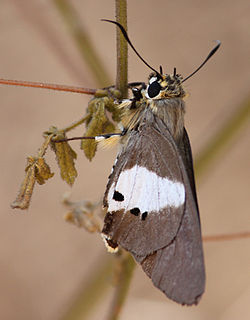
Coeliades pisistratus, the two-pip policeman, is a butterfly of the family Hesperiidae that occurs commonly in much of sub-Saharan Africa.

Senticolis is a genus of nonvenomous snake in the family Colubridae. The genus Senticolis is monotypic, containing the sole species Senticolis triaspis, also known as the green rat snake. The species is endemic to Central America, Mexico, southern Arizona, and southern New Mexico.

Coeliades bixana, the dark blue policeman, is a butterfly of the family Hesperiidae.
