The WOMBLES were a loosely aligned anarchist and anti-capitalist group based in London. They gained prominence in the early 2000s for wearing white overalls with padding and helmets at May Day protests, mimicking the Italian group Tute Bianche.

Tute Bianche was a militant Italian social movement, active from 1994 to 2001. Activists covered their bodies with padding so as to resist the blows of police, to push through police lines, and to march together in large blocks for mutual protection during demonstrations.
The Tianjin University of Technology and Education is a public vocational university in Tianjin, China. The university is sponsored by the Ministry of Education and Tianjin Municipal People's Government.
Esperanto II or Esperanto 2 was a reform of Esperanto proposed by René de Saussure in 1937, the last of a long series of such proposals beginning with a 1907 response to Ido with a project called Lingwo Internaciona, later called Antido 1. Esperanto II was one of several languages investigated by the International Auxiliary Language Association, the linguistic research body that eventually standardized and presented Interlingua de IALA.
Antigone is the daughter of Oedipus and his mother Jocasta in Greek mythology.
A cruiser is a type of naval warship.
The Ya Basta Association is a network of Italian anti-capitalist and pro-immigrants rights organizations and groups, fueled by the Italian social center movement, formed in 1994, and known for the "authorship" of the Tute Bianche, and later disobbedienti phenomena.

Brisca is a popular Spanish card game played by two teams of two with a 40-card Spanish-suited pack or two teams of three using a 48-card pack.
Santa Fe is the name of the capital of the Santa Fe District in the province of Veraguas in Panama. It has a population of 3200 and lies at an altitude of about 430m. Santa Fe lies close to the continental divide and just 60 km from the Mosquito Coast at the Caribbean Sea, but is only connected to the Pacific coast with a paved road to the Pan-American Highway and the city of Santiago de Veraguas.
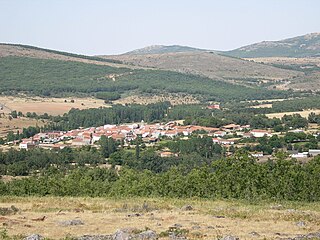
Cereceda de la Sierra is a municipality in the province of Salamanca, western Spain, part of the autonomous community of Castile-Leon. It is located 68 kilometres (42 mi) from the city of Salamanca and as of 2016 had a population of 75 people.
Public health genomics is the use of genomics information to benefit public health. This is visualized as more effective preventive care and disease treatments with better specificity, tailored to the genetic makeup of each patient. According to the Centers for Disease Control and Prevention (U.S.), Public Health genomics is an emerging field of study that assesses the impact of genes and their interaction with behavior, diet and the environment on the population's health.

Tute is a trick-taking card game of the Ace-Ten family for two to four players. Originating in Italy, where it was known as Tutti, during the 19th century the game spread in Spain, becoming one of the most popular card games in the country. The name of the game was later modified by Spanish speakers, who started calling the game Tute. The game is played with a deck of traditional Spanish playing cards, or naipes, that is very similar to the Italian 40-card deck.
The UCSC Genome Browser is an online and downloadable genome browser hosted by the University of California, Santa Cruz (UCSC). It is an interactive website offering access to genome sequence data from a variety of vertebrate and invertebrate species and major model organisms, integrated with a large collection of aligned annotations. The Browser is a graphical viewer optimized to support fast interactive performance and is an open-source, web-based tool suite built on top of a MySQL database for rapid visualization, examination, and querying of the data at many levels. The Genome Browser Database, browsing tools, downloadable data files, and documentation can all be found on the UCSC Genome Bioinformatics website.
Knome, Inc. was a human genome interpretation company based in Cambridge, Massachusetts. Launched in 2007, Knome focused on improving quality of life by applying insights gained from the interpretation of human genomes. They helped identify and classify the variants, genes, and gene sets that are likely to govern or underlie a specific disease, tumor, or drug response. Their clients included academic, pharmaceutical and medical researchers. In 2015, it was acquired by Tute Genomics.
Julepe, , is a gambling card game of Spanish origin, similar to the English five-card Loo, and best for six players. It spread rapidly across the Spanish-American countries during the 19th century.
Tute Genomics is a genomics startup that provides a cloud-based web application for rapid and accurate annotation of human genomic data. Built on the expertise of ANNOVAR, Tute assists researchers in identifying disease genes and biomarkers, and assists clinicians/labs in performing genetic diagnosis. Based in Provo, Utah, Tute was co-founded by Dr. Kai Wang, an Assistant Professor at the University of Southern California (USC); and Dr. Reid J. Robison, a board-certified psychiatrist with fellowship training in both neurodevelopmental genetics and bioinformatics.

Reid Robison is an American board-certified psychiatrist known primarily for his work with psychedelic medicines. As an early adopter and researcher of the use of ketamine in psychiatry, Robison has made significant contributions to ketamine-assisted psychotherapy (KAP) and other treatment modalities using ketamine for mental health conditions. He previously served as coordinating investigator for a study on MDMA-assisted psychotherapy for eating disorders, sponsored by the Multidisciplinary Association for Psychedelic Studies (MAPS), and he continues to lead research and psychiatric clinical trials involving psychedelics. To date, Robison has guided thousands of ketamine-assisted therapy sessions and Spravato dosing sessions. He currently serves as Medical Director of Center for Change, an eating disorder treatment center in Utah, and Chief Clinical Officer of Numinus, a Vancouver-based mental health company focused on psychedelic research and treatments. Robison is an adjunct professor at both the University of Utah and Brigham Young University.

HS4Air is a proposal for a 140-kilometre (87 mi) high-speed railway line in the United Kingdom, put forward in 2018 by a British engineering consultancy, Expedition Engineering.
