
The Ulfstand family was a Danish, mostly Scanian, noble family, known since the 14th century and extinct in the male line in 1637.
The Ulfstand family was a Danish, mostly Scanian, noble family, known since the 14th century and extinct in the male line in 1637.
It was possibly descended from a German noble family, and took the name Ulfstand when King Frederick decreed that the nobility had to take permanent family names in 1526. The family owned large estates in Scania, including Barsebäck, Glimmingehus, Skabersjö, Svenstorp and Torup, and several members were members of the Danish Council of the Realm.

Archbishop of Lund Jakob Gertsen (died 1410), the knight Henrik Gertsen (died after 1439), the estate owner and member of the council of the realm Truid Gregersen Ulfstand (1487–1545), his brother and member of the council of the realm Holger Gregersen Ulfstand (died 1542) of Skabersjö, and member of the council of the realm Jens Holgersen Ulfstand, are some of the members of this family. The family has many descendants through female lines in other Danish noble families.
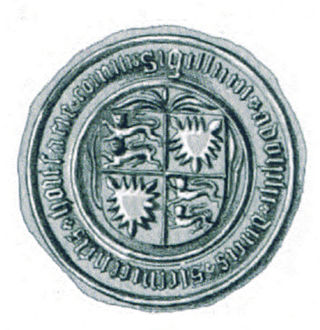
Adolphus XI of Schauenburg, as Adolph I Duke of Schleswig, and as Adolph VIII Count of Holstein-Rendsburg, was the mightiest vassal of the Danish realm.

Glimmingehus is a medieval era castle located at Simrishamn Municipality, Scania in southern Sweden. It is the best preserved medieval stronghold in Scandinavia. It was built 1499–1506, during an era when Scania formed a vital part of Denmark, and contains many defensive arrangements of the era, such as parapets, false doors and dead-end corridors, 'murder-holes' for pouring boiling pitch over the attackers, moats, drawbridges and various other forms of death traps to surprise trespassers and protect the nobles against peasant uprisings. The lower part of the castle's stone walls are 2.4 meters thick and the upper part 1.8 meters.

Otte Brahe was a Danish (Scanian) nobleman and statesman, who served on the privy council. He was married to Beate Clausdatter Bille and was the father of astronomers Tycho and Sophia Brahe.

Trolle-Ljungby Castle is a castle in Kristianstad Municipality, Scania, in southern Sweden. The Renaissance style castle is enclosed by a moat.

Bosjökloster is a castle located on the shore of Lake Ringsjön in Höör Municipality, Scania, Sweden.

Börringe Priory was a medieval Benedictine priory founded in 1150 at Svedala in Scania, Sweden. Secularized in 1536, the site was developed as a home for the Brahe family. The present large building, known as Börringeklosters slott, was built here in 1763.

Sigurd Jonsson was a Norwegian nobleman, knight and the supreme leader of Norway during two interregnums in the mid-15th century.
Christence (Christenze) Akselsdatter Kruckow was a Danish noblewoman who was executed for witchcraft after having been accused twice. She is one of the most well known victims of the witch hunt in Denmark, and one of few members of the nobility to have been executed for sorcery in Scandinavia, and the only one in Denmark.

Smedstorp Castle is a castle in Tomelilla Municipality, Scania, in southern Sweden.

Torup Castle is a castle in Svedala Municipality, Scania, in southern Sweden. It is situated approximately 15 kilometres (9.3 mi) east of Malmö. It was constructed by Görvel Fadersdotter (Sparre) for her son, after the death of her second spouse, Danish Privy Council Truid Gregersen Ulfstand (1487–1545).
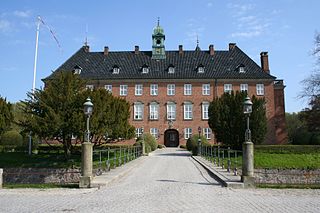
Vemmetofte Convent is a former manor house in Faxe Municipality south of Copenhagen, Denmark. It was turned into a convent by Princess Sophia Hedwig of Denmark in 1735. Since 1975 it has provided housing available to the general public.

Görvel Fadersdotter (Sparre) was a Swedish noblewoman and county administrator. She was a major landowner in Denmark, Norway, and Sweden.
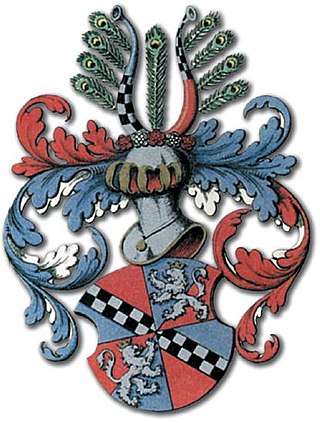
The Rosenkrantz family is the name of a family which belongs to Danish, Norwegian, Swedish and German nobility. The family is known since the 14th century and belongs to the old and high nobility. It has played a prominent role in Denmark and Norway, its members having been estate owners as well as high officials.

Knabstrup Manor is a manor house located near Holbæk on the Danish island of Zealand. It traces its history to before 1288.

Erik Juel, often referred to as Erik Juel to Hundsbæk and Alsted, was a Danish courtier, seignory and Privy Councillor, the father of Admiral Niels Juel and of the politician and diplomat Jens Juel.
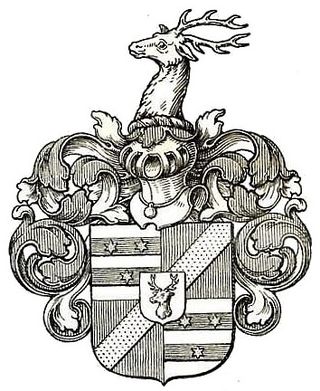
Nissen, von Nissen and von Nissen-Benzon is a Danish family of land owners from Southern Jutland, which was partially ennobled in 1710. It is descended from Henrik Lorentzen (Schack), who in 1484 was granted the estate of Oldemorstoft as a fief by John, King of Denmark. Members of the family were land owners and from the 17th century war commissioners, judges, councillors of state (etatsråd), Governors (stiftamtmann), Supreme Court Justice and General in Denmark. Family members served as Governor of Tranquebar, plantation owner and Vice Governor of the Danish West Indies in the 18th century. In Denmark, the family owned the estates of Oldemorstoft, Lerbæk, Rugballegaard, Brantbjerg, the Stamhus of Skærsø and others between the 15th century and the 18th century. In the 17th century, King Christian IV of Denmark was a guest at Oldemorstoft several times. The name von Nissen was used by the noble branch and military officers of the family.

Gregers Krabbe was a Danish nobleman who served as Governor-general of Norway.

The Valkendorf family (Denmark) or Walkendorff (Sweden) is a medieval Danish and Swedish noble family.

Truid Gregersen Ulfstand was a Danish nobleman, landowner, and privy council member. He was active in Norway in the 1530s during the time that the country was entering into a real union with Denmark, and was a commander in the Danish civil war known as The Count's Feud.
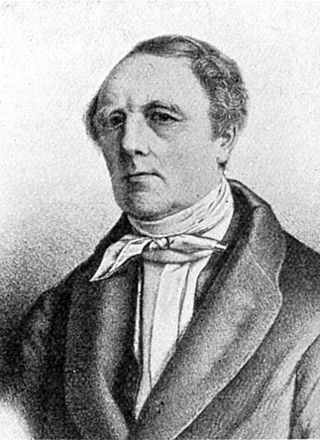
Holger Christian ReedtzS.K. was a Danish aristocrat, landowner, civil servant, diplomat and politician.